USDA Flooding Requirements and Property Assessment
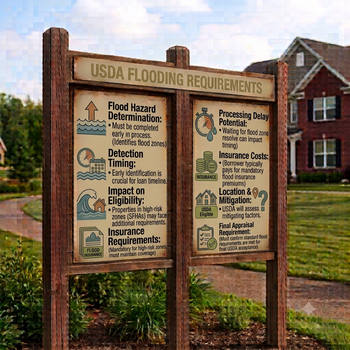 USDA flooding requirements protect rural
homeowners and lenders from water damage risks. Properties located
in flood zones require special insurance and
assessment before loan approval. The USDA evaluates
flooding risk to determine property eligibility for
rural development financing. Understanding flood zone
classifications and insurance requirements helps borrowers prepare
for loan approval and protect their property investments.
USDA flooding requirements protect rural
homeowners and lenders from water damage risks. Properties located
in flood zones require special insurance and
assessment before loan approval. The USDA evaluates
flooding risk to determine property eligibility for
rural development financing. Understanding flood zone
classifications and insurance requirements helps borrowers prepare
for loan approval and protect their property investments.
Flooding causes extensive property damage and threatens homeowner safety. Properties with high flooding risk may not qualify for USDA loans without proper mitigation. Lenders require flood insurance on properties in designated flood zones. The USDA recognizes that proper preparation and insurance management allows financing of properties with manageable flooding hazards. Homeowners must understand how flood zone designation affects their loan options.
Understanding Flood Zones and Risk Assessment
Flood zones are geographic areas identified by FEMA as having different flooding risk levels. The FEMA Flood Insurance Rate Map shows detailed flood zone boundaries for every community. Areas with one percent annual flooding probability are designated high-risk flood zones. Areas with lower flooding probability receive different designations. The USDA uses FEMA flood mapping to identify properties requiring special consideration.
Special Flood Hazard Areas (SFHA) represent the highest flooding risk locations. These areas have at least one percent annual probability of inundation. Properties in SFHA zones require mandatory flood insurance as a loan condition. Base Flood Elevation maps show expected water heights during maximum flooding. Properties above base elevation face lower risk than properties at or below this level.
The FEMA Flood Insurance Rate Map is updated regularly as flooding patterns change. Development, climate change, and infrastructure modifications affect flood risk. Property owners should verify current flood zone designation for their specific address. Flood maps show the exact boundaries of designated flood zones. Disagreement with flood designations can be appealed through formal processes.
USDA Flood Zone Requirements and Eligibility
USDA Rural Development requires flood insurance for properties in designated SFHA flood zones. Properties outside high-risk flood zones may not require mandatory insurance though USDA recommends it. Lenders determine insurance requirements based on flood zone location and loan details. The appraisal identifies whether properties fall in designated flood zones. USDA loan closing cannot proceed without proper flood insurance for at-risk properties.
Properties can receive USDA financing even in high flood zones if insurance requirements are met. Lenders do not automatically deny loans based on flooding risk. However, properties in very high-risk areas may face higher costs and stricter requirements. Some lenders may decline properties with extreme flood zone risk. Borrowers should discuss flood zone status with lenders early in the loan process.
The USDA requires that flood insurance remain active throughout the loan term. Borrowers cannot cancel policies without lender permission. If borrowers allow insurance to lapse, lenders may purchase policies at borrower expense. USDA loans are contingent on maintained flood insurance in designated flood zones. Protecting property with continuous insurance is both a lender requirement and a smart property management practice.
Flood Insurance and Cost Requirements
Flood insurance protects property and contents from water damage. Standard homeowners insurance does not cover flooding damage. The National Flood Insurance Program provides coverage through licensed insurers. Private insurers also offer flood insurance policies meeting USDA requirements. Annual premiums vary based on property location, value, and flood zone risk level.
| Flood Zone Type | Risk Level | Insurance Required | Average Annual Cost |
|---|---|---|---|
| SFHA (A or V zone) | High risk | Yes, mandatory | $500 - $3,000+ |
| High-risk moderate zone | Moderate risk | Yes, mandatory | $200 - $1,500 |
| X zone moderate | Moderate-low risk | Recommended | $100 - $500 |
| X zone low | Low risk | Not required | $50 - $200 |
| Outside mapped zones | Minimal risk | Not required | Not applicable |
Flood insurance costs depend on several factors including elevation, construction type, and previous claims. Properties above base flood elevation pay less for coverage. Modern elevated construction techniques reduce insurance premiums. Properties with previous water damage history pay higher premiums. USDA borrowers can work with insurance agents to find affordable coverage meeting lender requirements.
Flood insurance premiums are included in monthly loan payments. Lenders collect premiums and pay insurance companies maintaining continuous coverage. Borrowers never need to worry about policy lapses when insurance is included in loan payments. Including insurance costs in loan amounts simplifies budgeting and payment management. USDA allows this approach for properties in designated flood zones.
Flood Risk Assessment During Appraisal
USDA appraisers determine whether properties fall in designated flood zones during property evaluation. Appraisers check the FEMA Flood Insurance Rate Map for the property address. Properties in high-risk flood zones are flagged for insurance requirements. Appraisers note estimated base flood elevation and compare to property elevation. This assessment determines whether flooding affects property value or loan approval.
Properties above base flood elevation may not require insurance despite zone designation. Elevation certificates document property height and provide technical flood risk information. Professional surveyors determine exact elevations establishing insurance requirements. USDA lenders rely on elevation certificates to verify whether insurance is mandatory. These documents cost a few hundred dollars but clarify insurance obligations and may reduce required coverage.
Prior water damage or flooding history affects property appraisal and loan decisions. Appraisers investigate properties with previous flooding to understand damage patterns and recovery. Properties with repeated flooding may face higher insurance costs or loan restrictions. Some properties may not be eligible for USDA financing if flood risk is too high. Complete disclosure of prior water damage helps appraisers make accurate assessments.
Preparing Properties for USDA Loans in Flood Zones
Property owners in flood zones can take steps to reduce flooding risk and improve loan approval chances. Elevation improvements raise structures above flood levels. Installing flood vents allows water to drain reducing pressure on foundations. Proper grading directs water away from buildings. Sump pumps and drainage systems manage water accumulation. These improvements demonstrate responsible property management to lenders.
Flood mitigation improvements reduce insurance costs and improve property value. Elevated mechanical equipment keeps utilities above water levels. Waterproof coatings protect basement walls from seepage. Installing backflow preventers stops sewer water from backing into homes. These systems limit damage if flooding occurs. The USDA recognizes mitigation improvements as smart property management reducing long-term risk.
Flood-resistant materials and construction techniques reduce damage potential. Replacing drywall with water-resistant materials in flood-prone areas limits repair costs. Installing resilient flooring that tolerates water exposure protects property value. Elevated first floors remove living space from maximum flood impact. Flood-resistant landscaping choices prevent erosion. These improvements show lenders that property owners are managing risk responsibly.
Disclosure Requirements and Property Transparency
Sellers must disclose known flooding history and flood zone location to buyers. Property disclosure statements must include information about prior water damage and flooding. Real estate agents are required to provide FEMA flood zone information. Failure to disclose flooding history violates consumer protection laws. The USDA expects complete transparency about property hazards and risk factors.
Buyers have the right to obtain a Flood Hazard Determination Report before purchase. This report shows whether properties are in designated flood zones and insurance requirements. Professional flood determination services provide detailed analysis of risk factors. Understanding flood zone status allows buyers to make informed decisions. USDA allows buyers to investigate flood risk and negotiate accordingly.
Appraisers document flooding and water damage observations during property inspection. Visible water stains, foundation damage, and moisture indicate prior flooding. Basement moisture and mold suggest ongoing water problems. Complete documentation helps buyers understand property conditions. USDA requires that appraisals accurately reflect flood-related issues affecting property value.
Flood Insurance Claims and Recovery Process
When flooding occurs, property owners file flood insurance claims to recover losses. Policyholders document damage with photographs and detailed inventories. Insurance adjusters assess damage and determine claim values. Coverage limits determine maximum payment amounts for losses. USDA borrowers should understand policy limits and what damage is covered.
Flood recovery takes time and involves significant coordination with insurers and contractors. Temporary living expenses may be covered during repairs. Insurance payments help restore properties to pre-flood condition. Salvaging personal property and reducing water exposure are first priorities. Professional restoration contractors help manage recovery efficiently.
- Document all damage with photographs before beginning cleanup
- Keep records of all costs incurred during flood recovery
- Contact insurance company promptly after damage occurs
- Cooperate with insurance adjusters during damage assessment
- Obtain multiple contractor estimates for repair work
- Track all deductible amounts paid from personal funds
Repetitive flooding claims may result in policy non-renewal or premium increases. Properties with multiple claims within short timeframes become less insurable. Lenders prefer borrowers with stable insurance and no claim history. Building resilience and reducing flooding risk prevents repeated claims. Long-term property management strategies protect insurability and loan eligibility.
Community Flood Mitigation and Property Protection
Many communities implement flood mitigation projects protecting entire areas from inundation. Levees, dikes, and flood control structures protect properties downstream. Community buy-out programs move residents from high-risk areas. Wetland restoration improves natural flood absorption. These community projects reduce flooding risk benefiting all residents. The USDA recognizes that community mitigation efforts improve property values and loan stability.
Flooding impact varies based on flood control infrastructure. Properties protected by effective levees face lower risk than unprotected areas. Communities with poor drainage systems experience worse flooding than well-maintained areas. Regular maintenance of flood control infrastructure protects property values. Property owners should understand what protective systems exist in their communities.
Climate change is increasing flooding frequency in many regions. Extreme rainfall events overwhelm traditional drainage systems. Rising water tables affect areas with poor elevation. Communities are updating flood maps reflecting increased risk. Property owners should monitor whether their flood zone designation changes. Updating mitigation strategies addresses changing flood patterns and risks.
Geographic Flooding Patterns and Regional Risk
Flooding risk varies significantly by geography and climate. River flood plains experience seasonal inundation. Coastal properties face storm surge flooding during hurricanes. Properties in low-lying areas near streams and wetlands flood easily. Desert regions rarely flood but experience dangerous flash floods. Understanding regional flooding patterns helps property owners prepare appropriately.
- River valleys experience seasonal flooding during high water periods
- Coastal areas face storm surge flooding during tropical systems
- Urban areas with poor drainage experience localized flooding
- Properties near streams and wetlands flood during heavy rainfall
- Desert regions experience flash floods in arroyos and washes
- Low-lying properties near water bodies face persistent water problems
Historic flooding records show recurring patterns in flood-prone areas. Communities maintain records of past major floods and water levels. Properties that have flooded once often flood again during similar weather events. Understanding property-specific flooding history helps predict future risk. The USDA uses historical data to assess whether properties are suitable for long-term financing.
Frequently Asked Questions About USDA Flooding
Do all properties in flood zones require flood insurance?
Properties in designated Special Flood Hazard Areas require mandatory flood insurance as a condition of USDA loans. Properties in lower-risk flood zones may not require mandatory coverage but USDA recommends it. Properties outside mapped flood zones do not require flood insurance for loans. However, properties near flood-prone areas may still benefit from flood coverage. Contact your lender to determine specific insurance requirements for your property location.
How much does flood insurance cost?
Flood insurance costs vary based on property location, value, and flood zone designation. High-risk properties in Special Flood Hazard Areas pay five hundred to three thousand dollars annually. Moderate-risk properties pay two hundred to fifteen hundred dollars. Lower-risk properties outside high-zone areas pay less or may not require insurance. Elevation above base flood level significantly reduces premiums. USDA borrowers should obtain insurance quotes to understand their specific costs.
Can flood-damaged properties receive USDA loans?
Yes, properties with prior flood damage can receive USDA loans if damage is repaired and insurance requirements are met. Complete disclosure of damage history is required. Proper mitigation and repair demonstrate responsible property management. Lenders want assurance that future flooding is managed through insurance and mitigation. Properties with good repairs and current insurance can qualify for USDA financing even with prior damage history.
What if my property floods after I buy it?
Flood insurance covers property damage from inundation. Policyholders file claims with their insurance companies documenting losses. Repairs are completed using insurance proceeds. Mortgage payments continue during recovery unless insurance coverage includes temporary living expenses. USDA loans are not affected by flooding if property is insured. Maintaining continuous coverage is essential for protection and loan requirements.
How do I determine my property's flood zone?
You can check your property's flood zone using FEMA's Map Service Center online tool. The FEMA website allows property address searches showing designated zones. Your realtor or lender can also obtain this information. Professional flood determination reports provide official verification. If you disagree with designation, you can appeal through FEMA's appeals process. Understanding your flood zone is the first step in managing flood risk.
Alternative Titles (Best Choice Listed First)
BEST TITLE: USDA Flood Zones and Property Requirements for Home Loans (66 characters)
Understanding Flooding and USDA Loan Eligibility (47 characters)
Flood Insurance Requirements for USDA Rural Properties (54 characters)
How Flood Zones Affect USDA Loan Approval and Costs (51 characters)
USDA Flooding Assessment and Property Risk Management (52 characters)
Alternative H1s (Best Choice Listed First)
BEST H1: USDA Flooding Requirements and Property Assessment
Understanding Flood Zones and USDA Insurance Requirements
USDA Flood Risk Assessment and Property Eligibility
Flooding and Its Impact on USDA Home Loan Approval
Complete Guide to USDA Flood Zones and Property Protection
Alternative Meta Descriptions (Best Choice Listed First)
BEST META: Learn about USDA flood zone requirements, insurance, and property eligibility. Discover how flooding affects rural home loans and what borrowers must know. (126 characters)
BEST META #2: USDA flooding requirements protect homeowners and property value. Find flood insurance costs, zone assessment, and loan approval information. (126 characters)
BEST META #3: Understand flood zone designation and USDA loan requirements for rural properties. Learn insurance requirements, costs, and risk assessment. (126 characters)
Two-Sentence Hooks (Best Choice Listed First)
BEST HOOK: Properties in designated flood zones require special insurance and assessment before USDA loan approval. Understanding flood zone requirements and mitigation strategies helps rural homeowners protect their property investments and qualify for financing.
USDA flooding requirements ensure homeowners understand water damage risks and maintain proper insurance. Flood zone designation affects loan approval, insurance costs, and long-term property viability.
Flooding causes extensive property damage threatening homeowner safety and financial security. USDA borrowers must meet insurance and risk assessment requirements in designated flood areas.
Flood insurance costs vary based on property location and flood zone risk level. USDA loans allow borrowers to include insurance premiums in monthly payments for affordable protection.
Prior flood damage disclosure and property mitigation demonstrate responsible ownership to lenders. Properties with good insurance coverage and flood management can qualify for USDA financing.
Connect With Us
Please share – it really helps