USDA Well Water Requirements and Testing Standards
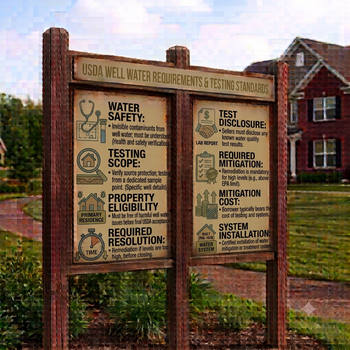 USDA well water requirements protect rural
homebuyers by ensuring wells provide safe drinking water. Properties
using wells must meet strict testing and safety standards before
USDA loan approval. These requirements help prevent health problems
from contaminated water in rural areas.
USDA well water requirements protect rural
homebuyers by ensuring wells provide safe drinking water. Properties
using wells must meet strict testing and safety standards before
USDA loan approval. These requirements help prevent health problems
from contaminated water in rural areas.
USDA well water standards focus on bacterial
contamination, nitrates, and other hazards that can make water
unsafe. Testing identifies problems before you move into your new
home.
Understanding USDA well water requirements
helps you prepare for the testing process and potential remediation
costs.
What Are USDA Well Water Requirements?
USDA well water requirements establish minimum standards for water safety in rural properties financed with USDA loans. These requirements apply to all properties using private wells rather than municipal water systems.
The USDA requires well water testing to confirm:
- Water is free from harmful bacteria including E. coli
- Nitrate levels do not exceed safe limits
- Other contaminants remain below EPA standards
- Well structure is sound and properly maintained
- Water pressure and flow rate are adequate
- Well has proper sealing and protection
- Septic systems do not threaten water quality
Properties that fail USDA well water testing require remediation before loan approval. The lender will not fund a purchase until water safety issues are resolved.
USDA Well Water Testing Requirements
USDA well water testing verifies that drinking water meets EPA standards. A certified laboratory analyzes water samples to detect contaminants and confirm safety.
Required well water tests for USDA loans include:
- Total coliform bacteria testing for any contamination
- E. coli testing for fecal contamination
- Nitrate testing for agricultural contamination
- Fluoride testing for naturally occurring levels
- Arsenic testing in certain geographic areas
- pH and hardness testing for water quality
- Iron and manganese testing if discoloration occurs
- Radon testing in high-risk areas
USDA well water testing costs typically range
from $150 to $500 depending on the extent of testing. Your lender
specifies which tests are required based on the property location
and known risk factors.
You should budget for testing costs as
part of your
USDA closing costs.
Who Orders USDA Well Water Testing?
Typically the seller orders and pays for USDA well water testing since the property must meet standards before sale. However, you can negotiate who pays for testing in your purchase agreement.
Common arrangements for well water testing costs:
- Seller orders and pays for testing before listing
- Seller orders testing after offer is accepted
- Buyer requests testing and shares cost with seller
- Buyer pays for testing independently
- Seller provides previous test results to buyer
If the seller provides previous test results, your lender may
accept those instead of requiring new testing. However, tests older
than one year typically need to be repeated to meet USDA
well water requirements.
Your lender makes the final
determination about which test results are acceptable.
Common Well Water Contaminants
Understanding common well water contaminants helps you prepare for testing. Different regions have different contamination risks based on geology and agriculture.
Common contaminants found in USDA well water testing:
- Coliform bacteria from soil, animals, or septic systems
- E. coli from fecal contamination
- Nitrates from fertilizers and manure
- Iron from natural geology causing discoloration
- Manganese combining with iron for staining
- Arsenic from natural rock formations
- Radon from natural radioactive decay
- Sulfur causing rotten egg smell in water
Finding contaminants does not automatically mean you cannot buy
the property. Treatment options can make the water safe.
The key
is identifying problems early so you can plan and budget for
remediation.
Well Water Remediation and Treatment Options
When USDA well water testing reveals contamination, treatment systems can make water safe. Different contaminants require different remediation approaches.
Treatment methods for well water contaminants:
- Shock chlorination treats bacterial contamination
- Permanent chlorination systems prevent bacteria growth
- Nitrate removal systems use ion exchange
- Activated carbon filters remove chemicals and odors
- Reverse osmosis systems remove multiple contaminants
- Iron filters remove iron and manganese staining
- Radon aeration systems remove radioactive gas
- Boiling water kills bacteria but does not remove chemicals
Treatment costs range from $500 for simple solutions to $3,000+
for whole-house systems.
Your lender approves the remediation
plan before closing.
USDA Well Water and Septic System Relationship
USDA well water safety depends partly on septic system location and condition. Wells and septic systems must be properly separated to prevent contamination.
USDA well water requirements regarding septic systems include:
- Wells must be at least 50 feet from septic tanks
- Wells must be 100 feet from septic drain fields
- Septic systems must drain downhill from wells
- Septic systems require proper maintenance records
- Failing septic systems must be repaired or replaced
- Drain field locations must be documented
- Distance requirements may vary by local regulations
If your property has both a well and septic system, the lender
verifies proper spacing during the appraisal inspection.
Inadequate spacing requires relocation of one system or additional
treatment to ensure well water safety.
Well Water and USDA Loan Approval
Your USDA qualification depends partly on well water safety. The lender will not approve the loan until well water requirements are satisfied.
The USDA appraisal process for well water includes:
- Appraisal inspector verifies well exists and functions
- Lender orders water quality testing
- Laboratory results are reviewed for contamination
- Any deficiencies must be documented
- Remediation plan must be submitted if needed
- Proof of treatment system installation is required
- Final approval comes after all issues are resolved
Plan for this testing and remediation timeline in your purchase
schedule. Issues discovered late can delay your closing date.
Address well water concerns early to keep your
transaction moving forward.
Bacterial Contamination in Well Water
Bacterial contamination is the most common well water problem discovered during USDA testing. Bacteria come from soil, animals, or septic system failures.
Bacterial contamination signs and causes:
- Total coliform bacteria indicates any contamination risk
- E. coli specifically indicates fecal contamination
- Cloudy or turbid water may suggest contamination
- Unusual taste or odor may indicate problems
- Recent flooding can introduce bacteria into wells
- Cracked well casings allow ground water entry
- Poor well sealing permits surface contamination
Bacterial contamination requires immediate treatment. Shock
chlorination eliminates bacteria quickly, while permanent systems
prevent recontamination.
The EPA requires that USDA well
water be free of E. coli and most coliform bacteria.
Nitrate Contamination in Well Water
Nitrates from agricultural fertilizers and manure commonly contaminate well water in farming areas. High nitrate levels pose health risks, especially to infants.
Nitrate contamination in well water:
- EPA limits nitrates to 10 mg/L for safe drinking water
- Agricultural properties have higher contamination risk
- Fertilizers and animal waste leach into groundwater
- High levels threaten infant health particularly
- Pregnant women face additional health risks
- Ion exchange filters remove nitrates effectively
- Regular testing monitors nitrate levels over time
If well water testing shows elevated nitrates,
treatment systems can reduce levels to safe amounts.
Some rural
areas have chronic nitrate problems requiring ongoing treatment and
monitoring.
Naturally Occurring Contaminants in Well Water
Some well water contamination occurs naturally from geology rather than human activity. These contaminants still require remediation to meet USDA well water requirements.
Naturally occurring well water contaminants:
- Arsenic from natural rock formations in some areas
- Radon from radioactive decay in underlying rocks
- Iron and manganese from natural mineral content
- Fluoride from natural deposits in groundwater
- Uranium in granite and other rock types
- Selenium in volcanic regions
Geographic location determines which natural contaminants are
common in your area. Your lender knows which tests are needed based
on the property location.
Treatment systems address natural
contaminants the same way they handle other problems.
Well Water Testing Timeline and Process
Understanding the well water testing timeline helps you plan your purchase. Testing is ordered early in the loan approval process.
Typical USDA well water testing timeline:
- Day 1: Offer accepted, lender orders well testing
- Day 3 to 5: Water samples are collected from well
- Day 5 to 7: Laboratory analyzes water samples
- Day 10 to 14: Results are reported to lender
- Day 15 to 21: Issues are identified and solutions planned
- Day 21 to 30: Remediation is completed if needed
- Day 30 to 45: Final approval is granted after verification
This timeline is approximate and varies by location and
circumstances.
Communicate regularly with your lender about
well water testing status to prevent unexpected
delays.
Negotiating Well Water Issues in Your Purchase
When well water testing reveals contamination, negotiate with the seller about remediation responsibility. Many sellers prefer to reduce the price rather than install treatment systems.
Negotiation strategies for well water problems:
- Request seller pay for treatment system installation
- Ask for price reduction equal to treatment cost
- Negotiate seller completion of remediation before closing
- Request seller provide credit at closing
- Combine well water issues with other repair negotiations
- Walk away if contamination is severe and costly
- Use multiple treatment cost estimates to support position
Most sellers understand that well water problems
must be addressed. Maintaining a reasonable tone in negotiations
helps reach agreement.
Document all discussions about
well water remediation in writing to prevent
misunderstandings.
Frequently Asked Questions About USDA Well Water Requirements
Is well water testing required for all USDA loans on rural properties?
Yes, USDA well water testing is required for any property using a private well rather than municipal water. The lender orders testing to verify the water meets EPA safety standards. This is a mandatory requirement, not optional. Properties with municipal water systems do not require well water testing since those systems are regulated separately.
What happens if well water testing fails USDA standards?
If well water testing shows contamination, the property owner must remediate the problem before the USDA loan closes. You cannot close on a property with unsafe well water. The seller usually installs a treatment system or you negotiate a price reduction. The lender requires proof that remediation is complete before final approval.
How long do well water test results remain valid for USDA loans?
USDA generally accepts well water test results that are less than one year old. If testing is older than that, new testing must be conducted. Some lenders accept results up to two years old depending on circumstances. Ask your lender about acceptable test age when you review previous test results from the seller.
Can I use bottled water if my well fails USDA well water testing?
No, using bottled water does not satisfy USDA well water requirements. The USDA requires that the well itself be treated and made safe. You cannot permanently rely on bottled water for daily use and hygiene. The property must have a functioning well that meets USDA standards, or you must connect to municipal water if available.
What if a property has both a well and municipal water available?
If the property can connect to municipal water, you have the option to abandon the well. This eliminates USDA well water testing requirements. However, the property may have restrictions preventing municipal connection. Verify water availability and connection feasibility before making your purchase decision.
Moving Forward with Well Water Requirements
USDA well water requirements protect your health by ensuring safe drinking water. While testing and remediation require time and money, the investment protects your family's health long-term.
If you are purchasing a property with a well, budget for testing
costs and potential treatment system installation. Address
well water issues early in your loan process to prevent
closing delays.
With proper testing and remediation, your well
can provide safe, clean water for years to come.
Connect With Us
Please share – it really helps