VA Loans and Flooding: What Homebuyers Need to Know
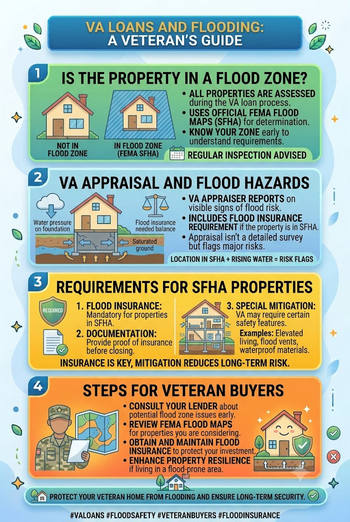 Flooding is a significant risk in certain areas of the United States. If you are considering purchasing a home in a flood-prone area with a VA loan, understanding flood zones, flood insurance requirements, and how flooding affects your loan is critical. A property in a flood zone will require flood insurance as a condition of the VA loan, adding to your monthly housing costs. Understanding these requirements helps you make an informed decision about purchasing in a flood-risk area.
What Is a Flood Zone and How Are They Classified?
Flood zones are geographic areas classified by the Federal Emergency Management Agency (FEMA) based on flood risk probability. FEMA's National Flood Insurance Program (NFIP) maps communities and identifies areas at different levels of flood risk.
FEMA Flood Zone Categories
Properties are classified into different flood zones based on the likelihood of flooding:
- Zone A: Areas with a 1 percent annual chance of flooding (sometimes called the "100-year floodplain"). This is a high-risk flood zone. Flood insurance is mandatory.
- Zone AE: Areas within the floodplain with detailed flood elevation information. Base Flood Elevation (BFE) is determined. This is a high-risk zone. Flood insurance is mandatory.
- Zone AO: Areas subject to shallow flooding with depths of 1 to 3 feet. This is a high-risk zone. Flood insurance is mandatory.
- Zone X (shaded): Areas between the 1 percent and 0.2 percent annual chance flood zones. This is a moderate-risk zone. Flood insurance is not mandatory by FEMA but may be required by lenders.
- Zone X (unshaded): Areas outside the floodplain with less than 0.2 percent annual chance of flooding. This is a low-risk zone. Flood insurance is not required.
- Zone D: Undetermined flood risk areas where FEMA has not yet completed detailed analysis. Lenders may require flood insurance depending on individual assessment.
The 100-year flood is the most commonly referenced flood zone. This is not a flood that occurs every 100 years, but rather a flood with a 1 percent chance of occurring in any given year. Over a 30-year mortgage period, the chance of at least one 100-year flood occurring is about 26 percent.
Do VA Loans Allow Properties in Flood Zones?
Yes. The VA does not prohibit properties in flood zones. However, if a property is in a high-risk flood zone (Zone A, AE, or AO), flood insurance is mandatory as a condition of the VA loan. Flood insurance must be maintained for the life of the loan.
Properties in moderate-risk zones (Zone X shaded) may or may not require flood insurance depending on the lender. Some VA lenders require flood insurance in moderate-risk areas as a precaution, while others may not require it.
Properties outside identified flood zones (Zone X unshaded or no flood zone designation) do not require flood insurance.
How Flood Zone Is Determined
The flood zone for a property is determined by FEMA's Flood Insurance Rate Maps (FIRMs). These maps show flood zones by geographic area. The property address determines which flood zone applies.
Flood Zone Determination Process
During the VA loan process, the lender orders a flood zone determination report (also called a flood elevation certificate or flood zone letter). This report identifies which FEMA flood zone the property is in based on FEMA's maps.
The flood zone determination is typically provided within days and costs $35 to $150. This determination triggers flood insurance requirements if applicable.
Checking Flood Zone Yourself
Before making an offer on a property, you can check the property's flood zone using FEMA's Flood Map Service Center (msc.fema.gov). Enter the property address to see the FEMA flood zone map and whether the property is in a designated flood zone.
Flood Insurance Requirements for VA Loans
If a property is in a high-risk flood zone (Zones A, AE, or AO), flood insurance is mandatory. The insurance must be in place at closing and must be maintained throughout the loan term.
Flood Insurance Basics
Flood insurance is separate from homeowner's insurance. Homeowner's insurance policies do not cover flooding. Flood insurance must be purchased through the National Flood Insurance Program (NFIP) or a private flood insurer.
Flood insurance covers structural damage to the building, permanent fixtures, and items in basements due to flooding. It does not cover contents (furniture, personal belongings), vehicles, or landscaping.
Flood Insurance Cost
Flood insurance premiums vary based on:
- Flood zone: Properties in Zone A or AE (high risk) pay the highest premiums. Zone AO properties pay moderate premiums. Zone X shaded properties (if insured) pay lower premiums.
- Base Flood Elevation (BFE): The higher the property is above BFE, the lower the premium. Properties above BFE pay significantly less than properties below BFE.
- Building construction: Elevated buildings, buildings on stilts, or buildings with flood vents pay lower premiums than buildings with basements or at-grade construction.
- Building age: Newer buildings built to current flood codes may qualify for discounts.
Typical flood insurance premiums for a home in Zone A or AE range from $400 to $2,000+ annually, depending on the property elevation and construction. Properties significantly above BFE may pay $300 to $500 annually. Properties below BFE pay $1,500 to $3,000+ annually.
Flood Insurance at Closing
Flood insurance must be in place at loan closing. The VA lender will not close the loan without proof of flood insurance for properties in high-risk zones. You must purchase flood insurance before closing and provide the insurance binder (proof of coverage) to the lender.
Escrow for Flood Insurance
Flood insurance premiums are typically paid through escrow (included in your monthly mortgage payment along with property taxes and homeowner's insurance). The lender collects the flood insurance premium monthly and pays the insurance company annually.
VA Appraisal and Flooding
VA appraisers note whether a property is in a flood zone. However, the flood zone designation itself does not trigger appraisal deficiencies. The property can still be approved for the VA loan if it is in a flood zone, provided flood insurance is obtained.
What Appraisers Look For
During the appraisal, the appraiser evaluates signs of flood damage or water intrusion:
- Water stains or discoloration on basement walls or flooring
- Evidence of mold or moisture damage
- Sump pumps or drainage systems installed (indicating acknowledged flood risk)
- Elevated mechanical systems or utilities (indicating flood mitigation measures)
- Flood vents or flood gates installed
- Ground-level or below-grade areas vulnerable to flooding
If the appraiser observes signs of past flooding or flood damage, this will be noted in the appraisal report. The condition of the property after past flooding is what matters - if damage has been properly repaired, it does not typically prevent approval.
Flood History and Appraisal
Properties with a history of flooding that has caused significant damage may trigger appraisal deficiencies if the damage has not been properly repaired. However, if the property has been restored to good condition and is in a manageable flood zone, the loan can still proceed.
Properties with a History of Flooding
If a property has previously flooded, several considerations apply:
Damage Assessment
If the property has a flood damage history, assess the extent of damage and whether it has been properly repaired. Water damage to drywall, insulation, and structural components must be properly remediated. Mold from water damage must be addressed. If repairs appear incomplete or substandard, the property may fail appraisal.
Flood Insurance History
Request the seller's flood insurance history or claims history. Multiple flood claims indicate recurring flooding. A property with repeated flood claims may be a higher risk, even if currently in a lower-risk zone.
Elevation and Mitigation
If a property has flooded previously, ask what mitigation measures have been taken. Has the structure been elevated? Have flood vents been installed? Has drainage been improved? These measures reduce flood risk and insurance costs.
Negotiation Opportunities
If you discover a property has previous flood damage, you can negotiate with the seller for repairs, credits toward flood insurance, or price reduction. A property with flood history may also qualify for lower flood insurance premiums if proper mitigation has been completed.
Base Flood Elevation and Property Elevation
The relationship between your property's elevation and the Base Flood Elevation (BFE) significantly affects flood insurance cost and flood risk.
What Is Base Flood Elevation?
Base Flood Elevation is the elevation to which water is expected to rise during the 100-year flood event. BFE is shown on FEMA flood maps for properties in Zone AE. Properties below BFE face higher flood risk. Properties above BFE face lower flood risk.
How Elevation Affects Insurance
Flood insurance premiums are substantially lower for properties above BFE. For every foot of elevation above BFE, insurance premiums decrease. A property 5 feet above BFE might pay 50 percent less than a property at BFE. A property below BFE faces much higher premiums.
Elevation Certificate
An elevation certificate is a FEMA form that documents the property's elevation relative to BFE. A licensed surveyor prepares the elevation certificate. Cost is typically $300 to $600. The elevation certificate is used to calculate flood insurance premiums and may qualify properties for premium reductions.
If you are considering a property in a high-risk flood zone, obtaining an elevation certificate before purchase allows you to determine accurate flood insurance costs based on the property's actual elevation relative to BFE.
Flood Mitigation and Risk Reduction
If you purchase a property in a flood zone, several mitigation measures reduce flood risk and may lower insurance costs:
Elevation
Elevating the home's main living areas above BFE significantly reduces flood risk and insurance costs. Elevation can be accomplished through:
- Raising the structure: The entire home is lifted and placed on a taller foundation. This is expensive ($50,000+) but dramatically reduces flood risk.
- Dry floodproofing: Flood vents or removable barriers prevent water from entering the home. This is less effective than elevation but more affordable.
- Wet floodproofing: Allowing water to enter lower areas while protecting critical systems. This is used when elevation is not feasible.
Flood Vents
Flood vents (also called flood doors or flood gates) allow water to pass through exterior walls during flooding rather than building up pressure inside. Installing flood vents allows foundation walls to withstand pressure and prevents structural damage. Cost is typically $1,000 to $3,000. Flood vents may reduce insurance premiums.
Sump Pumps and Drainage
A sump pump in the basement removes water and directs it away from the foundation. Good grading and drainage systems ensure water flows away from the home. These measures reduce flood risk for minor flooding but do not prevent major flood events.
Utility Elevation
Elevating HVAC systems, water heaters, and electrical panels above BFE protects critical systems from flood damage. Damage to utilities can be expensive to repair and can leave the home uninhabitable.
Flood Insurance Through NFIP vs. Private Insurers
Flood insurance can be obtained through the National Flood Insurance Program (NFIP) or private flood insurance companies.
National Flood Insurance Program (NFIP)
NFIP is a federal program administered by FEMA. NFIP insurance is available to most properties in participating communities. NFIP premiums are set by FEMA based on flood risk and are standardized. NFIP is often the most affordable option for properties in high-risk flood zones. However, NFIP has limitations on coverage amounts.
Private Flood Insurance
Private flood insurers offer flood insurance as an alternative to NFIP. Private insurers may offer better rates for low-risk properties or properties with mitigation measures. Private policies may also offer higher coverage limits than NFIP. However, private insurance is not available in all areas and may not be available for properties in very high-risk zones.
Which to Choose
For most properties in high-risk flood zones, NFIP is the standard and most affordable option. For properties in lower-risk zones or with mitigation measures, private flood insurance may be competitive. Compare quotes from both NFIP and private insurers to find the best option for your specific property.
Flood Risk and Resale Value
Homes in flood zones may have lower resale value due to:
- Flood insurance costs: Higher monthly housing costs reduce buyer appeal
- Perceived risk: Many buyers avoid flood-zone properties
- Lending restrictions: Some lenders are reluctant to finance properties in high-risk flood zones
- Insurance limitations: High-risk properties may be difficult to insure
- FEMA map changes: If the property is remapped to a higher-risk zone, value may drop further
When purchasing a property in a flood zone, understand that the property may be harder to sell in the future and may appreciate more slowly than properties outside flood zones.
Climate Change and Flooding Risk
Climate change is increasing flood risk in many areas. Rising sea levels, more intense rainfall, and changing weather patterns are causing flooding in areas that were previously considered low-risk.
FEMA is updating flood maps to reflect current flood risk, and some properties are being remapped to higher-risk zones. When purchasing a property, consider not just current flood zone designation but also long-term flood risk based on climate trends and local conditions.
Frequently Asked Questions
Can I get a VA loan if the property is in a flood zone?
Yes. If the property is in a high-risk flood zone (Zones A, AE, or AO), flood insurance is mandatory. If the property is in a moderate-risk zone, flood insurance may be required depending on the lender. Outside designated flood zones, flood insurance is not required.
How do I know if a property is in a flood zone?
Check FEMA's Flood Map Service Center (msc.fema.gov) by entering the property address. During the loan process, your lender will order a formal flood zone determination. Your real estate agent can also provide information about flood zone status.
Is flood insurance mandatory for VA loans?
Flood insurance is mandatory only if the property is in a designated high-risk flood zone (Zone A, AE, or AO). Moderate- and low-risk properties may not require flood insurance, depending on the lender.
How much does flood insurance cost?
Flood insurance premiums range from $300 to $3,000+ annually depending on flood zone, property elevation relative to BFE, and building characteristics. Properties significantly above BFE pay less. Properties below BFE pay substantially more.
Can I opt out of flood insurance if I'm in a flood zone?
If your property is in a high-risk flood zone and you have a federally-backed loan (including VA loans), flood insurance is mandatory. You cannot opt out. It is a condition of the loan.
Connect With Us
Please share – it really helps