Foundation Crack Assessment and Repair for VA Loans
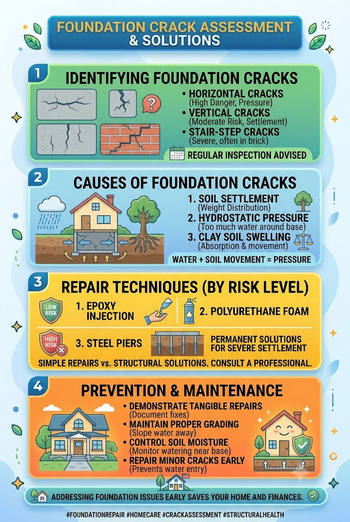 Foundation cracks are one of the most common property concerns
homebuyers encounter. While some cracks are minor and require no
action, others indicate serious structural problems that can be
expensive to repair. Understanding the difference between minor
settling cracks and serious structural damage helps you assess
whether foundation cracks are a concern when buying a home with a VA
loan.
Foundation cracks are one of the most common property concerns
homebuyers encounter. While some cracks are minor and require no
action, others indicate serious structural problems that can be
expensive to repair. Understanding the difference between minor
settling cracks and serious structural damage helps you assess
whether foundation cracks are a concern when buying a home with a VA
loan.
What Are Foundation Cracks and Why Do They Occur?
Foundations settle and shift over time due to soil compression, moisture changes, and temperature fluctuations. Minor cracks are a normal part of foundation aging. However, some cracks indicate structural problems requiring attention.
Common Causes of Foundation Cracks
- Normal settling: Homes naturally settle in the first few years after construction as soil compresses. Settling typically causes hairline cracks that do not indicate structural problems.
- Soil expansion and contraction: Clay soil expands when wet and contracts when dry. This movement causes foundation stress and cracking.
- Poor drainage: Water pooling around the foundation increases soil pressure and causes cracking and leaning.
- Subsidence: Soil sinks due to erosion, mining, or groundwater depletion, causing foundation to shift and crack.
- Tree roots: Large trees near the home extract moisture from soil, causing it to shrink and creating voids under the foundation.
- Structural overloading: Additions or second stories added without proper foundation support can overload and crack foundations.
- Frost heave: In cold climates, soil freezing and thawing cycles cause upward pressure on foundations, creating cracks.
- Earthquake or settlement shift: Earthquakes or sudden ground shifts cause cracking and can indicate serious damage.
Types of Foundation Cracks
Different crack types indicate different levels of concern:
Hairline Cracks
Hairline cracks are very thin cracks (less than 1/8 inch wide) that typically run horizontally or diagonally. Hairline cracks are common in concrete and are usually cosmetic with no structural significance. They do not require repair unless water is entering through the cracks.
Horizontal Cracks
Horizontal cracks running along the length of the foundation wall typically indicate lateral pressure from soil or water buildup. Horizontal cracks are more concerning than hairline cracks because they suggest the wall is being pushed inward. Horizontal cracks wider than 1/8 inch or showing signs of wall movement require evaluation and repair.
Vertical Cracks
Vertical cracks running up and down the foundation wall are typically caused by settling or concrete shrinkage. Single vertical cracks are usually not serious unless very wide or accompanied by other signs of movement. Multiple vertical cracks or those wider than 1/4 inch suggest more significant settling and may require structural evaluation.
Diagonal Cracks
Diagonal cracks at 45-degree angles suggest differential settling - different parts of the foundation are settling at different rates. Diagonal cracks can indicate serious structural concerns, especially if they are wide or accompanied by other cracks.
Stair-Step Cracks
Stair-step cracks follow the mortar joints in brick or block foundations, creating a diagonal stair-stepping pattern. These cracks indicate significant foundation movement and structural stress. Stair-step cracks require professional structural evaluation and usually require repair.
Bowing or Leaning Walls
In addition to cracks, foundation walls may bow inward (concave) or lean outward. Bowing or leaning indicates the wall is being pushed by external pressure (soil, water, or frost) and can be very serious. This requires immediate professional evaluation and structural repair.
Do VA Loans Allow Properties with Foundation Cracks?
Yes. The VA does not prohibit properties with foundation cracks. Minor, non-structural cracks will not prevent loan approval. However, cracks indicating serious structural problems will trigger appraisal deficiencies requiring evaluation and repair before approval.
The key distinction is minor settling cracks versus structural damage. Hairline and minor cracks are acceptable. Cracks indicating significant movement, bowing, or structural compromise require professional assessment and may require repair.
VA Appraisal and Foundation Cracks
VA appraisers evaluate foundation condition during the appraisal inspection. Appraisers look for visible cracks and assess their severity.
What Appraisers Look For
During the appraisal, the appraiser examines accessible foundation areas including basements, crawl spaces, and exterior foundation walls. The appraiser documents:
- Visible cracks, their size, location, and orientation
- Bowing, leaning, or other wall movement
- Water stains or evidence of water seepage (indicating poor drainage or structural issues)
- Gaps between foundation and wall or floor above (indicating settling or movement)
- Cracked or deteriorating mortar in brick or block foundations
- Evidence of past or ongoing foundation repair work
The appraiser will note these observations in the appraisal report with descriptions of crack size, location, and condition.
Appraiser Assessment of Severity
Appraisers are trained to identify structural concerns but are not structural engineers. Appraisers use visual observation to assess whether cracks appear minor or potentially serious. Hairline cracks are typically noted but not flagged as deficiencies. Wider cracks or multiple cracks suggesting movement may be flagged as requiring structural evaluation.
Appraisal Deficiencies for Foundation Cracks
Minor cracks do not typically trigger appraisal deficiencies. However, if the appraiser observes cracks suggesting significant structural concerns - such as wide horizontal cracks, stair-step patterns, bowing walls, or recent foundation movement - the appraisal may require structural evaluation or repair before approval.
A typical appraisal note for concerning cracks might read: "Foundation wall contains diagonal cracks suggesting foundation movement. Recommend structural engineer evaluation before closing."
Foundation Crack Inspection
If you observe foundation cracks during your property walk-through, a professional structural inspection can determine whether they are serious.
Structural Engineer Inspection
A licensed structural engineer can evaluate foundation cracks and determine whether they indicate structural problems. The engineer will:
- Visually inspect the foundation and cracks
- Measure crack width and length
- Assess whether cracks show signs of active movement (fresh paint, exposed concrete, clean edges)
- Look for supporting evidence such as gaps, bowing, or water intrusion
- Provide a written assessment of structural condition
- Recommend repair if needed or confirm cracks are minor/cosmetic
A structural engineer inspection costs $300 to $800 and typically takes 1 to 2 hours. This is a worthwhile investment if foundation cracks are observed during inspection.
When to Request Structural Evaluation
Request a structural engineer inspection if:
- You observe cracks wider than 1/8 inch
- You see multiple cracks or cracks in a pattern (horizontal, diagonal, stair-step)
- You notice bowing or leaning foundation walls
- You see gaps between the foundation and walls or flooring above
- You observe recent foundation repair work or carbon fiber reinforcement straps
- You see water stains or evidence of water seepage through cracks
- You want professional assessment of foundation condition for your own peace of mind
Assessing Crack Severity
Understanding crack characteristics helps you determine whether cracks are minor or require professional assessment:
Crack Width
Crack width is one of the most important indicators of severity:
- Less than 1/8 inch (hairline): Usually cosmetic, typically not concerning
- 1/8 to 1/4 inch: Moderate crack, warrants observation, may require monitoring
- 1/4 to 1/2 inch: Significant crack, requires professional evaluation
- Greater than 1/2 inch: Serious crack, requires structural engineer evaluation and likely repair
Crack Pattern
Single vertical cracks are typically less concerning than multiple cracks or cracks in other orientations. Horizontal, diagonal, or stair-step patterns suggest more serious structural movement.
Signs of Active Movement
Determine whether cracks are old or actively growing:
- Old cracks: Edges are weathered, gray, or filled with dirt/debris. These have been present for months or years.
- Active cracks: Edges are sharp and clean, showing fresh concrete. These have recently opened or are still moving.
- Taped cracks: Paint or tape over cracks indicates the owner has monitored them. Multiple tape lines may indicate ongoing movement.
Water Intrusion
If water is seeping through cracks, this indicates poor drainage and structural concern. Water in the basement or crawl space through cracks requires attention to both drainage and foundation repair.
Foundation Crack Repair Options
If structural evaluation determines that foundation cracks require repair, several options exist:
Crack Sealant or Caulk
For minor cracks (less than 1/8 inch), polyurethane sealant or hydraulic cement can seal cracks to prevent water entry. This is a cosmetic and water-sealing solution, not a structural repair. Cost is $100 to $300 for DIY application or $200 to $500 for professional application.
Epoxy Injection
For cracks up to 1/4 inch wide, epoxy is injected into the crack to bind concrete and restore some structural strength. Epoxy injection costs $200 to $600 per linear foot depending on crack length and depth. This is a more substantial repair than sealant but less invasive than structural repair.
Carbon Fiber Reinforcement
Carbon fiber straps or patches are bonded over cracks on the interior of foundation walls. These reinforce the wall and prevent further cracking. Carbon fiber reinforcement costs $300 to $800 per section depending on size and installation difficulty.
Foundation Piering or Underpinning
If foundation has settled significantly, underpinning (installing support pilings) can lift and stabilize the foundation. This is a major structural repair costing $5,000 to $25,000+ depending on extent. Underpinning is used only when settling is serious and other methods are inadequate.
Drainage Improvement
If cracks result from poor drainage or water intrusion, addressing drainage may prevent further cracking. Improvements include installing gutters, extending downspouts, grading soil away from the foundation, and installing interior or exterior drainage systems. Drainage work costs $1,000 to $10,000 depending on extent.
Professional Foundation Repair
For serious structural issues, specialized foundation repair contractors assess and repair damage. Foundation repair can include multiple methods (sealant, epoxy, piering, underpinning, drainage) and costs vary widely from $1,000 to $30,000+ depending on severity.
What Happens If Foundation Cracks Are Found During Appraisal
If the VA appraiser identifies concerning cracks:
Appraiser Notes Deficiency
The appraiser will document the cracks and may note them as requiring evaluation or repair. The appraisal report will include detailed descriptions and possibly recommendations for structural engineer evaluation.
Appraisal Contingency
If the appraiser identifies serious foundation concerns, the appraisal may condition approval on structural engineer evaluation. The evaluation must confirm that cracks do not indicate serious structural damage or the damage must be repaired before closing.
Structural Engineer Assessment
The seller may be required to hire a structural engineer to evaluate the cracks. The engineer's report will determine whether repair is necessary. If repair is required, the seller must either complete the repair or provide a credit at closing.
Negotiation
If cracks require repair, you can request the seller to repair before closing, ask for a credit to cover repair costs after closing, renegotiate the price, or in severe cases, make the purchase contingent on structural engineer clearance.
Foundation Cracks and Home Insurance
Most homeowner insurance policies do not cover foundation cracks or foundation repair. Cracking is considered a maintenance issue and normal wear. However, if foundation damage results from an insurable event (earthquake, plumbing leak), coverage may apply depending on the policy.
Before purchasing a home with known foundation cracks, contact your insurance provider to understand what coverage applies and whether foundation issues are excluded.
Monitoring Foundation Cracks
If you purchase a home with minor foundation cracks, monitoring can reveal whether they are stable or actively growing:
Visual Monitoring
Periodically inspect cracks to observe whether they appear wider, have new paint or tape over them, or show signs of recent movement. Photographing cracks and dating the photos creates a record of changes over time.
Crack Monitoring Tape
Place tape (painter's tape or specialized crack monitoring tape) across cracks. If the tape tears or separates, it indicates the crack has widened. This simple method shows whether cracks are stable or actively growing.
Professional Re-Evaluation
If cracks appear to be growing or if water begins seeping through cracks, hire a structural engineer for re-evaluation. Early detection of active movement allows you to address problems before they become severe.
Foundation Cracks and Property Value
Foundation cracks can affect property value:
- Minor cracks: Hairline or small cracks typically have minimal impact on value, especially if they are stable.
- Moderate cracks: Cracks requiring monitoring or minor repair may reduce value by 1 to 5 percent depending on location and severity.
- Serious cracks: Cracks indicating significant structural problems can reduce value by 5 to 20 percent or more depending on repair costs.
Document crack condition at purchase with photos and structural engineer assessments. This documentation helps establish baseline condition for future inspection or sale.
Preventing Foundation Cracks
After purchasing a home, proper maintenance reduces foundation crack risk:
Drainage Management
Ensure gutters are clean and downspouts extend 4 to 6 feet away from the foundation. Grade soil away from the foundation so water flows away, not toward it. Proper drainage is the most important factor in preventing foundation problems.
Moisture Control
Keep crawl spaces and basements as dry as possible. Use dehumidifiers if needed. Moisture causes soil expansion and foundation stress.
Tree Management
Do not plant large trees close to the foundation. Existing large trees should be monitored. Remove dead trees and trim branches to prevent root damage and soil moisture extraction.
Avoid Heavy Additions
Major additions or modifications should be designed with proper foundation support. Overloading a foundation with additions can cause new cracking. Hire a structural engineer if planning significant modifications.
Monitor Cracks
Inspect the foundation periodically. If new cracks appear or existing cracks widen, address them promptly before they become serious.
Frequently Asked Questions
Can I get a VA loan if the property has foundation cracks?
Yes, if the cracks are minor and do not indicate serious structural problems. Hairline and small cracks typically do not prevent approval. Cracks suggesting significant structural damage must be evaluated by a structural engineer and may require repair before approval.
What is considered a serious foundation crack?
Cracks wider than 1/4 inch, horizontal or stair-step cracks, cracks showing signs of active movement, or cracks accompanied by bowing or gaps are considered serious and warrant professional evaluation.
Does the VA require structural engineer evaluation of foundation cracks?
No. However, if the VA appraiser observes cracks suggesting structural concerns, the appraisal may require structural engineer evaluation before approval.
How much does structural engineer evaluation cost?
Structural engineer inspections cost $300 to $800. This is a worthwhile investment to determine whether foundation cracks are cosmetic or require repair.
Can I repair foundation cracks myself?
Minor cracks can be sealed with caulk or hydraulic cement for $50 to $200. However, if cracks indicate structural problems, professional repair is necessary. Do not attempt to repair serious foundation cracks without professional guidance.
How much does professional foundation crack repair cost?
Foundation repair costs vary from $500 to $30,000+ depending on the repair method and severity. Minor sealant or epoxy repairs cost $200 to $600. Serious repairs involving piering or underpinning can exceed $20,000.
Can foundation cracks get worse over time?
Yes. If cracks result from ongoing issues (poor drainage, soil movement, tree root extraction), cracks can continue to grow. Addressing underlying causes (drainage, vegetation) prevents worsening.
What if the foundation crack is in the crawl space where I can't see it?
Crawl space inspection is part of the appraisal and structural engineer evaluation. If you have access to the crawl space, inspect it yourself. If not, hire a professional inspector to evaluate foundation condition in inaccessible areas.
Are foundation cracks covered by homeowner insurance?
No. Standard homeowner insurance does not cover foundation cracks or foundation repair. Cracks are considered normal wear and maintenance issues. Only if cracks result from an insurable event (earthquake, covered water damage) might coverage apply.
Should I negotiate with the seller if foundation cracks are found?
Yes. If foundation cracks are discovered during inspection, negotiate with the seller for repairs, credits toward repair costs, or price reduction. The timing of discovery (during inspection contingency) gives you leverage.
Connect With Us
Please share – it really helps