VA Loans and Lead-Based Paint: What You Need to Know
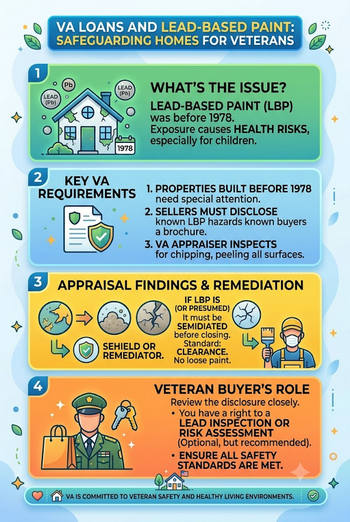 If you're using a VA loan to purchase a home built before 1978,
lead-based paint is part of the conversation. Federal law requires
sellers to disclose any known lead hazards. While the VA does not
require you to remove lead paint as a condition of loan approval,
understanding the disclosure process and how it affects your
appraisal is critical for making an informed decision about your
purchase.
If you're using a VA loan to purchase a home built before 1978,
lead-based paint is part of the conversation. Federal law requires
sellers to disclose any known lead hazards. While the VA does not
require you to remove lead paint as a condition of loan approval,
understanding the disclosure process and how it affects your
appraisal is critical for making an informed decision about your
purchase.
What Is Lead-Based Paint?
Lead-based paint is paint that contains lead, a toxic metal used in household paint for decades. Lead made paint more durable and helped it dry faster. The U.S. Environmental Protection Agency banned lead-based paint for residential use in 1978. Any home built before this year may contain lead paint on interior and exterior surfaces.
Lead poisoning is a serious health concern, especially for children under age 6. Exposure to lead can cause developmental delays, learning disabilities, behavioral problems, and neurological damage. In adults, lead exposure has been linked to high blood pressure, kidney damage, and reproductive issues. Homes with deteriorating lead paint, lead dust on surfaces, or lead-contaminated soil pose the greatest health risk.
Do VA Loans Require Lead Paint Inspection?
No. The VA does not require lead-based paint inspection or testing as a condition for loan approval. There is no blanket VA policy that mandates lead testing, remediation, or removal. Your VA loan can be approved even if lead paint is present in the home.
However, federal law does require something different: the seller must disclose any known lead hazards to the buyer. This is not a VA requirement - it's a federal requirement that applies to all home sales, regardless of loan type. As the buyer, you have the right to request a lead inspection during your inspection contingency period, typically 10 days after offer acceptance.
Federal Lead Disclosure Requirements
The Residential Lead-Based Paint Hazard Disclosure Rule is a federal requirement created by the EPA. It applies to the sale of any residential property built before 1978. The seller is required to disclose known lead hazards, and the buyer is required to be given an opportunity to conduct a lead inspection.
Here's what the seller must do:
- Disclose any known lead-based paint or lead-based paint hazards in the home
- Provide the EPA pamphlet "Protect Your Family from Lead in Your Home"
- Give the buyer 10 days to conduct a lead inspection if desired
- Acknowledge the buyer's right to inspect before signing the purchase agreement
If the seller fails to provide this disclosure, you have legal recourse. The seller can face federal penalties for non-compliance. Always ensure the seller has provided the required lead disclosure before closing.
How Does Lead Paint Affect Your VA Appraisal?
The VA appraiser evaluates the overall condition of the property, including the condition of all paint. The VA's concern is not the presence of lead itself - it's the condition of the paint.
Lead paint that is well-maintained and intact will not cause VA appraisal problems. If the paint is in good condition, even if it contains lead, the property will pass the VA appraisal.
However, if the appraiser observes paint that is peeling, chipping, flaking, or otherwise deteriorating, they may list this as a deficiency. Deteriorated paint is a health hazard regardless of whether it contains lead. The appraiser is concerned about lead dust that can form when paint deteriorates, which is why the condition matters.
If the appraisal notes deteriorating paint, the seller typically has two options: repair the condition of the paint, or the loan approval may be contingent on repairs. This is not specific to lead - any deteriorated paint will fail the VA property condition standards.
Should You Get a Lead Inspection?
A lead inspection is optional, not required. However, it is highly recommended if you are buying a home built before 1978, especially if you have young children, are pregnant, or plan to have children.
A lead inspection costs between $300 and $500. A certified lead inspector collects dust and paint samples from throughout the home and tests them for lead content. Results are typically available within a few days. If lead is found, you know the extent of contamination and can make an informed decision about negotiating repairs or credits with the seller.
If you skip the inspection and later discover lead paint, you may have limited options depending on whether the seller properly disclosed known hazards at the time of purchase.
What If Lead Paint Is Found During Your Inspection?
If your lead inspection reveals lead paint, you have several options:
- Request the seller to remediate: Ask the seller to hire a certified lead contractor to remove or encapsulate the lead paint before closing
- Request a credit at closing: Ask the seller for a credit toward the cost of remediation, which you pay for after closing
- Renegotiate the purchase price: Lower the sale price to account for the cost of addressing lead hazards
- Walk away: Use the lead disclosure as grounds to terminate the purchase if you're not comfortable with the property condition
The inspection contingency period is typically 10 days. If lead is discovered during this window, you have time to negotiate with the seller before the contingency expires.
Lead Paint Remediation Options and Costs
If lead is discovered and needs to be addressed, you have three main options:
Professional Abatement
Professional lead abatement involves complete removal or permanent encapsulation of lead paint by an EPA-certified lead contractor. This is the most effective but most expensive option, typically costing $8,000 to $15,000 or more depending on the size of the home and areas affected.
Abatement contractors use containment procedures, specialized equipment, and disposal protocols to safely handle lead paint. The work must meet EPA and state regulations. If you choose abatement, hire only a licensed and insured contractor certified in lead-safe work practices.
Encapsulation
Encapsulation seals lead paint with a protective coating. This prevents dust from forming and keeps the lead paint intact and inaccessible. Encapsulation is less expensive than removal, typically costing $1,500 to $3,000. However, the sealant must be maintained and monitored for cracks or deterioration over time.
Paint-Over
Painting over lead paint with a quality coat of new paint is the least expensive option, costing $500 to $2,000 depending on the area. This is acceptable only if the existing paint is in good condition and properly prepared. Paint-over does not eliminate the lead hazard - it simply covers it. If the outer paint deteriorates, the underlying lead becomes accessible again.
Do not attempt to remove lead paint yourself. Improper removal can spread lead dust and increase contamination. Professional remediation is required for any removal work.
VA Loans vs. Other Loan Programs: Lead Paint Comparison
How do VA loans handle lead paint compared to other loan programs?
FHA Loans
FHA loans have the same approach as VA loans. Federal disclosure is required, but the FHA does not mandate lead paint removal. The FHA appraiser will note the condition of paint during the appraisal. Deteriorated paint may require repair. Well-maintained lead paint will not prevent FHA approval.
USDA Loans
USDA loans follow the same federal disclosure requirement and have similar appraisal standards. Condition of paint matters, not the presence of lead itself. Lead paint that is in good condition will not affect USDA loan approval.
Conventional Loans
Conventional loans require federal disclosure of known lead hazards. However, conventional lenders may have additional property condition standards or requirements. Some conventional lenders are stricter about deteriorated paint than others. It's worth asking your lender about their specific property standards before making an offer.
All loan programs rely on the federal disclosure law. None require lead testing or blanket remediation. All evaluate property condition during appraisal, and poor paint condition may trigger repair requirements.
Protecting Your Family from Lead Paint
If you purchase a home with lead paint, you can take steps to minimize your family's exposure:
- Keep the home clean: Lead dust accumulates on surfaces. Regular wet cleaning with a damp cloth removes lead dust. Avoid dry sweeping, which spreads lead particles.
- Fix deteriorating paint promptly: Chip or peel paint creates lead dust. Repair any visible damage immediately.
- Use doormats and remove shoes: This prevents tracking lead dust from contaminated soil into the home.
- Wash hands and toys frequently: Lead dust settles on hands and objects, especially toys. Young children put objects in their mouths, so frequent washing is important.
- Test soil and water: Lead can be present in outdoor soil near old homes and in some water supplies. Test if you have a garden or play area.
- Professional cleaning after purchase: Consider hiring a professional lead-safe cleaner to perform initial deep cleaning after closing.
- Get children tested: If you're concerned about exposure, ask your pediatrician about blood lead level testing.
Resources for Lead-Based Paint Information
For more information about lead hazards and protection, consult these authoritative sources:
- EPA Lead Program: epa.gov/lead – Comprehensive information on lead testing, remediation, and health effects
- HUD Lead Safety: hud.gov/program_offices/public_indian_housing/lead – Federal housing and lead resources
- CDC Lead Prevention: cdc.gov/nceh/lead – Health information and prevention strategies
- National Center for Healthy Housing: nchh.org – Research and resources on lead and healthy housing
Frequently Asked Questions
Can lead-based paint prevent VA loan approval?
No. The VA does not deny loans based on the presence of lead paint. However, if paint is deteriorated and fails the VA's property condition standards, the appraisal may require repairs before approval. Once the condition is addressed, the loan can proceed.
What if the seller won't disclose lead paint?
Failure to provide lead disclosure is a federal violation. You have legal recourse. Always work with your real estate agent and attorney to ensure proper disclosure occurs before you sign the purchase agreement.
Can I use my VA loan funding to pay for lead remediation?
No. VA loan funds can be used only for the purchase, construction, or improvement of a primary residence. You cannot use VA funds for repairs or remediation. However, you can negotiate a seller credit at closing, use your own funds, or make repairs a condition of purchase.
How much does a lead inspection cost?
A professional lead inspection typically costs $300 to $500. Some inspectors offer abatement cost estimates after testing, which helps you understand the scope of any remediation needed.
Is lead paint dangerous if it's painted over?
Lead paint that is sealed or painted over poses minimal health risk if the outer paint is intact. However, if the outer paint chips or deteriorates, the underlying lead becomes accessible. Regular maintenance is essential. Professional encapsulation or removal is the safest long-term option.
Do home inspectors test for lead?
Standard home inspections do not include lead testing. You must hire a separate EPA-certified lead inspector. Some general home inspectors may note visible signs of deteriorating paint, but only a lead-certified professional can test and confirm lead presence.
Can I negotiate with the seller about lead paint?
Yes. If your lead inspection reveals lead, you can request repairs, credits, or price reductions. Negotiations typically occur during the inspection contingency period (usually 10 days). This is why getting an inspection early is important.
What if I buy the home and later discover lead paint?
If the seller knowingly withheld disclosure of lead, you may have legal recourse. This is why the disclosure process at closing is critical. Always ensure the seller has provided the required lead disclosure form before signing final closing documents.
Does VA require lead remediation after purchase?
No. The VA has no post-purchase requirements regarding lead paint. Once the loan closes, lead remediation decisions are entirely yours. However, if you have children and lead is present, the CDC recommends taking steps to minimize exposure.
Connect With Us
Please share – it really helps