VA Loans and Mold: What Homebuyers Need to Know
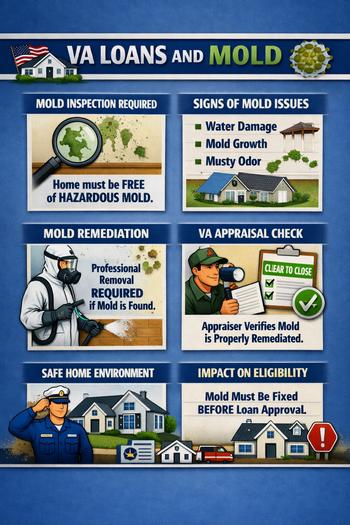 Mold is a serious concern when buying a home with a VA loan. Unlike some environmental hazards that are less visible, mold can be obvious or hidden, and it poses both health risks to your family and structural damage to the property. Understanding VA appraisal standards for mold, knowing what to inspect for, and understanding remediation options helps you make an informed decision about your purchase.
What Is Mold and Why Is It a Problem?
Mold is a fungus that grows in moist environments. Mold thrives in areas with water exposure, high humidity, poor ventilation, or previous water damage. Common areas where mold grows include bathrooms, kitchens, basements, crawl spaces, attics, and around windows and doors where condensation accumulates.
Mold becomes a problem for two reasons: health effects and structural damage.
Health Effects of Mold
Mold releases spores into the air that can cause respiratory problems, allergic reactions, and asthma symptoms in sensitive individuals. Common health effects include:
- Coughing and wheezing
- Nasal congestion and sinusitis
- Respiratory tract infections
- Asthma attacks and worsening of asthma
- Allergic reactions and skin rashes
- Eye irritation
- Immune system suppression in severely immunocompromised individuals
Children, elderly individuals, and people with asthma or compromised immune systems are most at risk from mold exposure. Pregnant women should also avoid mold exposure due to potential risks to fetal development.
Structural Damage from Mold
Mold breaks down organic materials such as wood, drywall, insulation, and fiberglass. Over time, mold can cause structural deterioration and compromise the integrity of walls, floors, and framing. Wood rot from mold weakens structural support and can be expensive to repair. Mold damage can also affect the home's resale value and make it difficult to obtain insurance.
Do VA Loans Allow Properties with Mold?
The VA does not prohibit properties with mold, but the mold must be remediated to meet VA property standards. A property with active mold growth or significant mold contamination will fail the VA appraisal. The mold must be identified, the source of moisture must be eliminated, and the mold must be cleaned or removed before the loan can be approved.
The key distinction is active mold versus past mold. Evidence of past water damage that has been properly cleaned and dried is acceptable. Active mold growth or mold in areas suggesting ongoing moisture problems is not acceptable and must be addressed.
How VA Appraisers Evaluate Mold
VA appraisers are trained to identify signs of mold and moisture problems during the property inspection. However, appraisers are not mold specialists and do not conduct mold testing or extensive mold investigation.
Visual Inspection for Mold
The appraiser looks for visible mold growth during the home inspection. Common areas where appraisers check for mold include bathrooms, kitchens, basements, crawl spaces, attics, and around windows. Visible mold discoloration, dark spots, or fuzzy growth are obvious indicators.
The appraiser will note the location and extent of visible mold in the appraisal report. Even small areas of visible mold will be flagged as a deficiency requiring remediation.
Signs of Moisture and Water Damage
Appraisers look for signs of moisture and water damage that suggest mold risk:
- Water stains on ceilings, walls, or flooring
- Discoloration or staining on materials
- Musty odors (common indicator of hidden mold)
- Peeling paint or wallpaper
- Warped or buckled flooring
- Soft or spongy drywall
- Evidence of previous water intrusion or flooding
- Improper grading or drainage around the foundation
- Clogged or damaged gutters
If the appraiser observes these signs, they will document them and may require mold inspection or remediation before approval.
Appraiser Limitations
Appraisers are not required to conduct mold testing or invasive investigation. They evaluate based on visual observation and ask questions about the home's history. If mold is hidden behind walls, in attics, or in crawl spaces, the appraiser may not detect it unless there are obvious signs such as odors or water damage.
This is why home inspection and mold testing are the buyer's responsibility. A professional home inspector and, if necessary, a mold specialist can identify mold that the appraiser might miss.
Mold Inspection and Testing
Mold inspection and testing are not required by the VA but are strongly recommended, especially if you observe signs of moisture or water damage.
Visual Mold Inspection
A professional home inspector evaluates the property for signs of mold during the standard home inspection. The inspector looks in high-risk areas and notes any visible mold or signs of moisture. A home inspection typically costs $300 to $500 and often includes basic mold inspection.
If the home inspector suspects mold or finds signs of moisture problems, they will recommend a specialized mold inspection.
Professional Mold Inspection
A professional mold inspector is specially trained to identify mold growth and assess the extent of contamination. A mold inspection includes:
- Visual inspection of all accessible areas
- Use of moisture meters to detect moisture in materials
- Inspection of crawl spaces, attics, and hidden areas
- Collection of air samples or surface samples for laboratory testing
- Written report with findings and remediation recommendations
A professional mold inspection costs $400 to $800. If testing is included (air or surface samples sent to a lab), costs may reach $800 to $1,200.
Mold Testing
Mold testing involves collecting air or surface samples and sending them to a laboratory for analysis. Air testing measures spore concentration in the home. Surface testing identifies the type of mold present.
Testing is useful if you want to confirm mold presence or identify the type of mold. However, testing is not always necessary for remediation - visible mold should be cleaned regardless of the type. Testing adds $300 to $500 to the inspection cost.
When to Get a Mold Inspection
Request a mold inspection if:
- You observe visible mold growth
- You notice musty odors in the home
- You see signs of water damage or staining
- The property has a history of flooding or water intrusion
- You see evidence of moisture problems (peeling paint, warped flooring)
- The property has been vacant or poorly maintained
- The home has a basement or crawl space with moisture concerns
- Someone in your household has asthma, allergies, or immune issues
A mold inspection during your inspection contingency period (typically 10 days) gives you time to negotiate or cancel if significant mold is discovered.
What Happens If Mold Is Found?
If mold is discovered during your inspection or the VA appraisal, you have several options.
Small Areas of Mold
Small areas of mold (less than 10 square feet) can typically be cleaned by a professional mold remediation company. The remediation process involves:
- Identifying and eliminating the moisture source
- Containing the contaminated area to prevent spore spread
- Cleaning or removing affected materials
- Treating surfaces with antifungal solution
- Drying the area thoroughly
- Restoring or replacing affected materials
Small mold remediation typically costs $500 to $2,000 depending on location and extent. You can request the seller to remediate small mold areas before closing or ask for a credit to cover remediation costs.
Extensive Mold Contamination
Extensive mold (more than 10 square feet or mold in multiple areas) indicates more serious moisture problems. Remediation becomes more complex and expensive. The moisture source must be identified and permanently eliminated, or mold will return.
Extensive remediation typically costs $2,000 to $6,000 or more depending on the extent and underlying cause. If the moisture problem is structural (foundation leaks, roof leaks, plumbing issues), the underlying problem must also be repaired.
Options include requesting the seller to remediate, asking for a credit at closing, renegotiating the price, or walking away from the purchase.
Mold from Water Damage
If mold resulted from recent water damage (flooding, burst pipe, roof leak), the source must be identified and repaired. Cleaning the mold alone will not solve the problem if the moisture source continues.
Remediation includes fixing the water source and cleaning the mold. This may be more expensive than mold remediation alone. For example, mold from a roof leak requires roof repair before mold cleanup.
Hidden Mold
If mold is discovered behind walls, in crawl spaces, or in other hidden areas, assessment becomes more complex. Determining the extent of hidden mold may require removing drywall or other materials, which increases cost.
Hidden mold typically indicates a significant moisture problem that must be identified and corrected. The source of moisture must be eliminated, contaminated materials must be removed, and the area must be restored.
VA Appraisal and Mold: What to Expect
Here's what happens when the VA appraisal addresses mold concerns:
Appraiser Notes Visible Mold
If the appraiser observes visible mold during the inspection, they will document it in the appraisal report. Even small amounts of visible mold will be noted as a deficiency that must be addressed before loan approval.
Appraisal Contingencies for Mold
If visible mold is noted, your loan approval will be contingent on remediation. The seller is responsible for addressing the issue unless you agree otherwise. The seller can:
- Hire a professional mold remediation company and have work completed before closing
- Provide documentation from a licensed remediation contractor showing the mold has been removed
- Obtain a post-remediation mold inspection confirming successful remediation
Once the seller provides proof of remediation, the appraisal contingency is removed and the loan can proceed.
Hidden or Suspected Mold
If the appraiser suspects hidden mold based on moisture signs or musty odors but cannot confirm it, they may require a professional mold inspection before approval. The appraiser will note this requirement in the appraisal report.
Post-Remediation Verification
After mold remediation, the seller may be required to provide a post-remediation verification report from the mold remediation company or a follow-up mold inspection confirming that remediation was successful and mold is no longer present.
Mold Remediation Cost Ranges
Mold remediation costs vary widely based on extent, location, and underlying causes:
- Small surface mold (less than 10 sq ft): $500-$2,000
- Bathroom or single-room mold: $1,000-$3,000
- Basement or crawl space mold: $2,000-$5,000
- Mold from roof leak (includes roof repair): $2,000-$8,000+
- Mold from foundation leak (includes foundation repair): $3,000-$10,000+
- Extensive multi-area mold: $5,000-$15,000+
Costs are higher if the underlying moisture source requires structural repair (roof, foundation, plumbing). Always obtain multiple quotes from licensed mold remediation contractors.
Common Mold Locations in Homes
Mold commonly appears in these locations:
Bathrooms
Bathrooms are high-moisture environments. Mold grows on tile, grout, caulk, shower surrounds, and ventilation ducts. Poor ventilation or lack of exhaust fans increases mold risk. Bathroom mold is common and usually small in extent, but can spread if ventilation problems persist.
Kitchens
Mold grows around sinks, under cabinets, and in areas with plumbing leaks. High-moisture cooking areas also develop mold if ventilation is inadequate.
Basements
Basement mold is common due to moisture from groundwater seepage, condensation, or poor drainage. Basements with past flooding are at high risk. Mold can be extensive in basements with chronic moisture problems.
Crawl Spaces
Crawl spaces accumulate moisture from the ground and are prone to mold growth if not properly ventilated or if the vapor barrier is damaged. Crawl space mold is often hidden and may not be visible during a basic appraisal.
Attics
Attic mold results from roof leaks, poor ventilation, or condensation from inadequate insulation. Attic mold can spread throughout the attic if the moisture source is not corrected.
Around Windows and Doors
Condensation on windows and poor weather sealing lead to mold growth around window frames and sills. Water intrusion around door frames also causes mold.
HVAC Systems and Ductwork
Mold grows inside air conditioning systems and ductwork if moisture accumulates. This spreads mold spores throughout the home via the air system. HVAC mold requires professional cleaning and may indicate moisture problems in the system.
Preventing Mold After Purchase
Once you purchase a home, proper maintenance prevents mold from developing:
Control Moisture
The key to preventing mold is controlling moisture. Use exhaust fans in bathrooms and kitchens during and after moisture-generating activities. Fix leaks promptly. Ensure gutters and downspouts direct water away from the foundation. Maintain proper grading so water slopes away from the home.
Ventilation
Ensure bathrooms, kitchens, and laundry areas have adequate ventilation. Use exhaust fans and vent them to the outside, not into attics or crawl spaces. Keep air circulating throughout the home to reduce humidity.
Humidity Control
Keep indoor humidity below 50 percent. Use dehumidifiers in basements or damp areas. Air conditioning helps control humidity in warm climates.
Insulation and Condensation
Proper insulation prevents condensation on windows and cold surfaces. Ensure attics are adequately insulated and ventilated. Install vapor barriers in basements and crawl spaces.
Regular Inspections
Inspect the home regularly for signs of moisture or mold. Check basements, crawl spaces, and attics for dampness or musty odors. Address any water intrusion immediately.
Immediate Response to Water Damage
If your home suffers water damage from a leak, burst pipe, or flooding, address it immediately. Dry affected areas within 24 to 48 hours to prevent mold growth. Remove saturated materials if necessary. Use fans and dehumidifiers to dry thoroughly.
Mold vs. Mildew: What's the Difference?
Mold and mildew are both fungi, but they are different:
Mildew is a surface-level fungus that appears as white or grayish powder on surfaces. It is commonly found on tile, shower walls, and fabrics in damp areas. Mildew is easier to clean and does not penetrate deep into materials. Mildew can usually be cleaned with bleach or mildew-killing solutions.
Mold is more serious. Mold grows deeper into materials, breaks down organic materials, and can cause structural damage. Mold is usually darker (black, brown, or green) and fuzzy in appearance. Mold requires professional remediation if extensive.
Both mildew and mold indicate moisture problems that should be corrected. However, only mold will typically trigger VA appraisal deficiencies, particularly if extensive or in structural areas.
Frequently Asked Questions
Can I get a VA loan if the property has mold?
The property can have a history of mold if it has been properly remediated. Active mold or unaddressed mold will fail the VA appraisal. The mold must be cleaned, the moisture source must be eliminated, and documentation of successful remediation must be provided before loan approval.
Does the VA require mold testing?
No. The VA appraisal does not require mold testing. However, if visible mold is observed or suspected, the appraiser may require professional mold inspection and testing before approval.
Who is responsible for mold remediation before closing?
The seller is responsible for addressing mold noted during the appraisal unless otherwise negotiated. The seller must remediate mold and provide documentation of successful remediation before closing.
How much does mold remediation cost?
Mold remediation costs $500 to $15,000+ depending on extent, location, and whether underlying structural issues (roof leaks, foundation leaks) must also be repaired. Obtain multiple quotes from licensed contractors.
What if mold is discovered after I close on the home?
Mold discovered after closing is typically your responsibility unless the seller failed to disclose known mold. Document the mold, hire a professional for remediation, and consult with a real estate attorney about your legal options if mold was present but not disclosed.
Connect With Us
Please share – it really helps