VA Loans and Septic Systems: What You Need to Know
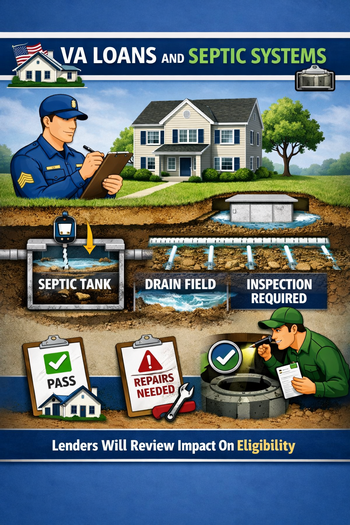 If you're buying a rural home with a VA loan, the property likely
has a septic system instead of connecting to municipal sewer. Septic
systems are common in rural and semi-rural areas where public sewer
infrastructure is not available. The VA has specific requirements
for septic systems, and understanding these standards helps you know
what to expect during your appraisal and what inspection and testing
you should conduct.
If you're buying a rural home with a VA loan, the property likely
has a septic system instead of connecting to municipal sewer. Septic
systems are common in rural and semi-rural areas where public sewer
infrastructure is not available. The VA has specific requirements
for septic systems, and understanding these standards helps you know
what to expect during your appraisal and what inspection and testing
you should conduct.
What Is a Septic System?
A septic system is a private wastewater treatment system that collects, treats, and disposes of household sewage on-site. Instead of connecting to a municipal sewer line, your home's plumbing drains into a septic tank buried in the yard. The tank holds wastewater, where solids settle to the bottom and liquids flow out to a drain field (also called a leach field or absorption field). The soil in the drain field naturally filters and treats the wastewater before it percolates into the groundwater.
Septic systems are designed to handle normal household wastewater from toilets, sinks, showers, and laundry. They are not designed to handle certain materials like grease, feminine products, diapers, or chemicals, which can damage the system.
Do VA Loans Allow Properties with Septic Systems?
Yes. The VA does not prohibit properties with septic systems. You can purchase a property with a septic system using a VA loan. However, the septic system must be functional and meet state and local health regulations. A failing or non-compliant septic system will fail the VA appraisal and must be repaired or replaced before loan approval.
Most states have septic system codes and regulations that dictate septic tank size, drain field design, distance from wells and property lines, and soil requirements. The VA relies on these existing state and local standards rather than creating its own septic requirements.
VA Appraisal Standards for Septic Systems
During the VA appraisal, the appraiser evaluates the septic system to ensure it is functional and adequate for the property. The appraiser is looking for evidence that the system can safely treat the home's wastewater without creating a health or environmental hazard.
System Functionality
The septic system must be in working order and capable of treating household wastewater. A system that is failing, backing up into the home, or creating odors indicates a problem. The appraiser will ask about system performance and may note visible signs of failure such as soggy areas in the yard, sewage odors, or plumbing backups.
If the system is not functioning properly at the time of appraisal, it must be repaired before closing. The seller is responsible for making repairs unless otherwise negotiated.
System Age and Maintenance
The appraiser will note the age of the septic system if known. Older, well-maintained systems are acceptable. The appraiser will ask about maintenance history and frequency of tank pumping. A system that has not been pumped in many years may be at risk of failure and may require pumping before closing.
Septic systems typically require pumping every 3 to 5 years, depending on system size and household usage. If maintenance records show regular pumping, the system is likely functioning properly. If no maintenance records are available, the buyer should request that the tank be pumped and inspected before closing.
System Size and Adequacy
The septic system must be sized appropriately for the home. A system that is undersized for the number of bedrooms or occupants may fail under normal use. The appraiser will note the system size. (tank capacity and drain field size) and whether it appears adequate for the home's needs.
If the home has been expanded or the number of occupants has significantly increased since the system was installed, the system may no longer be adequate. This will be noted in the appraisal.
Drain Field Condition
The drain field must be in good condition and not saturated with water. Soggy or wet areas in the yard may indicate drain field failure. The appraiser will look for these signs during the property inspection. If visible drain field problems exist, the system may need replacement, which is expensive.
The appraiser will ask about the location of the drain field and whether it has adequate access for maintenance and future replacement. A drain field located under a driveway or building may be difficult or impossible to replace if it fails.
Well and Septic Distance
If the property has both a well and septic system, they must be properly separated per state regulations. Most states require wells to be at least 50 feet away from septic tanks and 100 feet away from drain fields to prevent contamination. The appraiser will verify this separation if both systems are present.
If the well and septic are too close together, this is a significant problem that can contaminate the well water with bacteria and nitrates. This must be corrected before loan approval.
Septic System Inspection and Pumping
The VA appraisal does not include septic system inspection or pumping. However, a septic inspection is strongly recommended and is often required by the home inspection process or by the state.
Septic Inspection
A septic system inspection is conducted by a licensed septic contractor or inspector. The inspector evaluates the tank, drain field, and overall system condition. An inspection typically costs $300 to $500.
During an inspection, the contractor will:
- Locate and uncover the septic tank lid
- Visually inspect the tank interior for solids level and condition
- Check for cracks, leaks, or deterioration
- Evaluate drain field condition for signs of saturation or failure
- Verify proper system sizing for the home
- Note any maintenance issues or concerns
- Provide a written report with recommendations
A septic inspection should occur during your home inspection contingency period, typically within 10 days of offer acceptance. This timing gives you the opportunity to renegotiate or cancel if the inspection reveals significant problems.
Septic Tank Pumping
Tank pumping removes accumulated solids from the septic tank and prevents overflow into the drain field. Pumping should be conducted every 3 to 5 years for typical household use, though frequency depends on tank size and number of occupants.
Pumping costs between $150 and $300 per service. If maintenance records show the tank has not been pumped recently, you can request the seller to have it pumped before closing. A pre-closing pump and inspection can reveal whether the system is functioning properly.
Septic Dye Test
A dye test is a simple diagnostic that can reveal whether effluent is reaching the surface or contaminating nearby wells. A dye is flushed through the system, and the inspector watches for colored water appearing in the yard, indicating drain field problems. A dye test costs $50 to $100 and can quickly identify failing drain fields.
What Happens If Septic System Problems Are Found?
If a septic inspection reveals problems, you have several options depending on the severity and type of issue.
Preventive Maintenance Needed
If the inspection shows the system is functioning but needs routine maintenance (tank pumping, filter cleaning), the seller can address this before closing at minimal cost ($150-$300). You can request the seller to pump and clean the system as a condition of purchase.
Minor Repairs
Minor repairs such as replacing a baffle, fixing a crack in the tank, or repairing an access lid cost $500 to $1,500. You can request the seller to complete these repairs before closing or ask for a credit at closing.
Significant System Failure
If the septic system is significantly failing and requires replacement, costs are substantial. Septic system replacement typically costs $3,000 to $10,000 or more depending on soil conditions, system complexity, and local labor costs. Options include:
- Request seller replacement: Ask the seller to replace the system before closing
- Request credit at closing: Negotiate a credit to cover replacement costs, which you pay for after purchase
- Renegotiate price: Lower the purchase price to account for replacement costs
- Walk away: If replacement costs are prohibitive, you can cancel the purchase
System Pumping and Inspection
Even if the system is functioning, pumping and inspection before closing ($250-$400) is recommended as a precaution. This ensures you start your ownership with a clean, well-maintained system.
VA Appraisal and Septic Systems: What to Expect
Here's what typically happens during the VA appraisal process when a property has a septic system:
Appraiser Observation
The appraiser will visually inspect the septic system during the property appraisal. They will note the tank location, visible drain field area, any signs of system problems (odors, soggy ground, backed-up plumbing), and ask the seller about maintenance history.
Appraisal Report Notes
If the system appears functional with no obvious problems, the appraiser will note "septic system" and the tank capacity (if visible or reported). If problems are observed or reported, the appraiser will note these as deficiencies. Common deficiency notes include:
- "Septic system not pumped in X years - recommend pumping before occupancy"
- "Evidence of system failure; requires evaluation and repair"
- "Drain field appears saturated; system may be failing"
- "System may be undersized for current use; evaluate adequacy"
- "Well and septic too close; potential contamination risk"
Appraisal Contingencies
If the appraisal notes septic system deficiencies, your loan approval may be contingent on repairs or evaluation. The seller typically has the opportunity to address the issue. Options depend on the severity:
- For maintenance issues: Pump and inspect before closing
- For minor repairs: Complete repairs and provide documentation
- For significant failure: Obtain a repair estimate or replace system before closing
Once the seller addresses the issue and provides documentation or proof of repair, the appraisal contingency can be removed and the loan can proceed.
Septic Systems and Well Water Contamination Risk
Properties with both septic systems and wells face potential contamination risk if the systems are not properly separated. Bacteria and nitrates from a failing septic system can leach into groundwater and contaminate a well.
State regulations typically require:
- Minimum 50 feet between well and septic tank
- Minimum 100 feet between well and drain field
- Well uphill and upgradient from septic system
If a property has both systems, the VA appraisal will verify this separation. If the systems are too close, this must be corrected. Options include relocating one system or installing additional treatment before the well. These corrections are expensive and must be completed before loan approval.
If you discover well water contamination from a septic system, immediate action is required. Contact your state health department and cease using the well water until the contamination source is remediated.
Septic System Maintenance After Purchase
Once you purchase a home with a septic system, proper maintenance is essential to extend system life and avoid costly repairs. Key maintenance practices include:
Regular Pumping
Pump your septic tank every 3 to 5 years. The frequency depends on tank size and household use. Homes with garbage disposals, frequent laundry, or more occupants may need pumping more frequently. Keep records of all pumping and maintenance.
Water Conservation
Excess water overloads the system. Fix leaks, use water-efficient fixtures, and spread laundry use throughout the week rather than doing multiple loads in one day.
Proper Use
Never flush non-biodegradable items such as feminine products, diapers, paper towels, or cotton swabs. Avoid pouring grease, oils, or chemicals down the drain. Limit garbage disposal use. These items damage septic systems and can cause expensive repairs.
Protect the Drain Field
Do not drive vehicles or place heavy equipment over the drain field. Do not plant trees or shrubs with deep roots near the drain field. Do not direct roof gutters or sump pump discharge into the drain field. These practices can damage the system.
Annual Inspection
Have the system inspected annually, especially if you notice any signs of problems (slow drains, backups, odors, or wet areas in the yard). Early detection of problems prevents major failures and expensive repairs.
System Monitoring
Pay attention to how your system is functioning. Note any changes in drain speed, unusual odors, or wet areas in the yard. These can indicate developing problems that need attention.
Septic System Replacement and Costs
Septic system replacement becomes necessary when the system fails and cannot be economically repaired. Replacement involves:
System Design and Permitting
A new system design must comply with current state and local regulations. A soil evaluation determines suitable locations for the new drain field. Permits must be obtained before installation. This process costs $500 to $1,500.
Tank Installation
A new septic tank is installed, typically 1,000 to 1,500 gallons for a single-family home. Installation costs $1,500 to $3,000.
Drain Field Installation
A new drain field is constructed, typically 1,000 to 2,000 square feet depending on soil conditions and system design. Drain field installation costs $2,000 to $6,000.
Total Replacement Cost
Complete septic system replacement typically costs $4,000 to $10,000, with some systems exceeding $15,000 in difficult soil conditions or remote locations. This is why septic system condition is important when purchasing a property.
Septic vs. Municipal Sewer: VA Loan Comparison
How do properties with septic systems compare to properties with municipal sewer in VA loans?
Eligibility
Both septic and municipal sewer properties are eligible for VA loans. Septic systems do not disqualify a property, but the system must meet VA standards.
Appraisal Process
Properties with municipal sewer typically have few appraisal concerns related to wastewater. The appraiser notes the sewer connection and typically does not investigate further. Septic properties require more detailed evaluation because the system is on-site and homeowner-maintained.
Inspection Requirements
Septic system inspection is the buyer's responsibility. Municipal sewer properties typically do not require wastewater system inspection.
Repair Risks
Septic system failure is the homeowner's responsibility and can be expensive. Municipal sewer maintenance is handled by the city or county. However, municipal properties may have sewer line issues that are also the homeowner's responsibility.
Long-Term Costs
Septic owners must budget for regular pumping ($150-$300 per occurrence) and eventual system replacement ($4,000-$10,000). Municipal sewer owners pay a sewer bill as part of their property taxes or utilities but have no maintenance responsibility.
Environmental Considerations
Well-maintained septic systems are environmentally sound and treat wastewater effectively. Failing systems can contaminate groundwater and nearby wells. Municipal sewer systems centralize treatment but require significant infrastructure investment.
Red Flags: When to Be Cautious About a Septic System
Be cautious and request deeper investigation if you encounter these red flags:
- Odors: Sewage odors indicate a failing or inadequate system
- Wet areas in yard: Soggy ground in or near the drain field indicates system failure
- Slow drains: Multiple slow drains suggest tank backup or failure
- No maintenance records: Lack of pumping history is concerning and warrants inspection
- System age unknown: If the system age is unknown and no records exist, assume age and request inspection
- Recent system failure: If the system was recently pumped or repaired for failure, be cautious about system adequacy
- Well too close to septic: Less than required separation distance indicates contamination risk
- System under driveway or building: A drain field that cannot be accessed for repair or replacement is a long-term problem
- Home expanded since system installed: An old system may not be adequate for current use
- Garbage disposal present: Heavy garbage disposal use can overload and damage septic systems
If you encounter multiple red flags, consider requesting that the septic system be replaced before closing or build replacement costs into your negotiation.
Frequently Asked Questions
Can I get a VA loan with a septic system?
Yes. The VA allows properties with septic systems. The septic system must be functional and meet state regulations. If the system is functioning properly, your VA loan will be approved.
Does the VA require a septic inspection?
No. The VA appraisal does not include a septic system inspection. However, inspection is strongly recommended during your home inspection period. A professional septic inspection can identify problems early.
Who is responsible for septic system repair before closing?
The seller is responsible for septic repair unless otherwise negotiated. If the appraisal notes septic problems, the seller typically must repair or address the issue before closing.
How often should a septic tank be pumped?
Most septic tanks should be pumped every 3 to 5 years. Frequency depends on tank size and household use. Homes with garbage disposals or heavy water use may need pumping more frequently.
What does septic pumping cost?
Septic tank pumping typically costs $150 to $300. Some regions charge more. Request quotes from local contractors.
Connect With Us
Please share – it really helps