VA Loans and Termites: What Homebuyers Need to Know
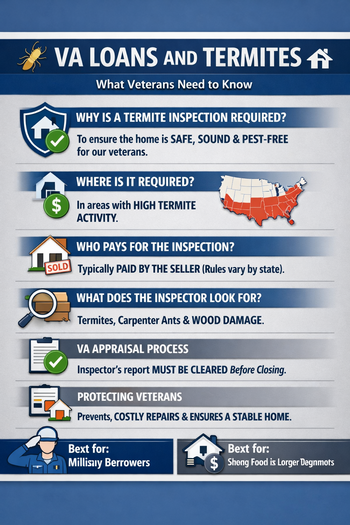 Termites are wood-eating insects that can cause serious structural damage to homes. Unlike some environmental hazards that are invisible or require specialized testing, termite damage is often visible during property inspection. If you are buying a home with a VA loan, understanding termite risk, knowing how to identify termite damage, and understanding treatment and repair options helps protect your investment.
What Are Termites and Why Are They a Problem?
Termites are social insects that live in colonies and feed on cellulose found in wood and wood products. There are three main types of termites in the United States: subterranean termites, drywood termites, and dampwood termites. Subterranean termites are the most destructive and most common.
Termites cause damage by eating wood from the inside out, weakening structural integrity. A termite colony can consume wood at a surprisingly fast rate. Over months or years, termite damage can compromise a home's structural integrity, making it unsafe to occupy. Termite damage can be extremely expensive to repair, ranging from thousands to tens of thousands of dollars depending on the extent.
The total annual cost of termite damage in the United States exceeds $5 billion. This makes termite inspection and prevention one of the most important concerns for homebuyers.
Do VA Loans Allow Properties with Termite Damage?
Yes, the VA does not prohibit the purchase of homes with termite damage. However, the extent of termite damage must be evaluated. Active termite infestation or extensive structural damage from termites will fail the VA appraisal. The termite problem must be treated, and any significant structural damage repaired or assessed before loan approval.
The key distinction is past termite damage that has been treated versus active infestation or untreated damage. Evidence of past termite activity that has been professionally treated and repaired is acceptable. Active termites or damage indicating an ongoing infestation is unacceptable and must be addressed.
VA Appraisal and Termite Inspection
VA appraisers evaluate the property for signs of termite damage during the appraisal inspection. Appraisers look for visible evidence of termites, termite damage, or past termite treatment.
What Appraisers Look For
During the appraisal, the VA appraiser evaluates structural components for signs of termite activity:
- Visible mud tubes on foundation walls or crawl space joists (subterranean termite trails)
- Wood that is hollowed out or damaged (evidence of termite feeding)
- Sagging or soft wood components (structural weakening from termite damage)
- Frass (termite droppings) that appears as fine sawdust
- Swarmers (winged termites) visible in or around the home (sign of active colony)
- Evidence of past termite treatment or termite reports
The appraiser will note any signs of termite activity in the appraisal report. Even past termite activity will be documented because it indicates the property has been vulnerable to infestation.
Appraiser Limitations
VA appraisers are not termite specialists and do not conduct invasive termite inspections. They evaluate based on visual observation of easily accessible areas. Hidden termite damage inside walls, under flooring, or in inaccessible areas may not be detected during the appraisal. This is why professional termite inspection is critical.
Appraisal Deficiencies for Termites
If the appraiser observes signs of active termite infestation or significant termite damage, these will be noted as deficiencies requiring treatment or repair before loan approval. The appraisal may also note that a professional termite inspection is required.
If no visible termite signs are observed but the appraiser suspects past activity or notes the property is in a high-termite area, the appraiser may recommend termite inspection as a condition of appraisal completion.
Termite Inspection
Termite inspection is not required by the VA but is highly recommended, especially in areas with high termite activity. A professional termite inspection identifies active infestation, past damage, and vulnerability to future infestation.
Professional Termite Inspection
A licensed pest control professional or termite inspector conducts a comprehensive inspection of the property, including:
- Visual inspection of all accessible structural components (foundation, framing, joists, beams)
- Crawl space and attic inspection for termite activity
- Inspection of wooden porches, decks, and exterior structures
- Identification of conducive conditions (moisture, soil contact, wood-to-earth contact)
- Assessment of past termite treatment or damage
- Written report with findings, recommendations, and estimated treatment costs if needed
A professional termite inspection costs $75 to $150 and typically takes 30 minutes to 1 hour. This is a very affordable investment that can identify serious structural problems.
When to Get a Termite Inspection
Request a professional termite inspection if:
- The property is in an area with high termite activity (your pest control professional can advise)
- The home is older with accessible wood framing (older homes are at higher risk)
- You observe any signs of termite activity during your visit
- The property has a crawl space (termites are drawn to ground-adjacent wood)
- The property has visible moisture issues (moisture attracts termites)
- You want comprehensive peace of mind before purchase
A termite inspection during your inspection contingency period gives you time to request treatment or repair if termites are found.
Inspection Report Details
A professional termite inspection report will clearly indicate:
- Active termite infestation present or not present
- Evidence of past termite activity
- Extent of termite damage if present
- Structural components affected
- Conducive conditions (factors that attract or support termites)
- Treatment recommendations and estimated costs
Types of Termites and Damage Patterns
Different termite species cause different damage patterns:
Subterranean Termites
Subterranean termites are the most common and destructive. They live in soil colonies and build mud tubes to travel from soil to wood. These termites create galleries (tunnels) inside wood while leaving outer shells intact. Damage appears as hollow wood with thin outer walls. Subterranean termite damage can be extensive and difficult to detect because the outer wood appears intact.
Drywood Termites
Drywood termites nest inside wood and do not require soil contact. They create chambers within the wood and can cause damage throughout wood structures. Drywood termite damage appears as galleries with clean, smooth walls. Frass (termite droppings) falls from entry holes, appearing as small piles of fine sawdust.
Dampwood Termites
Dampwood termites are larger than other termites and prefer moist wood. They are found primarily in the southern United States. Dampwood termite damage is typically less extensive than subterranean or drywood damage but indicates moisture problems that require correction.
Signs of Termite Activity
Understanding visible signs of termite activity helps you identify problems during your property walk-through:
Mud Tubes
Subterranean termites build mud tubes from soil up the foundation to reach wood above ground. These tubes range from pencil-sized to larger and are made of mud and termite secretions. Mud tubes indicate active termite travel and are a clear sign of infestation.
Hollow Wood
Tap or press suspected wood with a screwdriver or hammer. Termite-damaged wood sounds hollow and may collapse under pressure. Solid wood sounds solid and resists pressure. This simple test can reveal hidden termite damage.
Frass
Drywood termite frass looks like fine sawdust and accumulates below entry holes or damaged areas. Frass piles under wooden beams, in attics, or on floors indicate active drywood termite activity.
Swarmers
Winged termites (swarmers) appear when termite colonies are mature and producing reproductive termites. Swarmers typically emerge in spring and are attracted to light. Finding swarmers in or around the home indicates an active, established colony.
Soft or Sagging Wood
Structural wood damaged by termites becomes weak and may sag, crack, or splinter. Floors may become uneven, joists may sag, and walls may buckle if termite damage is extensive.
Dead Termites
Finding dead termite wings or bodies, especially in large numbers, suggests termite activity. Wings are often found near windows or light sources where swarmers congregate before dying.
Termite Treatment Options
If termite infestation is identified, treatment options depend on the type of termite, extent of infestation, and location.
Liquid Barrier Treatment
A liquid termiticide is applied as a chemical barrier around the foundation perimeter. This prevents subterranean termites from entering the home. Treatment costs $400 to $1,200 and typically lasts 5 to 7 years.
Bait Station Systems
Bait stations containing termiticide are placed in the soil around the foundation or inside the structure. Termites consume the poison and carry it back to the colony, eventually eliminating the colony. Bait systems cost $300 to $800 and require ongoing monitoring and maintenance.
Spot Treatments
For localized termite activity, spot treatments apply termiticide directly to affected wood areas. Spot treatments cost $200 to $600 and are useful for treating specific infestations without whole-house treatment.
Fumigation
For severe drywood termite infestation, whole-house fumigation may be necessary. The entire home is sealed and treated with gas to penetrate all infested wood. Fumigation costs $1,500 to $4,000, requires temporary relocation, and is a last resort for severe infestations.
Heat Treatment
Heat treatment raises home temperature to levels lethal to termites. This method kills termites throughout the home without chemicals. Heat treatment costs $1,000 to $3,000 and is effective for localized or whole-house treatment.
Structural Damage Assessment and Repair
If termite damage is present, the extent of damage must be assessed. Minimal damage may require only treatment. Significant damage requires repair to restore structural integrity.
Structural Assessment
A structural engineer or pest control professional with expertise can assess termite damage severity. Assessment determines whether wood components can be treated and left in place or must be replaced. Assessment costs $300 to $500.
Wood Repair or Replacement
Damaged wood components must be replaced if structural integrity is compromised. Replacement costs depend on extent:
- Minor damage (small areas, non-structural): $500-$2,000
- Moderate damage (structural components, localized): $2,000-$5,000
- Extensive damage (major framing, multiple areas): $5,000-$15,000+
Negotiating Repair Costs
If termite damage is discovered during inspection, you can request the seller to treat the infestation and repair damage, ask for a credit to cover treatment and repair costs, renegotiate the price, or make the purchase contingent on termite-free status and damage repair.
The timing of discovery (during inspection contingency) gives you leverage to negotiate. Many sellers prefer to address termite issues before closing rather than risk the deal failing.
VA Appraisal and Termite Issues: What to Expect
Here's what typically happens when a VA appraisal identifies termite concerns:
Appraiser Notes Signs of Termites
If the appraiser observes mud tubes, hollow wood, or other signs of termite activity, these will be documented in the appraisal report as deficiencies.
Appraisal Contingency for Termites
If termite signs are noted, loan approval may be contingent on:
- Professional termite inspection and written clearance showing no active infestation
- Termite treatment by a licensed pest control professional
- Repair of significant structural damage
- Post-treatment verification showing successful treatment
Seller Responsibility
The seller is typically responsible for addressing termite issues noted in the appraisal. The seller can hire a pest control company to treat the property, provide a clearance letter confirming the absence of active termites, and arrange any necessary structural repairs.
Repair Documentation
Once the seller completes treatment and repair, documentation (treatment receipt, pest control clearance letter, structural repair receipts) must be provided to remove the appraisal contingency.
Termite Prevention and Post-Purchase Protection
Once you purchase a home, proper maintenance and prevention reduce termite risk:
Regular Inspections
Have your home inspected annually by a pest control professional, especially if you live in a termite-prone area. Early detection of termite activity prevents extensive damage.
Eliminate Conducive Conditions
Termites are attracted to moisture and wood-to-soil contact. To prevent infestation:
- Fix moisture problems: Repair leaks, ensure proper grading and drainage, maintain gutters and downspouts
- Reduce wood-soil contact: Keep wood structures (decks, siding, mulch) away from soil contact when possible
- Maintain crawl space ventilation: Ensure crawl spaces are well-ventilated to reduce moisture
- Remove wood debris: Clear wood scraps, dead trees, and wood mulch from around the home
- Seal entry points: Caulk cracks in foundation and siding to prevent termite entry
Termite Monitoring Systems
Consider installing termite monitoring stations around the foundation. These stations contain bait that attracts termites, allowing early detection of activity before damage occurs. Monitoring costs $300 to $800 annually.
Preventive Treatment
Some homeowners choose preventive termite treatment even without active infestation. Preventive liquid barriers or bait stations create a protective barrier. Cost is similar to that of treatment for active infestation ($400-$1,200).
Maintain Treatment Barriers
If termite treatment has been applied, ensure reapplication occurs on schedule (typically every 5 to 7 years for liquid barriers). Expired treatments leave the home vulnerable to infestation.
Termite Bonds and Warranties
Some pest control companies offer termite bonds or warranties that cover termite treatment and retreatment over a period of time. A termite bond typically:
- Provides initial termite treatment
- Guarantees retreatment if termites return during the bond period
- Covers damage caused by termites during the bond period (in some cases)
- Costs $300 to $600 annually
- Lasts 1 year (renewable annually) or longer depending on terms
A termite bond provides peace of mind and protection against reinfestation. When purchasing a home, ask if a termite bond is available from the pest control company that will perform any treatment.
Termites and Home Insurance
Most homeowner insurance policies do not cover termite damage. Termites are considered a preventable problem through maintenance and inspection, so they are typically excluded from standard coverage. Before purchasing a home with any history of termite activity, contact your insurance provider to understand what coverage applies.
Some insurers offer termite damage coverage as an endorsement for an additional premium. If you purchase a home with a history of termites, inquire about this option.
Termite-Prone Regions
Termite risk varies by geographic region:
- Highest Risk: Southern United States (Florida, Georgia, South Carolina, Louisiana, Texas, California) where warm climate supports year-round termite activity
- Moderate Risk: Mid-Atlantic and Midwest states where subterranean termites are active in warmer months
- Lower Risk: Northern states where cold winters slow termite activity, though infestation still occurs
If you are purchasing in a high-termite area, termite inspection is especially important. Your pest control professional can advise on local termite risk.
Frequently Asked Questions
Can I get a VA loan if the property has termite damage?
Yes, if the termite damage has been treated and repaired or assessed as structurally acceptable. Active termite infestation or untreated damage will fail the VA appraisal. The infestation must be treated and significant damage repaired before approval is granted.
Does the VA require termite inspection?
No. The VA appraisal does not require termite inspection, but appraisers will note any visible signs of termite activity. Professional termite inspection is the buyer's responsibility.
How much does termite inspection cost?
Professional termite inspection costs $75 to $150 and is one of the most affordable inspections you can perform. This is a worthwhile investment in protecting your home investment.
What should I do if termites are found during inspection?
Request that the seller treat the infestation and repair any damage before closing. If the seller is unwilling, you can ask for a credit at closing, renegotiate the price, or cancel the purchase during your inspection contingency period.
How long does termite treatment take?
Liquid barrier treatment typically takes 1 day. Bait system installation takes several hours and requires monitoring over weeks or months. Heat or fumigation treatment takes 1 to 3 days. Once treatment is complete, verification may require 30 days or more.
Connect With Us
Please share – it really helps