Buying a Home in Juniata County: Choosing the Right PHFA Program Through Local Banks
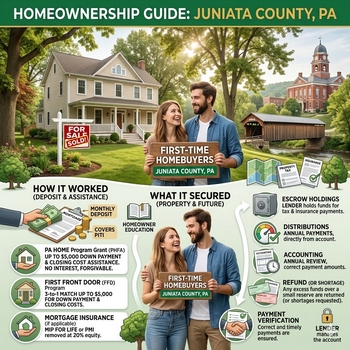 Juniata County is located in central Pennsylvania. The county includes towns like Mifflintown and Port Royal. The area is rural with rolling farmland and small communities. Juniata County has strong local banks that serve the community and understand the local market. These banks are partners with the Pennsylvania Housing Finance Agency. They offer PHFA mortgage programs to Juniata County homebuyers. The advantage of working with a local bank is personal service and familiarity with the area. The key is understanding which PHFA program matches your financial situation. This guide explains how to work with local banks and choose the right PHFA mortgage for your circumstances.
Juniata County homebuyers have access to the full range of PHFA programs. But which program is right for you depends on your credit score, income, down payment savings, and employment situation. A local bank can help you navigate these options. Unlike large national lenders, local banks take time to understand your situation. They recommend programs that fit your needs. They process applications efficiently. They provide the personal touch that matters when making the biggest purchase of your life.
Understanding Your Options: The PHFA Programs Available
PHFA offers multiple mortgage programs. Each program has different requirements and benefits. Understanding the differences helps you choose correctly.
Keystone Home Loan
Keystone Home is designed for first-time homebuyers. It requires first-time buyer status. You must have an income at or below program limits. You must complete homebuyer education. The down payment is as low as three percent. Interest rates are competitive and fixed for thirty years.
Keystone Home is the best choice if you are a first-time buyer with moderate income and the ability to save at least three percent down. The program is straightforward. The requirements are clear. Local banks know this program well and can process applications quickly.
HFA Preferred
HFA Preferred has higher income limits than Keystone Home. It does not require first-time buyer status. You can be a repeat buyer and still qualify. The down payment is three percent. Interest rates are favorable. Mortgage insurance is lower than conventional loans.
HFA Preferred is ideal if your income exceeds Keystone Home limits or if you previously owned a home but are buying again. The program is flexible. It works for diverse buyer situations.
K-Gov for Government-Backed Loans
K-Gov connects you to FHA, VA, or USDA loans. These loans have different advantages. FHA loans require 3.5 percent down and work for most borrowers. VA loans require zero down for eligible veterans. USDA loans require zero down for eligible rural properties.
K-Gov is the best choice if you are a veteran, if your property qualifies as rural, or if you prefer government-backed loans. Ask your local bank whether your target property qualifies for USDA loans. Many Juniata County properties do.
Working with Local Banks in Juniata County
Local banks like Juniata Valley Bank have deep roots in the community. These banks understand Juniata County mortgages. They know the local real estate market. They work with you as a person, not a number.
The Advantage of Local Lenders
Local lenders have flexibility that national lenders lack. They understand seasonal employment common in rural areas. They know agricultural income patterns. They have relationships with local appraisers and real estate agents. They can explain programs in plain language. They answer phone calls quickly.
National lenders operate from distant offices. They apply rigid rules. They require extensive documentation. They use automated systems. Communication is slow. Local lenders are different. They care about your success because they live in the same community.
Starting the Conversation with a Local Bank
Call or visit a local bank. Ask to speak with someone who handles PHFA mortgages. Tell them you are interested in buying a home in Juniata County. Describe your situation briefly. Are you a first-time buyer? What is your approximate income? How much have you saved for a down payment? Do you work seasonally?
A good loan officer asks detailed questions. They listen to your situation. They explain which programs might work. They tell you what documentation you need. They give you realistic timelines. They tell you what you need to do next.
Matching Programs to Your Situation
Different buyers need different programs. Here are common scenarios.
Scenario One: Steady Income, Moderate Savings
You have a stable job. Your income is moderate. You have saved three to five percent down. You are a first-time buyer. Keystone Home is your best choice. The program is designed for you. Apply with your local bank. You will likely qualify. The process moves quickly.
Scenario Two: Higher Income, Limited Down Payment
Your income is good but exceeds Keystone Home limits. You have saved only two percent down. You are a first-time buyer. HFA Preferred works for you. You have higher income limits. You can still buy with a small down payment. Talk to your bank about HFA Preferred. Explain your situation. They will help you apply.
Scenario Three: You Are a Veteran
You served in the military. You want to use your VA benefit. K-Gov with a VA loan is perfect. VA loans require zero down payment. No mortgage insurance is required. Interest rates are excellent. Your local bank can process VA loans. They know how to work with the VA. Apply through your bank.
Scenario Four: Seasonal or Self-Employment Income
You work seasonal work or run your own business. Your income varies. Traditional lenders worry about inconsistent income. But PHFA programs understand this. Your bank can work with you. They want to see two to three years of tax returns showing your average income. They want to confirm that your business is stable. Then they approve you. Local banks have experience with agricultural and seasonal workers. They understand Juniata County.
The Pre-Approval Process with Local Banks
Pre-approval starts with a conversation. You discuss your financial situation. You gather documentation. Your bank reviews everything. They issue a pre-approval letter.
Documentation You Will Need
Prepare recent pay stubs from the last two months. Prepare tax returns for the last two years. Prepare bank statements showing your savings. If you are self-employed, provide profit and loss statements. If you receive gifts for down payment, get letters from the gift giver explaining the money is a gift with no repayment requirement.
A local bank asks for this documentation but explains why. They tell you what each item means. They answer questions. The process feels collaborative, not interrogational.
The Credit Check and Review
Your bank pulls your credit report. They review your credit history. They look at payment patterns. They discuss any problem accounts with you. If you have explanations for late payments or collections, tell your banker. Circumstances matter. A late payment during a medical emergency looks different than habitual late payments. Your banker understands context.
The Pre-Approval Letter
Once approved, your bank issues a pre-approval letter. This letter states you are qualified for a specific loan amount. It names the program you are approved for. It lists conditions you must meet. You use this letter when shopping for homes. It shows sellers you are a serious buyer. It gives you confidence that you can actually buy.
From Pre-Approval to Closing
Pre-approval is the beginning. The next steps are finding a home, making an offer, and closing.
Finding a Home and Making an Offer
Work with a real estate agent. Look at homes in your approved price range. Take your time finding the right home. When you find one, make an offer. Once your offer is accepted, inform your bank. Your bank begins the formal loan process.
The Underwriting Process
Underwriting is thorough review of your finances and the property. Your banker coordinates with underwriters. They verify employment. They verify bank accounts. They review the appraisal. They make sure everything is correct. Underwriting typically takes two to three weeks.
Stay in contact with your banker during underwriting. If the underwriter needs additional information, provide it quickly. Delays happen when documents are slow to arrive. Being responsive speeds up the process.
Closing and Moving In
Closing is when you sign all documents and receive the keys. Your banker coordinates the closing. An attorney or title company handles the legal details. You bring a cashier's check for your down payment. You sign papers. You get the keys. You move in. Congratulations. You are now a homeowner.
Frequently Asked Questions
Is working with a local bank more expensive than a national lender?
No. Interest rates are determined by the market, not by whether the lender is local or national. Your rate depends on your credit score, down payment, and the loan program you choose. A local bank can offer competitive rates. The difference is service and personal attention, not cost.
What if I am denied by one PHFA program? Can I apply for a different one?
Yes. If Keystone Home denies you, you might still qualify for HFA Preferred. If HFA Preferred denies you, you might qualify for K-Gov with FHA financing. Talk to your banker about alternatives. There is usually a path forward.
How long does the entire process take from pre-approval to closing?
Pre-approval typically takes one to two weeks. Finding a home can take weeks or months depending on market conditions. Once you make an offer, closing typically happens in thirty to forty-five days. Plan for three to six months from start to finish. Some processes move faster.
What if I have bad credit or past financial problems?
Talk to your local banker about your situation. PHFA programs are designed to help people with imperfect credit histories. If your credit score is above 620, you can qualify for programs. Time heals credit scores. Recent late payments hurt more than old ones. Your banker can assess your likelihood of approval and advise you.
Can I refinance my PHFA mortgage later to get a better interest rate?
Yes. If interest rates drop, you can refinance. You will have options from multiple lenders. Your local bank can refinance you or you can shop around. Many borrowers refinance after two to five years when rates drop. Refinancing saves money on interest over time.
Taking Action in Juniata County
Identify a local bank you trust. Juniata Valley Bank is a strong choice, but other local banks also serve Juniata County. Call and ask to speak with a loan officer who handles PHFA mortgages.
Tell the loan officer about your situation. Be honest about your income, credit, and down payment savings. Ask which PHFA program fits your circumstances. Ask what documentation you need.
Gather your documentation. Collect pay stubs, tax returns, and bank statements. If you need to improve your credit before applying, ask your banker how long that typically takes.
Get pre-approved. Work through the pre-approval process with your banker. Ask questions. Understand the program you are approved for. Get your pre-approval letter in writing.
Shop for your home. Work with a real estate agent. Look at homes in Juniata County. Find one you love in your price range. Make an offer.
Work with your banker through closing. Stay responsive to requests for documentation. Communicate regularly. Close your mortgage. Move into your home. Begin your life as a Juniata County homeowner.
Connect With Us
Please share – it really helps