Fannie Mae High-LTV Refinance Option: Lower Your Interest Rate
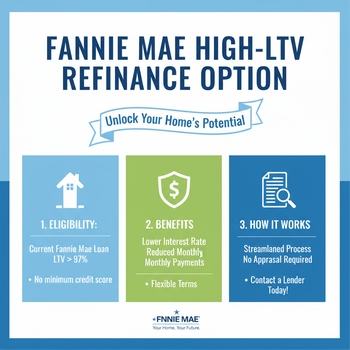 Homeowners with little equity in their homes now have access to a Fannie Mae high-LTV option that allows them to
refinance without first building significant equity. This
high-LTV solution opens doors for borrowers who want to
reduce their monthly payment but have limited home equity.
Homeowners with little equity in their homes now have access to a Fannie Mae high-LTV option that allows them to
refinance without first building significant equity. This
high-LTV solution opens doors for borrowers who want to
reduce their monthly payment but have limited home equity.
A high loan-to-value product lets you borrow up to 97% of your home's value. This means you can refinance even if you owe nearly as much as your home is worth. The LTV ratio measures how much you owe relative to your home's current market value. When your LTV is high, traditional lenders often decline your application. Fannie Mae changed this with their high-LTV option.
Understanding LTV and Your Refinance Loan
Your loan-to-value ratio is a critical number in any refinance loan decision. The LTV calculation is straightforward: divide your loan balance by your home's current value, then multiply by 100. A home worth $200,000 with a $190,000 high loan-to-value refinance option. mortgage has an 95% LTV.
Lenders traditionally required borrowers to have at least 20% equity - a maximum LTV of 80% - before approving a high-LTV refinance. The Fannie Mae high-LTV program removes this barrier. Now borrowers can refinance with an LTV up to 97%.
Your loan-to-value affects your refinance terms significantly. A lower LTV usually gets you better interest rate offers. Conversely, a higher LTV may cost more in fees and points. Understanding your specific loan-to-value ratio helps you determine if a high-LTV option makes sense for your situation.
- LTV up to 97% available through Fannie Mae
- No appraisal required in some cases
- Lower interest rates reduce monthly payments
- Faster approval process for qualified borrowers
- Fixed-rate options protect you from rate changes
Who Qualifies for This High-LTV Refinance Option
Eligibility for this high-LTV option depends on several factors. Your credit score, income, employment history, and current mortgage all matter. Fannie Mae requires a minimum LTV ratio for a high LTV refinance option. credit score of 620, though most lenders prefer 660 or higher.
Your borrower profile must show stable income and a solid payment history. You cannot be more than 30 days late on your current loan. The home must be your primary residence - investment properties and second homes generally do not qualify for this high LTV refinance option. refinance option.
Your current mortgage must be backed by Fannie Mae or Freddie Mac. If you have an FHA loan, VA loan, or USDA loan, different refinance programs apply. Ask your lender whether your existing loan is Fannie Mae-backed before applying for this program.
The property itself must meet Fannie Mae's standards. Your home needs a clear title and must be in decent condition. The lender will order an appraisal or automated valuation to confirm your home's current value, which determines your LTV percentage.
Benefits of a High-LTV Refinance
The biggest advantage of a high-LTV refinance is accessing lower mortgage payments. interest rate options even with minimal equity. If interest rate markets have dropped since you took your original mortgage, you can capture those savings.
Monthly payment reduction is the primary goal for most borrowers, who may benefit from a higher LTV refinance. Saving even $100 per month adds up to $1,200 per year. Over the life of a loan, hundreds of thousands of dollars in savings are possible.
A fixed-rate mortgage from a high-LTV refinance removes uncertainty. If you currently have an adjustable-rate mortgage, switching to a fixed-rate option locks in your payment for 30 years. This protects you from future interest rate increases.
Fannie Mae's program also allows faster processing. Many applications close in 30 days or fewer. The lender may not require a full appraisal, which saves time and money on closing costs.
- Lower payments from reduced interest rates
- Protection against rate increases with fixed-rate options
- No requirement to build 20% equity first
- Quicker approval for eligible borrowers
- Potential savings of thousands over loan term
High-LTV Refinance vs. Other Loan Options
HHow does this product compare to conventional refinance programs? Standard refinance products require an 80% maximum LTV ratio. The Fannie Mae high-LTV option allows 97%, giving more homeowners access.
FHA streamline refinance loans offer another alternative. These require an existing FHA mortgage. FHA loans carry mortgage insurance premiums that never go away, even after you build equity. This program from Fannie Mae may have lower total costs.
Freddie Mac offers similar high-LTV products. Both Fannie Mae and Freddie Mac have comparable rates and terms. Shopping with multiple lenders helps you find the best interest rate and program for your needs.
Cash-out refinance options let you borrow against your equity, especially through a high LTV refinance. If you need funds for home improvements or debt consolidation, a cash-out refinance works, but it increases your loan balance. A rate-and-term high-LTV product simply replaces your existing mortgage without borrowing extra money.
Steps to Apply for Your High-LTV Program
Start by gathering the financial documents necessary for the LTV refinance loan application. Your lender will need recent pay stubs, tax returns, and bank statements. Your mortgage statement showing your current loan balance and interest rate is essential. A recent property assessment or market analysis helps estimate your home's value.
Contact multiple lenders and ask specifically about their high-LTV programs. Each lender has slightly different requirements for a high LTV refinance loan. refinance terms and closing costs. Getting three to five quotes allows you to compare interest rate offers and total loan costs.
Submit your application to your chosen lender. The lender will order an appraisal and underwrite a mortgage loan with a high LTV ratio. Your application. This process typically takes 15 to 30 days. The lender will verify your income, check your credit score, and confirm employment.
Once approved, you will lock your interest rate and review the closing disclosure. This document shows all closing costs, your final interest rate, and monthly payment. After signing at closing, your new high-LTV refinance funds and pays off your old mortgage.
- Gather financial documents and property information
- Get quotes from at least three lenders
- Submit complete application with supporting documents
- Lender orders appraisal and begins underwriting
- Review closing disclosure and sign loan documents
Frequently Asked Questions About High-LTV Refinance
What is the highest LTV available with a Fannie Mae high-LTV program?
Fannie Mae allows higher LTV refinance loans under certain conditions. LTV ratios up to 97% for qualified borrowers. This means you can refinance even if you owe up to 97% of your home's current value. Your specific LTV percentage depends on your credit score, income, and employment history.
How long does a high-LTV refinance take to close?
Most high-LTV refinance loans close in 30 to 45 days. The timeline depends on how quickly you provide documents and how fast the lender completes the appraisal and underwriting. Some applications close in as little as 15 days.
Can I do a cash-out refinance with this program?
No, you cannot proceed without a proper LTV refinance option. The high-LTV refinance option is limited to rate-and-term refinance only. You cannot withdraw cash with this program; however, you can explore various LTV refinance options. If you need funds, a traditional cash-out refinance or home equity line of credit may work better.
What credit score do I need for a high-LTV refinance?
Fannie Mae requires a minimum credit score of 620. However, most lenders require a credit score of 640 to 660 or higher to approve a high-LTV refinance. Your payment history, debt levels, and income also factor into the decision.
Will I pay mortgage insurance with a high-LTV refinance?
Yes. With an LTV above 80%, you will pay mortgage insurance. This protects the lender if you default on your loan. The mortgage insurance premium depends on your exact LTV ratio and credit score. You can remove it once your LTV drops to 80% or lower.
Connect With Us
Please share – it really helps