What Are the Appraisal and Inspection Requirements?
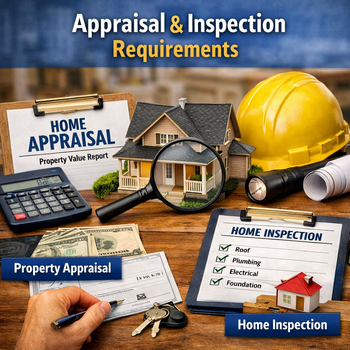 Home-buying
loans require properties to meet minimum safety and livability
standards before a loan can be approved. Understanding what the
loan requires, how appraisals work, and what inspections are
needed helps you avoid surprises and keep your purchase on
track. This article explains property standards, the appraisal
process, inspection requirements, and what repairs must be
completed before closing.
Home-buying
loans require properties to meet minimum safety and livability
standards before a loan can be approved. Understanding what the
loan requires, how appraisals work, and what inspections are
needed helps you avoid surprises and keep your purchase on
track. This article explains property standards, the appraisal
process, inspection requirements, and what repairs must be
completed before closing.
Understanding Property Standards
What Are Property Standards for a mortgage?
Loan property standards are minimum requirements that every property must meet to qualify for financing. These standards ensure the property is:
- Safe and structurally sound
- Free from hazardous materials
- Livable and functional
- Protected from environmental hazards
- Adequate for the borrower's needs
Lenders require properties to be perfect - just safe, clean, and in good repair. A 50-year-old home can qualify if it meets these standards; a brand-new home won't qualify if it has safety issues.
Who Enforces Standards?
The appraiser is responsible for determining whether a property meets the loan standards. The appraiser inspects the property and notes any issues that must be corrected before closing.
The Appraisal Process
What Is an Appraisal?
An appraisal is a professional evaluation of a property's fair market value and condition. The lender requires it for two purposes:
- Valuation - Confirming the property is worth at least the purchase price
- Condition assessment - Confirming the property meets the loan guidelines
Who Conducts the Appraisal?
An independent, lender-approved appraiser conducts the appraisal. The lender neither employs the appraiser nor the borrower - they're neutral third parties certified to evaluate property value and condition.
When Is the Appraisal Ordered?
The lender typically orders the appraisal after your offer is accepted and you're under contract. This timing allows the appraiser to inspect the actual property you're purchasing.
Appraisal Cost
Appraisal fees typically range from $400-600 depending on:
- Property location
- Property type and size
- Complexity of valuation
The borrower pays the appraisal fee, usually as part of closing costs or upfront during the loan process.
Appraisal Timeline
- Order date: Day 1 after contract accepted
- Inspection: Usually scheduled within 3-5 days
- Report completion: 5-10 days from order
- Total timeline: 5-10 business days from order to completed report
What the Appraiser Evaluates
Interior inspection:
- Room count and sizes
- Flooring condition
- Wall and ceiling condition
- Kitchen appliances and cabinets
- Bathrooms (fixtures, condition)
- Plumbing functionality
- Electrical safety
- HVAC system
Exterior inspection:
- Roof condition and age
- Siding or exterior finish
- Foundation condition
- Deck/porch condition
- Driveway condition
- Grading and drainage
- Fences and gates
Systems:
- Electrical system
- Plumbing system
- Heating and cooling systems
- Water heater
- Septic (if applicable)
- Well water (if applicable)
Environmental:
- Mold or moisture issues
- Pest damage or infestation
- Lead paint (homes built before 1978)
- Asbestos
- Underground storage tanks
- Radon (if applicable)
Property features:
- Square footage
- Lot size
- Comparable properties
- Market conditions
Minimum Property Standards
Structural Requirements
Foundation:
- Must be structurally sound
- No major cracks or settling
- Must protect the home from moisture intrusion
- Basement or crawl space must be dry (no active water intrusion)
- Sump pump required if drainage issues are present
Roof:
- Must be structurally sound and weather-tight
- Maximum age typically 20-30 years (varies by type)
- Asphalt shingle roofs: Generally acceptable up to 20 years
- Metal roofs: Can exceed 30 years if in good condition
- Must have adequate drainage
- No missing, cracked, or curled shingles
- Must have proper flashing around chimneys and vents
Walls and Structure:
- No significant cracks or structural damage
- No major settlement or shifting
- Walls must be plumb (straight) or reasonably close
- No major wood rot or insect damage
- Adequate wall bracing if needed
Safety Requirements
Electrical System:
- Must be adequate and safely installed
- All outlets must be properly grounded
- No exposed wiring
- The electrical panel must be properly labeled
- Adequate capacity for the home's needs
- GFI outlets are required in bathrooms and kitchens
Plumbing:
- All plumbing must function properly
- No leaks or water damage
- Adequate water pressure and drainage
- The water heater must function properly
- No lead water lines (or must be replaced)
- Septic systems must be functional (if applicable)
HVAC (Heating, Ventilation, Air Conditioning):
- The heating system must be adequate for the climate
- Must be safe and functional
- No carbon monoxide hazards from furnaces
- Ventilation must be adequate
- Air conditioning is not required, but if present, it must function
Stairs and Railings:
- Interior and exterior stairs must be safe
- Handrails are required where applicable
- No excessive gaps between balusters (for child safety)
- Railings are required on decks over 30 inches
- Stairs must not have excessive rise/run variations
Exterior Access:
- Property must be accessible
- The front entrance must be functional
- Steps and walkways must be safe and in good repair
- Handrails are required where needed
Health and Sanitation Requirements
Lead Paint Hazard (Pre-1978 homes):
- FHA-financed properties must have an FHA Lead-Safe certification or
- Lead paint hazard remediation must be completed or
- Lead disclosure must be provided to the borrower
- Properties built after 1978 have no lead paint concerns
Mold and Moisture:
- No evidence of active mold growth
- No signs of water damage or moisture intrusion
- Basement/crawl space must be dry
- Proper grading around the foundation to direct water away
- No smell of mold or mildew (strong indicator of moisture issues)
Pest Infestation:
- No evidence of active pest infestation (termites, carpenter ants, cockroaches, etc.)
- No wood damage from pests
- May require pest inspection and treatment
Sanitation:
- Property must be clean and sanitary
- No excessive dirt, garbage, or filth
- Bathrooms and kitchens must be functional
- No evidence of rodent infestation
Hazardous Materials:
- No exposed asbestos
- No tanks or hazardous materials storage on the property
- No environmental contamination
Functionality Requirements
Kitchen:
- Must have a functional kitchen with a sink
- Stove/oven required or space for one
- Refrigerator space available
- Counter space for food preparation
- Cabinets or storage space
Bathrooms:
- At least one functioning bathroom is required
- Toilet, sink, and bathtub/shower
- Ventilation in the bathroom
- Proper drainage
Utilities:
- Electricity is available and functional
- Water supply (municipal or well)
- Sewer or septic system
- All utilities must be adequate
Bedroom Requirements:
- Each bedroom must have:
- Closet or storage space
- Window (with emergency egress for bedrooms)
- The door that closes
- Adequate ceiling height (minimum typically 7 feet)
What Fails Appraisal
The following issues are common reasons properties fail the appraisal and require repairs before closing:
Major Issues (Must Be Fixed)
- Structural damage - Cracks in foundation, settling, and bowing walls
- Roof issues - Leaking roof, missing shingles, age beyond limits
- Electrical hazards - Exposed wiring, unsafe panels, inadequate service
- Plumbing issues - Leaks, non-functioning toilets/sinks, water pressure problems
- Pest damage - Active termite infestation, carpenter ant damage, rodent damage
- Mold growth - Active mold, water damage, basement moisture
- Safety hazards - Missing handrails, unsafe stairs, broken windows
- Heating system failure - Furnace not working or inadequate for the climate
- Lead paint hazard (pre-1978 homes) - Unless properly disclosed or remediated
- Environmental hazards - Underground storage tanks, asbestos, contamination
Minor Issues (May Need Correction)
- Cosmetic damage - Peeling paint, worn flooring (if safe)
- Minor repairs - Cracked tiles, worn caulk, missing trim
- Appliance condition - Old but functional appliances are usually okay
- Landscaping - Overgrown bushes, broken fences, poor drainage (if safety/water issue)
- Driveway/walkway - Minor cracks acceptable; major damage may need repair
Typically NOT Required
- Interior renovations or upgrades
- Carpet replacement (if flooring is safe)
- Paint (unless required for lead remediation)
- Landscaping improvements (unless drainage issue)
- Appliance upgrades
- Cosmetic improvements
Appraisal Results: What Happens Next
Appraisal Comes In at or Above Purchase Price
Best case scenario:
- Property appraised at $300,000
- Purchase price: $300,000
- Appraisal value meets or exceeds purchase price
- Process continues normally
What happens:
- Lender funds based on appraised value
- No renegotiation needed
- Closing proceeds as planned
Appraisal Comes In Below Purchase Price
Low appraisal scenario:
- Property appraised at $295,000
- Purchase price: $300,000
- Appraisal is $5,000 below the purchase price
- The lender will only lend based on the appraised value
Your options:
- Renegotiate with seller - Ask seller to reduce price to match appraisal ($295,000)
- Increase down payment - Make up the difference with a larger down payment
- Split the difference - Seller reduces price; you increase the down payment
- Walk away - Use appraisal contingency to cancel contract (if included)
Example of impact:
- Original down payment: 3.5% of $300,000 = $10,500
- New down payment needed: 3.5% of $295,000 = $10,325
- BUT if you bring only $10,500, you'd be putting down 3.56% instead of 3.5%
- The difference may require additional funds or lender approval
Timeline impact:
- Renegotiation can delay closing 2-5 days
- Most contracts include an appraisal contingency, allowing time to resolve
Appraisal Shows Required Repairs
Repairs required scenario:
- Appraisal identifies roof needs replacement (estimated cost: $8,000)
- Roof replacement is required before some lenders will approve the loan.
Resolution options:
- Seller completes repairs - Seller pays for and completes repairs before closing
- Repair credit from the seller - The seller credits funds to you at closing; you complete repairs after
- Escrow holdback - Funds held at closing until repairs are completed and verified
- Buyer completes repairs - You pay for repairs after closing (not recommended - may affect finances)
Most common resolution: Seller completes repairs or provides credit before closing.
Timeline impact:
- Repair completion can add 5-15 days to closing
- Verification of repairs may be required before Clear to Close
- Use a repair contingency in the contract to protect yourself
Home Inspections vs. Appraisals
Important Distinction
Many borrowers confuse home inspections with appraisals. They're different and serve different purposes:
| Appraisal | Home Inspection | |
|---|---|---|
| Purpose | Determine value & loan compliance | Detailed condition assessment |
| Who orders | Lender (required) | Borrower (optional but recommended) |
| Who performs | Lender-approved appraiser | Licensed home inspector |
| Cost | $400-600 (borrower pays) | $300-500 (borrower pays) |
| Timeline | 5-10 days | 3-7 days |
| Report detail | Summary of value & major issues | Extensive detail on all systems |
| Binding | Yes - lender requires compliance | No - informational only |
| Pass/fail | Yes - must meet the loan standards | No - just documentation of condition |
Why Get Both?
Appraisal:
- Required by the lender
- Determines lending value
- Identifies major violations
- Summary-level condition assessment
Home Inspection:
- Optional but highly recommended
- Detailed examination of all systems
- Identifies smaller problems and maintenance issues
- Gives you a full picture of the property condition
- Helps with negotiation and future maintenance planning
Best practice: Get both an appraisal (required) and a home inspection (recommended).
Home Inspection Process
What Is a Home Inspection?
A home inspection is a comprehensive, non-invasive examination of the property's physical systems and components by a licensed professional home inspector. It's more detailed than an appraisal.
Should You Get One?
Highly recommended - While not required by all loans, a home inspection is smart for:
- Understanding the full condition of the property
- Identifying maintenance issues before purchase
- Negotiating repairs with the seller
- Planning future repairs and budgeting
- Protecting your interests
Inspection Timeline
- Order: After the contract is accepted
- Schedule: Within 3-7 days
- Duration: 2-4 hours
- Report: Within 1-3 days
- Walk-through: You can attend (recommended)
What Inspector Evaluates
Exterior:
- Roof condition and age
- Siding/exterior finish condition
- Foundation cracks
- Grading and drainage
- Decks, porches, walkways
- Gutters and downspouts
- Doors and windows
Interior Systems:
- Electrical system and panels
- Plumbing and water pressure
- HVAC systems
- Water heater
- Flooring condition
- Walls, ceilings, insulation
- Kitchen and bathroom fixtures
- Appliances (if included in sale)
Structural:
- Foundation integrity
- Framing and structure
- Attic condition
- Crawl space (if applicable)
- Basement/foundation walls
Environmental:
- Signs of mold or moisture
- Pest damage
- Lead paint concerns (pre-1978 homes)
- Radon (if radon testing ordered)
- Asbestos concerns
Inspection Cost and Responsibility
- Cost: $300-500 typically
- Who pays: Borrower (you)
- Required: No (optional)
- Binding: No (informational only)
Using Inspection Results
Negotiation:
- Use inspection findings to negotiate repairs with the seller
- Request that the seller make repairs or provide credit
- Most common: Seller credits funds for minor repairs
Knowledge:
- Understand maintenance issues needing attention
- Budget for future repairs
- Identify systems reaching the end of life
Protection:
- An inspection contingency in the contract allows a walkaway if major issues arise
- Helps you make an informed decision
Repairs Required Before Closing
Required Repairs
These repairs MUST be completed before the lender will approve the loan:
Structural:
- Foundation repair/stabilization
- Roof replacement (if leaking or too old)
- Major wood rot
- Significant water damage
Safety:
- Electrical hazards (exposed wiring, unsafe panels)
- Plumbing hazards (no water, non-functioning)
- HVAC system replacement (if not functional)
- Stair/railing safety issues
- Broken windows (security/weather concern)
Health:
- Mold remediation
- Pest infestation treatment
- Lead paint remediation (pre-1978)
- Sanitation issues
Environmental:
- Removal of hazardous materials
- Underground storage tank removal
Repairs That Can Wait
These can be completed after closing (though the seller usually completes):
- Minor cosmetic repairs
- Non-structural ceiling/wall damage
- Broken trim or molding
- Non-safety electrical outlet issues
- Minor plumbing repairs (if not affecting safety/function)
- Landscaping improvements
- Paint touch-ups
Who Pays for Required Repairs?
Typical scenarios:
Scenario 1 - Seller pays:
- Seller funds for repair work
- Repairs completed before closing
- Verification provided at final walk-through
- Most common arrangement
Scenario 2 - Repair credit:
- Seller provides credit at closing
- You complete repairs after purchase
- Funds held in escrow until completion
- Less common; creates post-closing risk
Scenario 3 - Escrow holdback:
- Portion of closing proceeds held in escrow
- Released when repairs are verified complete
- Less common; requires specialized closing arrangement
Best practice: Include in the purchase agreement a requirement that the seller complete the required repairs before closing.
Repair Timeline
- Identified in appraisal: Typically, day 7-10 after appraisal is ordered
- Resolution negotiation: 2-5 days
- Repair completion: 5-15 days, depending on the repair scope
- Verification: 1-2 days
- Clear to Close: Can proceed once repairs are verified complete
Repair Verification
The lender typically requires:
- Receipt/invoice for repairs completed
- Photo evidence of completed work
- Sometimes: Final inspection by appraiser or contractor
- Proof that work meets the lender standards
Common Appraisal Issues and Solutions
Issue: Roof Age Exceeds Limits
Problem:
- The roof is 25+ years old
- Most loan guidelines typically limit to 20-25 years, depending on the type
- Appraisal notes that the roof must be replaced
Solutions:
- Seller replaces roof (most common)
- Seller provides roof replacement credit
- You make a larger down payment to compensate (rare)
Timeline: Roof replacement typically takes 5-10 days
Issue: Foundation Cracks or Settlement
Problem:
- Appraisal notes foundation cracks
- Appraiser notes settling or movement
- Lenders will require a structural assessment
Solutions:
- Structural engineer inspection (determines if repair is needed)
- Minor cracks: Often acceptable if stable
- Major cracks: Foundation repair required
- Settlement: May require foundation stabilization
Timeline: Structural engineer report takes 3-5 days; repair timeline varies
Issue: Mold or Moisture
Problem:
- Appraiser notes mold growth or moisture stains
- Some lenders and loan programs require mold remediation or source correction
- Common in basements or older homes
Solutions:
- Mold remediation (professional cleaning/treatment)
- Moisture source correction (grading, drainage, repairs)
- Verification that moisture is now controlled
Timeline: Mold treatment: 2-5 days; moisture solutions: 5-15 days
Issue: Electrical Hazards
Problem:
- Outdated electrical panel
- Unsafe wiring
- Inadequate capacity
- Missing grounding
Solutions:
- Licensed electrician repairs/upgrades
- Electrical panel replacement if needed
- Rewiring sections (if outdated/unsafe)
- Grounding improvements
Timeline: Simple repairs: 1-3 days; panel replacement: 5-10 days
Issue: Plumbing Problems
Problem:
- Non-functioning fixtures
- Leaks or water damage
- Lead pipes (pre-1980s homes)
- Low water pressure
Solutions:
- Licensed plumber repairs/replaces
- Lead pipe replacement (if required by state)
- Water pressure/flow testing
- Leak repairs and water damage mitigation
Timeline: Simple repairs: 1-2 days; pipe replacement: 5-10 days
Issue: HVAC System Not Functional
Problem:
- The furnace is broken or very old
- Air conditioning is not working
- The system is inadequate for the climate
Solutions:
- HVAC contractor repairs the system
- System replacement if beyond repair
- Verification system meets needs
Timeline: Repair: 1-3 days; replacement: 5-10 days
Issue: Low Appraisal
Problem:
- Appraised value below purchase price
- The lender will only finance based on the lower value
- The buyer must make up the difference
Solutions:
- Renegotiate the purchase price with the seller
- Increase the down payment to compensate
- Challenge appraisal (if you believe the value is higher)
- Walk away using appraisal contingency
Timeline: Renegotiation: 2-5 days; appraisal challenge: 5-10 days
Tips for a Smooth Appraisal and Inspection Process
Before Appraisal
- Clean the property - Cleanliness matters to appraisers
- Maintain lawns - Cut grass, trim bushes (shows property is maintained)
- Minor repairs - Fix obvious issues before appraisal (saves time)
- Gather documentation - Have records of major repairs/replacements
- Disclose issues - Tell lender about known problems (better to know upfront)
During Appraisal
- Provide access - Appraiser needs access to all areas, including the attic and crawl space.
- Be available - Answer appraiser's questions honestly
- Don't interfere - Don't try to influence the appraiser's findings
- Document condition - Take photos if you disagree with the findings
After Appraisal Results
- Review carefully - Understand all noted deficiencies
- Get quotes - If repairs are needed, get contractor estimates
- Negotiate promptly - Address repairs/credits quickly
- Verify completion - Ensure repairs are completed to the loan's standards
- Request documentation - Get receipts and proof of work
Home Inspection Recommendations
- Attend inspection - Be present to ask questions and learn about the property.
- Take notes - Write down the inspector's findings and concerns
- Ask questions - Understand what items are concerns vs. cosmetic
- Don't over-negotiate - Focus on major issues, not cosmetic items
- Plan future maintenance - Use inspection to understand upcoming repairs
Key Takeaways for Appraisal & Inspection Requirements
-
Appraisals serve two purposes: Determining value AND confirming the property standards compliance
-
Property must be safe and functional: Not perfect, just safe, clean, and livable
-
Roof age matters: Most roofs must be less than 20-25 years old
-
Foundation must be sound: Cracks are concerning; settlement requires engineering assessment
-
Electrical and plumbing must be safe: Hazards must be corrected before closing
-
Mold and moisture are deal-breakers: Source must be corrected, not just cleaned
-
Lead paint requires disclosure or remediation: Pre-1978 homes need proper handling
-
Appraisals can delay closing: Low appraisals require renegotiation or additional funds
-
Home inspections are optional but recommended: More detailed than an appraisal; helps you understand the full condition
-
Repairs must be verified before closing: Get documentation that lender-required repairs are completed to standard
Conclusion
Understanding the loan appraisal and inspection requirements helps you prepare for the process and avoid surprises. Lenders do not require perfection - just safety, functionality, and basic livability. Having realistic expectations about what might fail appraisal, being prepared to negotiate repairs with the seller, and completing a thorough home inspection help ensure a smooth closing. Work with your lender and appraiser to understand any identified issues and resolve them promptly to keep your purchase on track.
Connect With Us
Please share – it really helps