Home Possible Loan vs FHA: Complete Comparison for First-Time Buyers
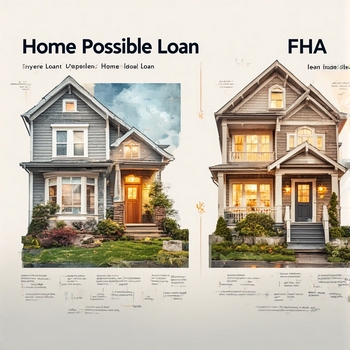 Choosing the right mortgage program ranks among the most
important decisions for first-time homebuyers. Home
Possible loans vs FHA loans represent two popular
pathways to homeownership, each with distinct advantages and
limitations.
Choosing the right mortgage program ranks among the most
important decisions for first-time homebuyers. Home
Possible loans vs FHA loans represent two popular
pathways to homeownership, each with distinct advantages and
limitations.
Understanding the differences between these
programs helps you select the option that aligns with your
financial situation and long-term goals. Both programs lower
barriers to homeownership, but they operate under different
rules, costs, and requirements.
What Is a Home Possible Loan?
Home Possible is a Freddie Mac mortgage
program designed for borrowers with limited down payment
resources and moderate income levels. This program emphasizes
flexibility and accessibility for first-time homebuyers and
other qualified borrowers.
The Home Possible program
allows borrowers to purchase homes with down payments as low as
3 percent. Freddie Mac created this program to expand
homeownership opportunities across various income levels and
credit profiles. Home Possible loans carry competitive interest
rates and lower insurance costs compared to some conventional
alternatives.
Home Possible loans accept borrowers with credit scores as low as 580, making this program accessible to those still building credit history. The program accommodates gifts for down payments and closing costs, providing flexibility for borrowers without substantial savings. Home Possible also permits higher debt-to-income ratios, allowing qualified buyers with existing debts to still qualify for financing.
What Is an FHA Loan?
FHA loans, backed by the Federal Housing
Administration, serve as the nation's most popular mortgage
program for first-time homebuyers. The
FHA loan program insures mortgages from qualified lenders,
reducing lender risk and allowing borrowers with lower credit
scores and minimal down payments to access financing.
FHA
loans permit down payments as low as 3.5 percent on properties
priced up to the conforming loan limit. The program serves
borrowers with credit scores starting at 580, similar to Home
Possible. FHA loans dominate the market for buyers seeking
affordable financing with manageable requirements.
The Federal Housing Administration does not lend money directly. Instead, FHA-approved lenders originate these mortgages while the government insures them against default. This insurance structure protects lenders, allowing them to extend credit to borrowers with higher risk profiles. FHA mortgage insurance remains mandatory for all loans, representing a significant cost consideration for borrowers.
Key Differences in Down Payments
Down payment requirements represent a crucial distinction
between these programs. Understanding how much you must save
upfront shapes your overall affordability calculation.
Home Possible loans accept down payments
starting at 3 percent, while FHA loans require a minimum 3.5
percent down payment. This half-percent difference may seem
minor, but it translates into real savings on larger purchase
prices. On a $250,000 home, a 3 percent down payment equals
$7,500 compared to $8,750 for FHA, saving $1,250 in upfront
capital.
Both programs permit gift funds for down payments and closing costs, though restrictions apply. Home Possible allows 100 percent of the down payment from gifts with proper documentation. FHA permits gift funds but requires the borrower to contribute a minimum of 1.5 percent of the purchase price from personal funds in most scenarios.
Down Payment Comparison: Home Possible offers a slightly lower minimum down payment requirement, making it attractive for buyers with limited savings. FHA's 3.5 percent requirement still remains achievable for most first-time homebuyers in Pennsylvania.
Mortgage Insurance Costs and Requirements
Mortgage insurance protects lenders when borrowers default on
loans. Both programs require insurance, but the structure and
costs differ significantly.
Home Possible loans
use Freddie Mac's mortgage insurance model, which charges lower
insurance premiums than FHA in many cases. With Home Possible,
mortgage insurance can be removed once the loan-to-value
ratio reaches 80 percent through a combination of principal
paydown and home appreciation.
FHA loans require two types of mortgage insurance: upfront mortgage insurance premium (UFMIP) and annual mortgage insurance premium (MIP). The UFMIP charges 1.75 percent of the loan amount, typically rolled into the mortgage balance. FHA mortgage insurance remains mandatory for the loan's entire life if you put down less than 10 percent, making it a permanent cost factor.
| Feature | Home Possible | FHA Loan |
|---|---|---|
| Mortgage Insurance Type | PMI (Freddie Mac) | MIP (FHA) |
| Insurance Removable | Yes, at 80% LTV | Only with 10%+ down or refinance |
| Upfront Insurance | Typically lower | 1.75% (UFMIP) |
| Annual Insurance Cost | Generally 0.5-1% annually | 0.55-0.8% annually |
Over the life of a 30-year mortgage, FHA mortgage insurance can add $50,000 or more to the total cost if you put down less than 10 percent. Home Possible becomes more economical when you plan to build equity and eventually reach that 80 percent loan-to-value threshold. Calculating these costs for your specific situation reveals which program offers better long-term value.
Credit Score Requirements and Flexibility
Credit history significantly impacts mortgage qualification.
Both programs accommodate borrowers with lower credit profiles
than conventional loans, but they differ in implementation.
Home Possible loans accept credit scores
starting at 580, mirroring FHA flexibility. However, Home
Possible lenders often show greater flexibility with credit
history explanations and compensating factors. If you
experienced past credit challenges, Home Possible allows you to
present compelling explanations regarding what caused the credit
issues and how your situation has stabilized.
FHA loans also accept 580 credit scores, but the program follows strict guidelines regarding seasoning periods for past credit events. FHA requires specific waiting periods after bankruptcy, foreclosure, or late payments before borrowers qualify. For example, FHA requires a three-year seasoning period after Chapter 7 bankruptcy completion, while Home Possible may offer more flexibility depending on the lender's individual guidelines.
A credit score above 620 on either program typically unlocks better interest rates and more favorable terms. Building your credit before applying improves your qualification chances and reduces your lifetime interest costs significantly.
Debt-to-Income Ratio Allowances
Your debt-to-income ratio (DTI) measures your monthly debt
obligations against your gross monthly income. Lenders use this
metric to determine how much you can borrow safely.
Home Possible loans permit
debt-to-income ratios up to 50 percent with strong
compensating factors, allowing buyers with existing debts to
qualify for larger loans. If your student loans, car payments,
and credit cards consume 45 percent of your income, Home
Possible might still approve your mortgage application with
appropriate justification.
FHA loans typically allow DTI ratios up to 43 percent, with exceptions to 50 percent under specific circumstances. The program emphasizes housing expense ratios, meaning the percentage of income dedicated to mortgage payments (principal, interest, taxes, insurance, and insurance) must remain below 31 percent ideally. This conservative approach protects borrowers from overextending their finances.
Understanding debt-to-income ratio requirements for each program helps you assess qualification likelihood. Both programs consider factors beyond raw DTI, including savings history, employment stability, and compensating factors that strengthen your application.
Interest Rates and Loan Pricing
Interest rates drive the true cost of homeownership. While
interest rates fluctuate based on market conditions, Home
Possible and FHA loans typically track similarly.
Home
Possible loans often receive slightly better interest rate
pricing due to lower perceived risk from Freddie Mac's
underwriting standards. When market conditions favor mortgage
lending, Home Possible rates may undercut FHA rates by 0.125 to
0.25 percent. Over a 30-year mortgage, this seemingly small
difference saves tens of thousands of dollars.
FHA rates depend heavily on loan characteristics and the borrower's credit profile. Borrowers with stronger credit scores (680+) may find FHA and Home Possible rates nearly identical. Borrowers with lower credit scores (580-620) often face higher FHA rate adjustments compared to Home Possible alternatives.
Shopping multiple lenders ensures you receive the most competitive rates regardless of program selection. Each lender prices loans differently, and rate variations across lenders often exceed the differences between program types.
Property and Appraisal Requirements
Both programs require property appraisals, but FHA appraisals
involve more detailed inspections and stricter property
standards.
FHA loans demand properties
meet specific minimum property standards, ensuring homes provide
safe, sanitary living conditions. FHA appraisers evaluate
foundation integrity, roof condition, plumbing, electrical
systems, and heating/cooling functionality. Properties must pass
FHA inspection requirements, which can delay closings if
deficiencies require repairs.
FHA inspection requirements protect borrowers from purchasing severely damaged or dangerous properties. However, these stringent standards occasionally disqualify otherwise suitable homes, limiting your purchasing options in deteriorating neighborhoods.
Home Possible loans follow more flexible appraisal guidelines, permitting properties in various condition levels. While Home Possible still requires functional properties that protect the lender's collateral, the program shows greater flexibility regarding cosmetic issues, older homes, and properties needing moderate updates. This flexibility expands available inventory for Home Possible borrowers.
Maximum Loan Amounts and Property Limits
Both programs respect conforming
loan limits, which adjust annually. For 2024, conforming
loan limits in most Pennsylvania counties reach $766,550 for
single-family homes.
Home Possible and FHA loans can
finance properties up to these conforming limits, though
specific
FHA loan limits vary by county based on median home prices.
In high-cost areas, loan limits increase to accommodate local
market conditions.
Both programs serve single-family homes, townhouses, and condominiums with certain restrictions. FHA-approved condominiums must meet specific documentation requirements, while Home Possible maintains similar but slightly more flexible condo approval processes. Rural borrowers can use both programs on properties meeting standard underwriting criteria.
Employment and Income Verification
Lenders verify income to ensure you can repay the mortgage.
Both programs follow similar documentation standards.
Home Possible and FHA loans typically require
two years of
employment history from a consistent employer in the same
field. Self-employed borrowers must provide two years of tax
returns and profit-and-loss statements. Recent job changes
require lender approval, though staying within the same industry
field typically allows qualification.
Both programs accept year-to-date income documentation, allowing recently employed borrowers to qualify by averaging their monthly earnings. Overtime income and bonuses require documentation history, typically two years of consistent receipt before inclusion in qualifying income.
If you're changing careers or recently experienced unemployment, both programs allow qualification with proper documentation. The lender must verify that your new position offers comparable or better income than previous employment, ensuring your ability to sustain mortgage payments.
Home Possible vs Home Possible Advantage: Understanding the Variants
Freddie Mac offers variations within the Home Possible family, including Home Possible vs Home Possible Advantage. The Home Possible Advantage targets borrowers with lower credit scores (580-619) and provides flexible underwriting to ensure qualification opportunities for underserved borrowers. Home Possible Advantage incorporates similar features as standard Home Possible but with customized compensating factors for applicants with marginal credit profiles.
The primary distinction between Home Possible and Home Possible Advantage centers on credit score positioning and lender flexibility. Both products share the 3 percent minimum down payment and PMI removal features, but Advantage versions emphasize accessibility for borrowers facing credit challenges. Discuss with your lender which Home Possible variant best matches your financial profile.
Seller Concessions and Closing Cost Assistance
Seller concessions allow sellers to contribute toward buyer
closing costs, reducing your cash needed at closing.
Seller assistance programs differ between loan types.
Home Possible loans permit seller
concessions up to 6 percent of the purchase price, allowing
sellers to cover substantial closing costs. This flexibility
helps buyers without large liquid savings complete transactions.
Sellers remain willing to provide concessions when competing in
favorable buyer markets.
FHA loans permit seller concessions up to 6 percent of the purchase price as well, matching Home Possible flexibility. However, FHA requires sellers to use concessions for specific purposes (closing costs, discount points, pre-paid items) rather than direct cash rebates to borrowers. This distinction ensures funds improve the buyer's loan position rather than reducing down payments.
Closing Cost Assistance: Both programs accommodate seller assistance, though rules differ slightly. Home Possible permits more direct use of concessions, while FHA restricts concessions to traditional closing cost categories.
Loan Assumption and Transferability
Loan assumption allows future buyers to take over your
mortgage at the original interest rate, providing significant
value in rising rate environments.
FHA loans
offer assumable mortgages, permitting future purchasers to
qualify and assume your loan. This feature attracts buyers when
interest rates exceed your mortgage rate, creating an attractive
selling advantage. FHA assumption requires the new borrower to
qualify and assumes the existing mortgage balance and remaining
term.
Home Possible loans are not assumable under standard conditions, limiting this feature as a selling advantage. However, non-assumability affects your future sale value minimally unless rates rise dramatically above your original rate. Most borrowers refinance or pay off mortgages before assumability becomes relevant.
Renovation and Construction Financing
Both programs serve borrowers purchasing existing homes. If you're interested in renovation financing, FHA 203(k) loans provide specialized options for purchasing and rehabilitating properties. Home Possible does not offer renovation financing, limiting this program to existing homes in their current condition.
The 203(k) streamline option serves minor renovations (under $35,000), while full 203(k) programs handle substantial rehabilitation projects. If property renovations factor into your homebuying strategy, FHA provides built-in solutions through these specialized programs.
Tax and Insurance Escrow Requirements
Most mortgages include
escrow accounts where lenders collect portions of property
taxes and insurance premiums monthly, paying these bills on your
behalf.
Both Home Possible and FHA loans
typically require escrow accounts, particularly for loans with
lower down payments or credit scores. Escrow simplifies
budgeting by spreading annual tax and insurance bills across
monthly payments. Borrowers with strong credit scores and
substantial down payments may avoid escrow requirements.
Escrow account increases occur when property taxes rise or insurance premiums increase, requiring additional monthly contributions. Understanding potential escrow adjustments helps you budget for future payment increases.
First-Time Homebuyer Program Integration
Pennsylvania offers
state housing finance agency programs designed specifically
for first-time buyers. These programs integrate with both Home
Possible and FHA loans.
The Pennsylvania Housing Finance
Agency (PHFA) operates
Keystone Home Loan programs that work alongside
conventional, FHA, VA, and USDA mortgages. Combining a
first-time homebuyer program with Home Possible or FHA loans can
reduce your interest rate by 0.375 to 0.5 percent, generating
substantial lifetime savings.
Keystone Advantage and Assistance programs provide down payment assistance up to $15,000 in some cases, directly reducing your cash requirements at closing. Combining state assistance with Home Possible or FHA programs creates powerful financing combinations for Pennsylvania first-time buyers.
Processing Timeline and Documentation
Loan processing timelines vary slightly between programs. Home Possible loans often process 1-2 business days faster than FHA due to less stringent appraisal review requirements and streamlined underwriting. Standard Home Possible closings occur 30-35 days after application submission.
FHA loans require additional verification steps, including detailed appraisal reviews to ensure properties meet minimum standards. FHA closings typically complete within 35-40 days from application, accounting for extra appraisal time. If appraisals identify deficiencies, closings may extend further while sellers address required repairs.
Working with an experienced mortgage lender familiar with mortgage underwriting processes accelerates closings. Providing complete documentation upfront eliminates processing delays regardless of program selection.
Loan Modification and Refinancing Options
Life circumstances change, sometimes requiring loan
modifications or refinancing. Both programs accommodate these
needs differently.
FHA loans provide
streamline refinancing options allowing borrowers to refinance
without full re-underwriting when reducing interest rates or
changing loan terms.
FHA refinance options minimize documentation and appraisal
requirements, accelerating the refinance process for existing
FHA borrowers.
Home Possible loans follow standard Freddie Mac refinancing guidelines, requiring traditional underwriting for most refinance scenarios. However, Freddie Mac offers streamline programs for qualified borrowers, though less comprehensive than FHA options. If you anticipate potential refinancing needs, FHA flexibility in this area provides advantages.
When Home Possible Makes Sense
Home Possible loans work best for borrowers meeting these criteria:
- Planning to stay in the home 5+ years and build equity
- Seeking to remove mortgage insurance once reaching 80% LTV
- Preferring lower upfront costs and insurance expenses
- Wanting flexibility with seller concessions and gift funds
- Needing accommodating lenders for credit history explanations
- Purchasing properties requiring minimal appraisal-related repairs
Home Possible delivers superior long-term economics when you remain committed to building home equity and eventually eliminating mortgage insurance costs.
When FHA Loans Make Sense
FHA loans serve borrowers best in these situations:
- Needing maximum flexibility regarding property conditions
- Requiring loan assumption capability for future sale advantages
- Interested in renovation financing through 203(k) programs
- Preferring more stringent lender guidelines and standardization
- Uncertain about long-term homeownership commitment
- Seeking historical program credibility and nationwide lender familiarity
FHA remains an excellent choice when you prioritize flexibility, proven program structure, and renovation opportunities over long-term insurance removal.
Comparing Costs Head-to-Head
Consider a $250,000 home purchase with a 3 percent down payment ($7,500):
| Cost Category | Home Possible | FHA Loan |
|---|---|---|
| Down Payment (3%) | $7,500 | $8,750 (3.5%) |
| Loan Amount | $242,500 | $241,250 |
| Upfront Insurance | $0-1,000 | $4,222 (1.75%) |
| First Year Mortgage Insurance | $1,700-2,125 | $1,463 |
| 5-Year Insurance Total | $10,200-12,750 | $11,500 + UFMIP |
| Insurance Removal Potential | Yes (80% LTV) | No (unless 10%+ down) |
These figures demonstrate Home Possible's advantage for long-term homeowners planning to build equity. For short-term homeownership or quick appreciation scenarios, FHA's lower annual insurance cost provides temporary advantages, though the upfront UFMIP charges create immediate expense.
Making Your Final Decision
Selecting between home possible loan vs fha requires honest assessment of your financial situation, homeownership timeline, and property needs. Both programs serve first-time homebuyers effectively. The optimal choice depends on your specific circumstances and long-term planning.
Request quotes from multiple lenders on both programs. Comparing actual rates, insurance costs, and total closing expenses reveals which program delivers better economics for your situation. Many borrowers find their local lender's offerings differ substantially from national averages, making personalized quotes essential for accurate decision-making.
Working with HUD-approved housing counseling agencies provides unbiased guidance comparing loan programs. These services, often available free or low-cost, help you understand program details and make informed decisions matching your homeownership goals.
Frequently Asked Questions
What's the main difference between Home Possible and FHA loans?
The primary distinction centers on mortgage insurance costs and removal flexibility. Home Possible allows mortgage insurance removal at 80% loan-to-value, while FHA mortgage insurance remains permanent unless you put down 10% or refinance. Home Possible typically costs less in insurance premiums, while FHA requires an upfront insurance premium of 1.75% rolled into the loan. For long-term homeowners planning to build equity, Home Possible generally offers better value.
Can I get approved for Home Possible with a 580 credit score?
Yes, Home Possible accepts credit scores starting at 580, though you may face higher interest rates than borrowers with stronger credit. Credit scores between 580-619 often trigger rate adjustments of 0.5-1.5% higher than borrowers scoring 700+. Working to improve your credit score before applying can reduce your lifetime mortgage costs substantially. Even 20-30 point improvements may lower your rate by 0.25-0.375%.
Is an FHA loan assumable by future buyers?
Yes, FHA loans offer assumable mortgages, allowing future buyers to take over your loan at your original interest rate. This feature provides significant advantages when interest rates rise above your mortgage rate. However, the new buyer must still qualify for the assumption and verify their creditworthiness. Conventional alternatives may provide similar benefits depending on loan type and terms.
Which program requires a higher down payment?
FHA loans require 3.5% down payments, while Home Possible accepts 3% down. On a $250,000 home, this represents a $1,250 difference. Both programs permit gift funds for down payments, though FHA requires you to contribute at least 1.5% from personal funds in most cases. Home Possible allows 100% gift funding, providing maximum flexibility for borrowers without substantial personal savings.
Can I remove mortgage insurance from an FHA loan?
FHA mortgage insurance remains permanently if you put down less than 10%, requiring you to refinance to remove it. FHA streamline refinancing makes this process simpler, but it still involves a refinance transaction. If you put down 10%+ on an FHA loan, you can remove insurance after 11 years. For most FHA borrowers with 3-5% down payments, permanent mortgage insurance makes Home Possible's removable insurance feature more attractive.
Additional Resources for Pennsylvania First-Time Buyers
Pennsylvania offers abundant resources supporting first-time homebuyers. The PA First Time Home Buyer website provides comprehensive information on all available programs. Explore buyer resources covering credit, pre-approval processes, and homebuying fundamentals.
Mortgage calculators help you estimate payments, closing costs, and debt-to-income ratios. Understanding these figures before meeting with lenders accelerates your homebuying process.
Pennsylvania's Housing Finance Agency administers Keystone programs designed exclusively for state residents. Keystone Advantage programs provide down payment and closing cost assistance, making homeownership even more accessible for qualified borrowers.
Connect With Us
Please share – it really helps