FHA Guidelines for Collection Accounts
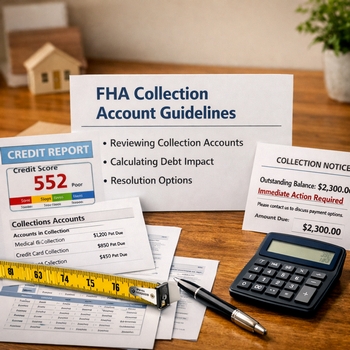 If you have collection accounts, they can impact
your FHA loan eligibility. Lenders often view these accounts as
signs of financial instability, and outstanding amounts over $2,000
can affect your debt-to-income ratio. However,
FHA guidelines are more lenient than conventional
loans, and older collections may matter less. You can improve your
chances by addressing these accounts before applying. Want to know
more about how to navigate this process effectively?
If you have collection accounts, they can impact
your FHA loan eligibility. Lenders often view these accounts as
signs of financial instability, and outstanding amounts over $2,000
can affect your debt-to-income ratio. However,
FHA guidelines are more lenient than conventional
loans, and older collections may matter less. You can improve your
chances by addressing these accounts before applying. Want to know
more about how to navigate this process effectively?
The Impact of Collection Accounts on FHA Loans
When you're considering an FHA loan, it's essential to understand how collection accounts can impact your eligibility. Lenders look closely at your credit history, and collection accounts can raise red flags.
Even if these accounts are settled, they might still influence your credit score and the lender's perception of your financial responsibility. If you have multiple collections, it could signal a pattern of financial distress, making lenders hesitant.
Addressing these accounts before applying can improve your chances. Always review your credit report, and consider paying off or negotiating settlements for any outstanding collection accounts to enhance your eligibility for an FHA loan.
How FHA Guidelines Handle Collection Accounts
Collection accounts can greatly affect your FHA loan application, but understanding how FHA guidelines address them is essential.
The FHA typically views collection accounts as a sign of financial instability. If you have collections, the lender may require you to pay them off or establish a payment plan.
Generally, if the total outstanding collection amount exceeds $2,000, lenders will factor it into your debt-to-income ratio. However, if you demonstrate consistent payment history on other debts, it may help mitigate the impact of these accounts.
Staying proactive about managing collections can enhance your chances of loan approval.
How Do Collection Accounts Affect Your FHA Loan Application?
While managing your finances, you might wonder how collection accounts impact your FHA loan application. Generally, collection accounts can affect your credit score, which lenders consider when evaluating your eligibility.
If you have recent collection accounts, they might signal to lenders that you’ve had trouble managing debt. However, FHA guidelines are often more lenient than conventional loans.
While older collections may have less impact, multiple accounts could raise red flags. It’s important to understand that every situation is unique, and lenders may weigh these accounts differently.
Being proactive about your financial health is always a good idea.
What to Do About Collection Accounts Before Applying for an FHA Loan
Before you apply for an FHA loan, it’s vital to address any collection accounts that might impact your application.
Start by reviewing your credit report to identify all outstanding collections. If possible, pay off smaller accounts to improve your credit score.
For larger accounts, consider negotiating a payment plan or a settlement with the creditor. Make sure to obtain written confirmation of any agreements you reach.
Additionally, keep documentation of your payments, as this can help when discussing your financial history with lenders.
Taking these steps can enhance your chances of securing that FHA loan you need.
Clarifying Misconceptions About Collection Accounts and FHA Loans
Many people mistakenly believe that having collection accounts automatically disqualifies them from obtaining an FHA loan. In reality, the FHA guidelines are more flexible.
While collection accounts can impact your credit score, they don’t necessarily prevent you from getting approved. What matters is how you manage your overall credit profile.
If your debt-to-income ratio is within acceptable limits and you demonstrate responsible financial behavior moving forward, you can still qualify.
Frequently Asked Questions
Can I Get an FHA Loan With Unpaid Collection Accounts?
Yes, you can get an FHA loan with unpaid collection accounts.
However, lenders may look at your overall credit profile and financial situation, so addressing those collections could improve your chances of approval.
How Long Do Collection Accounts Affect My Credit Score?
Collection accounts can affect your credit score for up to seven years.
However, their impact diminishes over time, especially if you maintain positive credit behaviors.
Regularly monitoring your credit helps you understand the changes better.
Are Medical Collection Accounts Treated Differently Under FHA Guidelines?
Yes, medical collection accounts are treated differently under FHA guidelines.
They’re often viewed more leniently, especially if they’re paid off.
You should focus on resolving them to improve your overall credit profile.
Will Paying off a Collection Account Improve My Loan Chances?
Yes, paying off a collection account can improve your loan chances. It shows lenders you're responsible with your finances.
However, focus on overall credit health, as other factors also influence your loan approval.
Do Collection Accounts Impact FHA Loans for Self-Employed Borrowers?
Yes, collection accounts can impact your FHA loan eligibility as a self-employed borrower.
Lenders assess your overall creditworthiness, so addressing these accounts can improve your chances of securing a loan.
Conclusion
In summary, understanding FHA guidelines on collection accounts is crucial for your loan application. While these accounts can impact your approval chances, knowing how to address them can make a difference. By taking proactive steps to manage your collection accounts, you can improve your financial profile and boost your chances of securing an FHA loan. Don’t let misconceptions hold you back - arm yourself with the right information and approach your homebuying journey with confidence.
Connect With Us
Please share – it really helps