Required Documentation for a USDA Loan: Your Complete Checklist
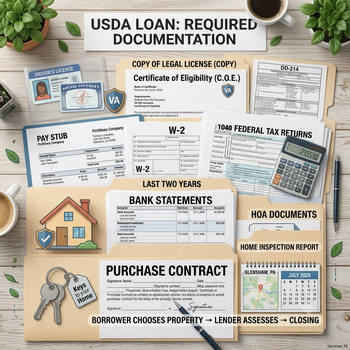 Getting approved for a USDA home loan means gathering specific paperwork that the lender needs to verify your eligibility and creditworthiness. Understanding what documents are needed for a USDA loan upfront can speed up the application process and help you prepare before meeting with your loan officer.
The United States Department of Agriculture offers loans for homebuyers in rural areas through USDA Rural Development programs. These loans come with unique requirements, so the documentation requirements differ slightly from conventional loans or FHA loans. Your lender will request proof of income, employment history, credit information, and property details to process your USDA loan application.
Income and Employment Documentation for Your USDA Loan
One of the most important parts of USDA documentation requirements involves proving your household income. Lenders use this information to calculate your debt-to-income ratio and determine whether you qualify for a USDA loan. Most lenders need to see two years of tax returns to verify your income history.
Your pay stubs from the last 30 days are required documentation for a USDA loan as well. These documents show your current income and help the lender confirm that your job is stable. If you receive income from self-employment, rental properties, or other sources, bring documentation for those earnings too.
- Two years of personal income tax returns (signed copies)
- Recent pay stubs covering the last 30 days
- W-2 forms from the past two years
- Profit and loss statements for self-employed applicants
- Proof of other income (Social Security, disability, child support)
Your loan officer will need a written explanation if you've changed jobs recently or if your income fluctuates. Letters from your employer stating your position, salary, and likelihood of continued employment also strengthen your application.
Credit and Debt Information for USDA Loan Approval
The USDA loan program does not have a minimum credit score requirement, but your credit history matters. Lenders review your credit report to see how you've managed debt in the past. Required documentation for a USDA loan includes authorization for the lender to pull your credit report, which happens automatically during the application process.
You'll need to disclose all existing debts so the lender can calculate your debt-to-income ratio. This includes credit card balances, auto loans, student loans, and any other monthly obligations. If you have an account in collection or past-due payments, bring documentation showing the current status.
- Credit authorization forms
- List of all credit accounts with current balances
- Documentation of collection accounts or late payments
- Explanation letters for negative credit items
- Proof of credit repair or good payment history improvements
Documents needed for a USDA loan also include information about any co-signers or co-borrowers. Each person on the application must provide their own income documentation and consent to the credit check.
Property and Appraisal Documents for Your USDA Home Loan
Your property must meet USDA Rural Development standards to qualify for a USDA loan. The lender will order a real estate appraisal to determine the property's value and verify it meets program requirements. You don't submit the appraisal yourself, but you should provide the address and any details about the property.
Documentation requirements for USDA loans include proof of what you're buying. If you're purchasing from a seller, bring the purchase agreement. If you're building a home, bring construction plans and contractor quotes. For existing properties, a property description and photos help the lender understand what you're purchasing.
- Signed purchase agreement or sales contract
- Property address and legal description
- Construction plans (for new builds)
- Current property taxes and utility bills (if available)
- Documentation of any property improvements planned
The eligible area where your property is located matters for USDA loans. Your lender will verify that your chosen rural area qualifies under USDA Rural Development guidelines. Properties in towns with populations over 10,000 may not be eligible for a USDA loan, though some exceptions apply.
Down Payment and Financial Documentation
A major advantage of the USDA loan program is that you may not need a down payment at all. However, you still need to show the lender proof of any funds you're putting toward the purchase. Required documentation for a USDA loan includes bank statements, investment account statements, and proof of gift funds if someone is helping with the purchase.
Bank statements covering the last two months show your savings and liquid assets. The lender wants to confirm you have the funds available to close on the home. If a family member is gifting money for the down payment, they must provide a gift letter stating the amount is a gift and does not need to be repaid.
- Bank statements from the last 60 days
- Investment account statements
- Proof of retirement accounts (401k, IRA statements)
- Gift letters with donor information
- Documentation of grant funds or assistance programs
If you receive help from programs like the People Driven Credit Union or Red Carpet Club, bring documentation of your membership or approval. Some employers offer down payment assistance, so ask your company's HR department if this benefit is available.
Identification and Legal Documentation
You'll need to prove your identity and citizenship status to apply for a USDA loan. These basic documents needed for a USDA loan include a government-issued photo ID and your Social Security card or number. Each applicant on the loan must provide their own identification.
Documentation requirements for a USDA loan also include proof of legal residency in the United States. Foreign nationals with valid visas may qualify, but they need to provide visa documentation. If you're a permanent resident, bring your green card or proof of permanent residency status.
- Government-issued photo ID (driver's license or passport)
- Social Security card or proof of number
- Visa or green card documentation
- Birth certificate (if requested)
- Marriage license or divorce decree (if applicable)
Additional Documents Your Lender May Request
Beyond the main categories, specific situations require additional documents needed for a USDA loan. If you own other property, bring documentation showing the current status of those mortgages. If you've had bankruptcy, foreclosure, or other credit events, the lender needs paperwork related to those situations.
Divorced or separated applicants should provide divorce decrees or separation agreements. If you're planning to use part of the property as a secondary suite for rental income, bring documentation of how you'll operate that arrangement. USDA Rural Development has specific guidelines about secondary dwellings on the property.
Documents needed for a USDA loan also include explanation letters for employment gaps of more than 30 days. If you've changed jobs recently or have periods of unemployment, write a brief explanation of what happened and why your employment is now stable.
- Current mortgage statements or property deed (for owned properties)
- Bankruptcy discharge papers
- Divorce decree or separation agreement
- Child support or alimony documentation
- Employment gap explanation letters
- Homeowners insurance quote
- Information about previous addresses (past two years)
Organizing Your USDA Loan Application Documents
Start collecting these documents early to avoid delays in your USDA loan application. Create a checklist and mark items off as you gather them. Ask your loan officer which specific documents are required for your situation, as some may not apply to everyone.
Keep everything organized and easy to access. Make copies of important documents so you have backups. Bring original documents or certified copies to your closing, but provide copies to your lender during the application process.
Your loan officer can advise you on any gray areas or special circumstances. Some applicants with complex financial situations may need additional documentation, while others with straightforward finances might need fewer documents.
How USDA Loan Documentation Differs from Other Programs
A USDA loan differs from an FHA loan in some documentation requirements. While both programs have flexible credit requirements, USDA loans focus more on location and property eligibility in rural areas. An FHA loan may accept properties in more urban locations, but documentation of household income requirements are similar across both programs.
A conventional loan typically requires higher credit scores and larger down payments compared to a USDA loan. You won't need to provide as much documentation for a conventional loan if your credit is excellent, but USDA loans are designed to help borrowers with modest income and limited savings.
The USDA loan program emphasizes household income over credit score, making it accessible to more rural homebuyers. This approach means lenders focus extra attention on income documentation and property eligibility verification.
- USDA loans require rural property location verification
- Household income limits apply to USDA loans
- USDA loans typically require no down payment
- Credit requirements are more flexible than conventional loans
- FHA loans and USDA loans have similar income documentation needs
Timeline for Submitting Your USDA Documentation
Submit your documents as soon as possible after applying for a USDA loan. Most lenders have a timeline for reviewing your application, and having all documents upfront speeds up the approval process. Your loan officer will tell you which documents are most urgent.
The appraisal process begins after your initial application is submitted. While the lender reviews your documentation, the appraiser will inspect the property and verify it meets USDA Rural Development standards. Both processes need to complete before you can move to final approval.
Plan to provide additional documentation if the lender requests clarification. Common follow-up requests include explanation letters, updated pay stubs, or additional income verification. Responding quickly to these requests keeps your application moving forward.
FAQs About USDA Loan Documentation
What documents do I need if I'm self-employed for my USDA loan application?
Self-employed applicants need two years of personal tax returns, business tax returns, and a current profit and loss statement. Your lender may also request bank statements showing business deposits and expense payments. A CPA letter explaining your business structure and income stability can help strengthen your application. Some lenders require additional verification for self-employed income.
Can I apply for a USDA loan with no down payment?
Yes, one major benefit of the USDA loan program is that you may qualify for 100 percent financing with no down payment required. However, you still need to provide bank statements showing enough liquid assets to cover closing costs. The lender wants proof that you have reserves available, even if you're not putting money down toward the purchase price.
What happens if I don't have all my documents ready when I apply?
Contact your loan officer immediately if you're missing any required documentation for a USDA loan. You don't need to submit everything on the same day, but delays in providing documents slow down your approval timeline. Your lender can advise which documents are most critical to provide first.
Do I need an explanation letter for every late payment on my credit report?
You don't need to explain every minor late payment, but you should address significant issues like collections, foreclosures, or multiple late payments in the same account. Write a brief, honest explanation without making excuses. Focus on what changed to make your credit better moving forward.
How long does a USDA lender keep my documentation after I'm approved?
Your lender must keep your file for several years after closing, typically between five and seven years. This documentation supports the loan servicing and protects both you and the lender. You may need to request copies of your original application documents for your own records.
Key Takeaways About Required Documentation for a USDA Loan
Gathering the right documents upfront makes your USDA loan application faster and smoother. Start with income verification through tax returns and pay stubs, then compile your credit information and property details. Don't forget identification documents, bank statements, and any special documentation related to your unique financial situation.
Work closely with your loan officer throughout the process. They can clarify which documents you need, answer questions about your specific circumstances, and advise you on the strongest way to present your financial picture. The USDA loan program exists to help homebuyers in rural areas achieve homeownership, and lenders want to work with you to make that happen.
Required documentation for a USDA loan is straightforward once you understand what lenders need to verify. Give yourself enough time before your target closing date to collect everything, organize it clearly, and submit it promptly. Your preparation and organization throughout the USDA loan application process directly affects how quickly you can move toward homeownership.
Connect With Us
Please share – it really helps