USDA Streamline Assist Refinance: Lower Your Payment Without an Appraisal
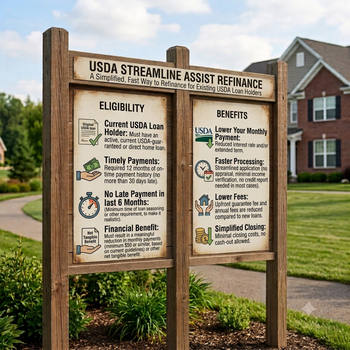 A USDA streamline assist refinance can help homeowners lower mortgage payments quickly. If you own a rural home financed with a USDA direct loan or guaranteed USDA loan, you may qualify for this simplified refinancing program. The USDA streamline refinance program reduces typical mortgage delays by eliminating the appraisal requirement and reducing paperwork.
Unlike a standard refinance, the USDA streamline assist refinance process moves quickly and costs less. A mortgage lender can approve your application in days rather than weeks. Your closing costs shrink dramatically because the lender skips the appraisal and property inspection. For borrowers looking to save money on their monthly payment, this streamlined refinance option makes financial sense.
What Is USDA Streamline Assist Refinancing?
The USDA streamline assist refinance is a mortgage program for current USDA loan holders. The USDA created this streamline refinance program to help borrowers reduce their monthly payment and overall loan costs. Unlike a cash-out refinance, the streamline process focuses on lowering your interest rate and payment amount.
Your mortgage lender conducts minimal underwriting for this loan program. The lender verifies that you currently own the home and hold an active USDA mortgage. No appraisal required. No new property inspection required. The existing USDA loan file becomes the foundation for approval.
This approach saves time and money. Typical appraisals cost between $300 and $500. When you streamline your USDA home loan, you skip that expense. Your new loan includes a guarantee fee of 0.35 percent (one-time cost), which rolls into your new loan amount rather than being paid upfront.
Who Qualifies for USDA Streamline Assist Refinance?
Not every homeowner with a USDA loan qualifies for streamline refinancing. Your eligibility depends on several factors. First, your current USDA mortgage must be in good standing with no late payments or defaults.
You must have owned the property for at least 6 months before applying. This requirement prevents borrowers from refinancing immediately after purchase. Your existing USDA loan must be current on all payments, and you cannot have any missed payments in the past 12 months.
The new loan amount cannot exceed the outstanding balance of your current USDA mortgage plus closing costs. This cap prevents borrowers from taking cash out during the streamline process. Your credit score should reflect your payment history, but the USDA doesn't set a minimum credit score requirement for streamline refinancing.
- Current USDA loan in good standing with no late payments
- Minimum 6-month ownership period
- No missed payments in the last 12 months
- Property must still meet USDA location requirements
- New loan amount cannot exceed current balance plus closing costs
How the Streamline Refinance Process Works
The streamline refinance process begins with a phone call to your mortgage lender. Tell them you want to streamline your existing USDA loan to lower your payment. The lender pulls your existing loan file and reviews your payment history.
Step one is gathering basic documents. You'll provide verification of income and employment, recent pay stubs, and W-2 forms. If you're self-employed, bring your business tax returns for the last 2 years. The lender needs proof that you can afford the new loan payment.
Step two is a credit check and debt review. The lender wants to confirm you have no recent missed payments on any debts. They calculate your debt-to-income ratio using your new loan payment amount. Your DTI must stay below USDA guidelines to qualify.
Step three is property verification. Since no appraisal occurs in streamline refinancing, the lender confirms the property still qualifies as eligible USDA property. Your home must still meet rural location requirements and meet USDA property standards.
Step four is loan approval and rate locking. Once the lender approves your application, you lock in your new interest rate. Current mortgage rates determine how much you save each month. Lower rates mean bigger monthly savings for your household.
Step five is closing. You'll sign loan documents and pay closing costs. Most USDA streamline assist refinances close in 7 to 14 days. Compare this to standard refinances, which typically take 30 to 45 days.
Cost Savings with USDA Streamline Assist Refinance
Why refinance your USDA loan? The primary reason is to lower your monthly mortgage payment. A lower interest rate directly reduces what you owe each month. Over the life of your loan, even a small rate reduction saves thousands of dollars.
Consider this example: You have a USDA mortgage with a $200,000 loan balance at 5 percent interest. Your monthly payment is approximately $1,073. If you refinance to 4.5 percent interest through streamline refinancing, your new payment drops to about $1,013. That's $60 in monthly savings, or $720 per year.
The cost comparison is striking when you look at closing costs. A standard refinance can cost between $2,000 and $5,000 in expenses. A USDA streamline assist refinance costs between $800 and $1,500 typically. You save money because the lender skips the appraisal, title work is simplified, and underwriting time shrinks.
Another benefit involves mortgage insurance costs. If your current USDA loan includes mortgage insurance (annual 0.35 percent), you might reduce that premium on your new loan. The new loan's mortgage insurance depends on your loan-to-value ratio and down payment history. Many borrowers see their mortgage insurance decrease or disappear entirely on a streamline refinance.
- Average monthly payment savings: $50 to $200 per month
- Typical closing costs: $800 to $1,500
- Payoff period: Usually within 18 to 36 months
- Interest rate reduction: Typically 0.25 to 1 percent
- No appraisal cost: Saves $300 to $500
USDA Streamline Assist Refinance vs. Standard Refinance
A standard USDA refinance requires a full home appraisal. The lender needs an independent valuation to confirm your home's current market value. Appraisals take time and cost money. They also delay your loan closing.
The streamline refinance program skips this step entirely. Your lender uses the original appraisal from your current USDA loan. This approach works because your home's value is already documented in the existing USDA mortgage file.
Standard refinancing also requires a new title search and updated title insurance. Your lender wants confirmation that you own the property free of liens. The streamline process simplifies this by relying on your existing title work.
The underwriting timeline differs significantly. A standard USDA refinance takes 30 to 45 days from application to closing. A streamline refinance closes in 7 to 14 days. This speed matters when mortgage rates are falling, and you want to lock in savings quickly.
Both programs have the same eligibility requirements regarding property location and USDA loan program status. However, streamline refinancing has stricter rules about your payment history. You cannot have any missed payments in the past 12 months. Standard refinancing allows more flexibility on past payment issues.
USDA Streamline Refinance Guidelines and Requirements
The USDA publishes official streamline refinance guidelines that all lenders must follow. These guidelines establish the framework for how mortgage lenders process streamline applications.
First, your current USDA loan must be a direct loan or a guaranteed loan made by a private lender and guaranteed by the USDA. Loans held by the USDA government qualify for streamline refinancing. Most private lenders also offer this program.
Second, the streamline refinance guidelines require that your new loan saves you money. The USDA calculates this by comparing your current payment (principal, interest, and mortgage insurance) to your new payment (principal, interest, and new guarantee fee). Your new payment must be lower than your current payment for a streamline refinance to be approved.
Third, you must occupy the home as your primary residence. Investment properties or vacation homes don't qualify for USDA streamline refinancing. The USDA program exists to help primary homeowners, not real estate investors.
Fourth, the property must remain USDA-eligible. Rural areas that qualified when you took out your original USDA loan must still qualify. USDA loan programs have specific geographic boundaries. If your area's status changed, you may not qualify for streamline refinancing.
Fifth, your new loan cannot exceed your current loan balance plus allowable closing costs. You cannot pull cash out during streamline refinancing. This restriction keeps the program focused on reducing payments rather than on cash-out borrowing.
Interest Rates and Payment Calculations
Current mortgage rates determine your potential savings. When mortgage rates drop, refinancing becomes attractive. Your new interest rate depends on market conditions at the time you lock in your rate.
A mortgage lender offers rate lock periods, typically 30, 45, or 60 days. During this period, your interest rate stays the same even if market rates move higher. This protects your rate from climbing before closing.
Your new loan payment calculation includes your principal balance, interest rate, and loan term. Most borrowers refinance into a 30-year loan, though 15-year and 20-year terms are available. A shorter loan term means higher monthly payments but lower total interest paid.
The USDA guarantee fee adds to your loan costs. For streamline refinancing, the guarantee fee is 0.35 percent of your new loan amount. This fee gets rolled into your loan rather than paid upfront, so you don't need cash at closing.
Getting Started with Your USDA Streamline Assist Refinance
Ready to streamline your USDA loan? Start by contacting a mortgage lender experienced with USDA loans. Not all lenders offer streamline refinancing, so confirm that your chosen lender handles this program.
Gather your financial documents before calling. Have recent pay stubs, W-2 forms, and a list of current debts ready. Your mortgage statement showing your current balance and interest rate is essential. These documents speed up the pre-qualification process.
Ask your lender for an estimate of closing costs. Most lenders provide a Loan Estimate within 3 business days of application. This document shows your estimated new payment, total costs, and monthly savings. Review it carefully and ask questions about any charges you don't understand.
Compare rates from multiple lenders. Different mortgage lenders offer different rates and closing cost structures. Getting quotes from two or three lenders ensures you receive competitive pricing. Remember that the lowest rate isn't always the best deal if closing costs are high.
Frequently Asked Questions About USDA Streamline Assist Refinance
Can I get cash back when I streamline my USDA loan?
No. USDA streamline refinancing doesn't allow cash-out refinancing. Your new loan amount cannot exceed your current loan balance plus closing costs. This restriction is built into the streamline program guidelines.
How long does a USDA streamline refinance take?
A typical streamline refinance closes in 7 to 14 days. Compare this to standard refinances, which take 30 to 45 days. The speed comes from simplified underwriting and the absence of an appraisal requirement.
What's the minimum credit score needed for streamline refinancing?
The USDA doesn't publish a minimum credit score requirement for streamline refinancing. However, your lender will review your credit report and payment history. Most lenders prefer a credit score above 620, though some accept lower scores if your payment history is clean.
Do I need an appraisal for USDA streamline assist refinancing?
No appraisal is required. This is one of the biggest benefits of streamline refinancing. Your lender uses the existing appraisal from your current USDA loan, which eliminates time and expense.
What if I have missed payments in my credit history?
Recent missed payments prevent you from qualifying for streamline refinancing. The USDA requires that you have no missed payments in the past 12 months. If you have late payments older than 12 months, you may still qualify depending on your lender's specific guidelines.
Connect With Us
Please share – it really helps