VA Loans and Asbestos: What Homebuyers Need to Know
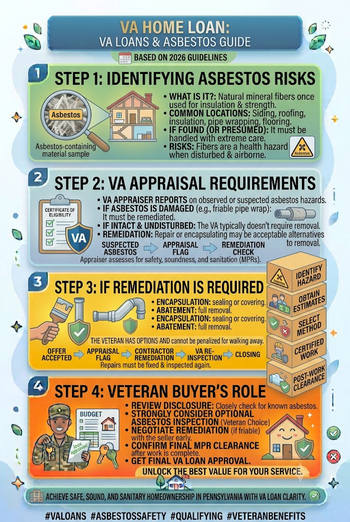 Asbestos is a naturally occurring mineral fiber that was widely
used in building materials for decades due to its heat and fire
resistance. If you are buying an older home with a VA loan, asbestos
may be present in insulation, flooring, roofing, siding, and other
materials. Understanding asbestos, knowing where it commonly
appears, and understanding testing and management options helps you
protect your family when purchasing an older property.
Asbestos is a naturally occurring mineral fiber that was widely
used in building materials for decades due to its heat and fire
resistance. If you are buying an older home with a VA loan, asbestos
may be present in insulation, flooring, roofing, siding, and other
materials. Understanding asbestos, knowing where it commonly
appears, and understanding testing and management options helps you
protect your family when purchasing an older property.
What Is Asbestos?
Asbestos is a mineral fiber found naturally in rock and soil. Due to its heat resistance, fire resistance, and insulating properties, asbestos was used extensively in building materials from the 1930s through the 1970s. Common asbestos-containing materials include insulation, floor tiles, ceiling tiles, roofing, siding, pipe wrapping, gaskets, and spackling compounds.
The U.S. Environmental Protection Agency (EPA) began regulating asbestos in the 1970s due to health concerns. In 1989, the EPA issued the Asbestos Ban and Phase-Out Rule, which banned or phased out most asbestos-containing products. However, some asbestos-containing products remain legal and are still manufactured today. Older homes built before the 1980s are most likely to contain asbestos materials.
Why Is Asbestos a Health Concern?
Asbestos fibers are extremely small and, when inhaled, can lodge in the lungs and remain there for life. Long-term exposure to asbestos fibers causes serious respiratory diseases including asbestosis, lung cancer, and mesothelioma.
Health Effects of Asbestos Exposure
Asbestos-related diseases develop after years of exposure and do not typically cause immediate symptoms. However, once asbestos fibers are inhaled, the damage is permanent.
- Asbestosis: Chronic lung disease causing scarring and reduced breathing capacity. Symptoms include persistent cough, shortness of breath, and chest pain. Asbestosis typically develops 10 to 20 years after exposure.
- Lung cancer: Asbestos exposure increases lung cancer risk significantly. Risk is higher in smokers exposed to asbestos. Lung cancer from asbestos typically develops 20 to 40 years after exposure.
- Mesothelioma: A rare, aggressive cancer of the lung lining or abdominal lining caused almost exclusively by asbestos exposure. Mesothelioma typically develops 20 to 50 years after exposure and is almost always fatal.
- Other respiratory diseases: Pleural diseases (scarring of lung lining), pleural thickening, and pleural effusion (fluid accumulation around lungs) can result from asbestos exposure.
There is no safe level of asbestos exposure. Even minimal exposure over time can increase disease risk. Workers who handled asbestos-containing materials occupationally face the highest risk, but homeowners and family members can be exposed if asbestos materials are disturbed during renovation or if materials deteriorate.
Do VA Loans Allow Properties with Asbestos?
Yes. The VA does not prohibit properties containing asbestos. Many older homes built before the 1980s contain asbestos-containing materials, and these homes can be purchased with VA loans. However, the asbestos situation must be evaluated, and if asbestos materials are deteriorating or pose an exposure risk, management or remediation may be required.
The key distinction is undisturbed asbestos versus deteriorating or friable asbestos. Asbestos that is intact and undisturbed typically poses minimal health risk. Asbestos that is damaged, deteriorating, or friable (easily crumbled) poses significant exposure risk and requires remediation.
VA Appraisal and Asbestos
VA appraisers are not asbestos specialists and do not conduct asbestos testing or identification during the appraisal. However, appraisers may note visible asbestos-containing materials, signs of asbestos deterioration, or the presence of asbestos abatement work done previously.
What Appraisers Look For
During the property appraisal, the appraiser evaluates the overall condition of materials and systems. If the appraiser observes older insulation, flooring, or other materials that may contain asbestos, they will note this in the appraisal report. The appraiser may note:
- "Property appears to contain asbestos-containing insulation or materials"
- "Evidence of past asbestos abatement or removal"
- "Deteriorating materials that may contain asbestos"
- "Recommendation for asbestos inspection if materials will be disturbed during renovation"
Appraisal Deficiencies for Asbestos
Asbestos materials that are intact and in good condition do not typically trigger VA appraisal deficiencies. However, if asbestos materials are deteriorating, damaged, or friable, the appraiser may note this as a property condition concern that requires repair or abatement before approval.
Friable asbestos (asbestos that is easily crumbled and releases fibers into the air) is considered a health hazard and must be abated before the property can be approved for occupancy.
Common Asbestos-Containing Materials in Homes
Asbestos was used in hundreds of building products. In homes, asbestos is most commonly found in:
Insulation
Pipe insulation, boiler insulation, and attic insulation installed before the 1980s frequently contained asbestos. Asbestos pipe insulation is white, gray, or tan and wraps around pipes. Attic insulation that is loose, fluffy, or blanket-like may contain asbestos. If these materials are undamaged, they typically pose minimal risk, but if they are disturbed or deteriorating, they become hazardous.
Flooring
Vinyl floor tiles (VCT), vinyl sheet flooring, and the adhesive used to install flooring often contained asbestos. These materials remain safe if intact, but sanding, drilling, or removing flooring can release asbestos fibers. Asbestos flooring is common in homes built from the 1930s through 1970s.
Ceiling Tiles and Acoustic Panels
Suspended ceiling tiles and acoustic panels installed before the 1980s often contained asbestos. These materials are typically non-friable if undamaged, but if broken or crumbled, they release asbestos fibers.
Roofing and Siding
Asbestos shingles, asbestos corrugated roofing, and asbestos cement siding were common in older homes. These materials are typically durable and pose minimal risk if intact. However, if damaged or deteriorating, they can release asbestos.
Plaster, Drywall Joint Compound, and Spackling
Some older plaster, joint compound, and spackling compounds contained asbestos. These materials pose minimal risk if painted over or sealed, but if sanded or disturbed during renovation, asbestos can be released.
HVAC Systems and Ductwork
Some older HVAC systems, ductwork insulation, and heating equipment contained asbestos. If undamaged, these pose minimal risk, but if insulation is loose or deteriorating, asbestos exposure is possible.
Fireproofing Materials
Spray-applied fireproofing on structural steel and other fireproofing materials sometimes contained asbestos. Fireproofing is typically found in commercial buildings more than residential, but some older residential buildings may have asbestos fireproofing.
Asbestos Testing and Inspection
The VA appraisal does not include asbestos testing. Asbestos identification is the buyer's responsibility. If you are purchasing an older home and want to know whether asbestos is present, professional testing is necessary.
Visual Asbestos Inspection
A professional home inspector can note materials that appear to contain asbestos based on age, material type, and condition. However, a visual inspection cannot definitively identify asbestos. Laboratory testing is required for confirmation.
Professional Asbestos Inspection
A certified asbestos inspector or industrial hygienist can conduct a detailed property inspection, collect samples of suspected asbestos-containing materials, and send samples to a laboratory for analysis. A professional asbestos inspection costs $400 to $1,000 depending on the property size and number of samples collected.
During an asbestos inspection, the professional will:
- Visually identify materials that may contain asbestos
- Collect bulk samples from suspected materials (without creating dust)
- Document the location, condition, and extent of potentially asbestos-containing materials
- Send samples to a laboratory for polarized light microscopy (PLM) analysis
- Provide a detailed written report with findings and recommendations
Asbestos Laboratory Testing
Samples collected during inspection are analyzed by a certified laboratory using polarized light microscopy. The laboratory determines whether asbestos is present and identifies the type of asbestos. Laboratory analysis typically takes 3 to 7 days and costs $50 to $150 per sample.
When to Request Asbestos Inspection
Request a professional asbestos inspection if:
- The home was built before 1980 (highest asbestos risk)
- You plan to renovate or disturb materials (flooring removal, insulation replacement, etc.)
- You observe damaged or deteriorating insulation, flooring, or other older materials
- You want a comprehensive understanding of asbestos presence before purchase
- Someone in your household has respiratory sensitivities or immune issues
An asbestos inspection during your inspection contingency period gives you information to negotiate or cancel if extensive asbestos is found.
What Happens If Asbestos Is Found?
If asbestos is identified in the home, your options depend on the asbestos type, condition, and location.
Non-Friable Asbestos in Good Condition
Non-friable asbestos that is intact and in good condition (such as vinyl floor tiles, intact roofing, or intact insulation) typically poses minimal health risk if left undisturbed. Options include:
- Leave as is: Many homeowners choose to leave intact asbestos in place and simply avoid disturbing it. This is the least expensive option.
- Encapsulation: Encapsulate asbestos with a sealant coating to prevent fiber release. Encapsulation costs $1,500 to $3,000 depending on extent.
- Abatement/Removal: Have the asbestos-containing material professionally removed. This is the most expensive option but eliminates the hazard.
Friable Asbestos or Deteriorating Materials
Friable asbestos or asbestos materials that are damaged, crumbling, or deteriorating must be abated or removed. This is not optional - friable asbestos poses a serious health hazard. If the VA appraisal identifies friable asbestos, remediation is required before loan approval.
Friable asbestos abatement requires:
- Hiring a licensed asbestos abatement contractor
- Proper containment and removal procedures following EPA regulations
- Disposal of asbestos waste at a licensed facility
- Post-abatement air testing to verify successful removal
Friable asbestos abatement costs $2,000 to $6,000 or more depending on extent and location.
Negotiating with the Seller
If asbestos is discovered during inspection, you can request the seller to:
- Provide professional asbestos assessment and abatement plan
- Complete asbestos abatement or encapsulation before closing
- Provide a credit at closing to cover asbestos management costs
- Lower the purchase price to account for asbestos remediation needed
The timing of asbestos discovery (during inspection contingency) gives you leverage to negotiate. Many sellers prefer to address asbestos before closing rather than risk the deal falling through.
Asbestos Abatement Costs
Asbestos management costs vary widely based on type, condition, location, and extent:
- Professional asbestos inspection: $400-$1,000
- Laboratory testing per sample: $50-$150
- Encapsulation of non-friable asbestos: $1,500-$3,000
- Removal of flooring, tiles, or limited materials: $2,000-$5,000
- Extensive asbestos abatement: $5,000-$20,000+
- Post-abatement air testing: $500-$1,000
The largest costs are associated with friable asbestos abatement, which requires licensed contractors and special procedures.
Renovation and Asbestos: Important Considerations
If you plan to renovate a pre-1980 home, asbestos management is critical. Disturbing asbestos-containing materials during renovation can release asbestos fibers into the home and create serious health risks.
Pre-Renovation Asbestos Assessment
Before starting any renovation, have a professional asbestos assessment conducted. The assessment identifies asbestos-containing materials that might be disturbed during renovation. If asbestos is present in areas to be renovated, it must be abated or encapsulated before renovation begins.
Contractor Notification
Inform your renovation contractor about any known or suspected asbestos. The contractor must follow EPA asbestos handling procedures when working near or with asbestos-containing materials. Some contractors specialize in asbestos-safe renovation.
EPA Renovation Repair and Remodeling Rule
The EPA requires that contractors working on homes built before 1978 be trained in asbestos identification and handling. Contractors must notify occupants about potential asbestos before starting work and must follow proper procedures to avoid releasing asbestos fibers.
Asbestos Encapsulation vs. Removal
When asbestos is identified, you have two main options for management: encapsulation or removal.
Encapsulation
Encapsulation involves applying a sealant coating over asbestos-containing materials to prevent fiber release. Encapsulation can be applied to flooring, roofing, insulation wrapping, and other materials. It is less expensive than removal ($1,500-$3,000) and allows the asbestos to remain in place if it is not friable.
Encapsulation is effective if:
- Materials are non-friable and structurally intact
- You do not plan extensive renovation that would disturb the materials
- You want to minimize costs while preventing fiber release
Disadvantages of encapsulation include the need for periodic re-sealing and the continued presence of asbestos (which may concern some homeowners).
Removal (Abatement)
Asbestos removal involves professionally removing asbestos-containing materials and disposing of them at a licensed facility. Removal is more expensive ($2,000-$20,000+ depending on extent) but completely eliminates the asbestos hazard.
Removal is necessary if:
- Asbestos is friable or deteriorating
- You plan extensive renovation that would disturb asbestos
- You want to completely eliminate asbestos presence
- The VA appraisal requires abatement
Removal must be performed by a licensed asbestos abatement contractor following EPA procedures.
Asbestos Disclosure and Real Estate Transactions
Asbestos disclosure requirements vary by state. Some states require sellers to disclose known asbestos. Other states do not mandate asbestos disclosure. Check your state's real estate disclosure requirements.
Regardless of disclosure requirements, professional asbestos assessment during inspection is the best way to understand asbestos presence in a property you are considering purchasing.
Licensed Asbestos Contractors and Professionals
Asbestos inspection, testing, encapsulation, and removal must be performed by licensed professionals. The EPA requires that:
- Asbestos inspectors be certified and trained in asbestos identification
- Asbestos contractors be licensed and trained in asbestos abatement procedures
- All work follow EPA asbestos regulations and NESHAP (National Emission Standards for Hazardous Air Pollutants) requirements
Always verify contractor licenses and certifications before hiring. The EPA website (epa.gov) provides information on finding certified asbestos professionals in your area.
Asbestos and Home Insurance
Some homeowner insurance policies exclude coverage for asbestos-related claims. Before purchasing a home with known asbestos, contact your insurance provider to understand what coverage applies. If asbestos is disclosed, some insurers may require abatement as a condition of coverage.
Protecting Your Family from Asbestos
If you purchase a home with asbestos, follow these precautions:
- Leave intact asbestos undisturbed: Do not drill, sand, cut, or remove asbestos-containing materials unless necessary. Minimize disturbance.
- Professional renovation: If renovation is necessary in areas with asbestos, hire contractors trained in asbestos handling.
- Maintenance: Regularly inspect asbestos materials for damage or deterioration. If materials become friable, contact an asbestos contractor immediately.
- Professional abatement: If asbestos needs to be addressed, hire a licensed asbestos contractor. Do not attempt DIY asbestos removal.
- Proper disposal: Asbestos waste must be disposed of at a licensed facility. Never dispose of asbestos in regular trash.
- Post-work verification: After abatement, ensure post-abatement air testing is conducted to verify successful removal.
Asbestos Myths and Facts
Myth: All asbestos is friable and dangerous
Fact: Non-friable asbestos (encapsulated, sealed, or intact) poses minimal risk if undisturbed. Friable asbestos is hazardous.
Myth: You must remove all asbestos from a home
Fact: Intact, non-friable asbestos can safely remain in a home if left undisturbed. Removal is not always necessary.
Myth: Any exposure to asbestos causes disease
Fact: Asbestos-related disease develops from long-term exposure. Brief, minimal exposure poses less risk than prolonged exposure.
Myth: Only very old homes have asbestos
Fact: While asbestos is most common in homes built before 1980, some asbestos-containing products were manufactured as recently as the 1990s and 2000s.
Myth: Asbestos is banned in the United States
Fact: Most asbestos uses were banned in 1989, but some asbestos-containing products remain legal. Asbestos is not completely banned.
Frequently Asked Questions
Can I get a VA loan if the property contains asbestos?
Yes. Intact, non-friable asbestos does not prevent VA loan approval. Friable or deteriorating asbestos may trigger appraisal deficiencies that require abatement before approval. Properties with abated or encapsulated asbestos are acceptable.
Does the VA require asbestos testing?
No. The VA appraisal does not require asbestos testing or inspection. Testing is the buyer's responsibility. However, if asbestos is identified, it must be properly managed.
How much does asbestos testing cost?
Professional asbestos inspection and testing costs $400 to $1,000. Laboratory testing per sample costs $50 to $150. This investment provides clear information about asbestos presence.
What should I do if I find asbestos during renovation?
Stop work immediately. Do not disturb the asbestos. Contact a licensed asbestos contractor to assess the situation and recommend remediation. Do not attempt to remove asbestos yourself.
How can I manage asbestos without removing it?
Encapsulation applies a sealant coating over asbestos materials to prevent fiber release. Encapsulation costs $1,500-$3,000 and is less expensive than removal.
Is encapsulation as safe as removal?
Encapsulation is safe for non-friable asbestos if properly applied and maintained. However, it requires periodic inspection and re-sealing. Removal permanently eliminates asbestos but costs more.
Can I sell a home with asbestos?
Yes. Homes with intact, non-friable asbestos can be sold. Disclosure requirements vary by state. A professional assessment and disclosure of asbestos presence is recommended.
Is asbestos in flooring a problem?
Intact vinyl floor tiles containing asbestos pose minimal risk if left undisturbed. If flooring will be removed or replaced, the asbestos must be properly handled to avoid fiber release.
What is friable asbestos?
Friable asbestos is asbestos that is easily crumbled or disintegrated by hand pressure, releasing fibers into the air. Friable asbestos poses serious health risk and must be abated.
Can I get a home inspection that includes asbestos testing?
Standard home inspections do not include asbestos testing. You must hire a separate certified asbestos inspector for asbestos assessment and testing.
Connect With Us
Please share – it really helps